














 Global Sourcing Spotlight: Building a Supply Chain That Bends, Not Breaks
 Smart Automation: The Journey of a Component Through an SMT Factory
 Powering the Future: Why Thermal Management Defines the Future of Electronics





Stencil Printing Techniques for Challenging Heterogeneous Assembly Applications
April 16, 2018 | Mark Whitmore and Jeff Schake, ASM Assembly SystemsEstimated reading time: 3 minutes
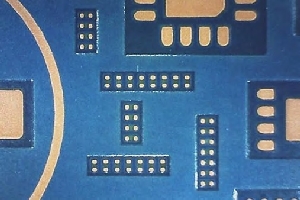
A new generation of near microscopic size SMT chip capacitors has appeared in the market, known as either 0201 (metric dimension label) or 008004 (imperial dimension label). Assembly results using these components is so far largely obscured from publication and highly proprietary. All aspects of the assembly process are expected to be challenged to accommodate the extreme level of miniaturization embodied in this device. The objective of this research is to investigate and characterize the stencil printing process for compatibility with M0201 (metric 0201) capacitor assembly. Effects of circuit board quality, stencil thickness, and stencil nano-coating are the primary experiment variables reported against solder paste volume transfer efficiency and raw-volume print distribution.
Figure 1: M0201 capacitor dimensions and tolerances.
M0201
The designation M0201 implies a case size length of 0.2mm and width of 0.1mm, when in fact these are produced at nominal dimensions of 0.25mm x 0.125mm (Figure 1).
In a footprint-area comparison, the M0201 covers only 39% of a M0402 (imperial 01005) chip component. M0201 capacitors were first commercially available for volume prototype assembly testing in 2014. Resistor M0201 passives are not yet known to be offered.
PCB land design options for M0201 are shown in Figure 2 as prescribed by the component manufacturer. The smallest pad size is 125μm x 70μm, which approximately matches the metal end terminal footprint. The largest pad size nearly doubles the smallest pad size area at 145μm x 120μm.
The pad design of our preference is shown in Figure 3, which is at the top limit of the suggested pad size range. The motivation for using such sizeable pad dimensions include:
Figure 2: M0201 vendor pad size recommendations.
Over-etched Cu is expected to be problematic at this dimensional scale. Using the largest Cu pad design should at least help to improve PCB manufacturability.
Typically, the stencil aperture size mimics pad the dimensions. The largest pad area offers to ease aperture area ratios and permits potentially improved print volume control.
Prerequisite Solder Volume
The determination of a suitable stencil aperture capacity requires prerequisite knowledge of the appropriate reflowed solder joint form. The IPC-A-601E standard was consulted as an appropriate reference to determine this. Figure 4 illustrates the model used to establish the structure of an acceptable M0201 solder joint of minimum volume. Author judgment prevailed for dimensions not explicitly provided in the 601E standard. The determination of this smallest solder volume is helpful in establishing a stencil design and for evaluating print performance against solder paste inspection (SPI) data.
Figure 3: Selected M0201 pad design for drint study
The geometry of the soldered terminations with minimum solder volume have been simplified as triangles at the sides (V1, V2) and end of the terminal contact (V3) while the largest volume contributor to the solder joint is the rectangular area underneath it (V4). The solder thickness dimension G contributes substantially to the overall solder joint volume. As the objective here is to determine a minimum solder volume, our interpretation of the 601E standard does not require the pad to be fully wetted to form an acceptable solder joint shape. An acceptable ratio of solder paste to metal by volume is 2:1. From this it is found that each chip component termination should require at least 0.48 nanoliters (1nl = 1,000,000μm3) of printed solder paste volume to form an acceptable reflowed solder joint. Note this amount scales to the pad dimensions selected (i.e., smaller pads will not require as much solder paste to comply).
Figure 4: Minimum solder volume termination model.
The printing stencil must be designed with aperture opening dimensions that will allow solder paste transfer accomplishing at least 0.48nl per pad. The difficulty in achieving this relates to practical restrictions on stencil thickness. For the products likely to see earliest implementation of M0201s, common stencil thickness used today is 100μm. The inclusion of M0201 will compel the use of even thinner stencil foils to reduce the risk of producing insufficient volume paste deposits attributed to clogged apertures. It is well documented that print transfer efficiency (TE) of solder paste scales proportionally to stencil aperture area ratio. Area ratio (AR) is defined as the aperture opening area divided by the aperture wall area.
AR values reducing further away from 0.6 will escalate average paste transfer loss while also increasing scatter in printed deposit size and shape.
To read the full article, which appeared in the March 2018 issue of SMT007 Magazine, click here.
Share on:


Testimonial
"Advertising in PCB007 Magazine has been a great way to showcase our bare board testers to the right audience. The I-Connect007 team makes the process smooth and professional. We’re proud to be featured in such a trusted publication."
Klaus Koziol - atgSuggested Items
ACCM Unveils Negative and Near-zero CTE Materials for Large-Format AI Chips
04/21/2026 | Advanced Chip and Circuit MaterialsAdvanced Chip and Circuit Materials, Inc. (ACCM) has launched two new materials: Celeritas HM50, with a negative coefficient of thermal expansion (CTE) of -8 ppm/°C to offset the positive CTE and expansion of copper with temperature on circuit boards, and Celeritas HM001, with near-zero CTE and the low-loss performance needed for high-speed signal layers to 224 Gb/s and faster in artificial intelligence (AI) circuits.
SMTA Ultra HDI Symposium, Day 2: Fragile Supply Chains, Fierce Innovation
04/14/2026 | Marcy LaRont, I-Connect007The Arizona weather yielded another beautiful day as we gathered for the second day of SMTA’s annual UHDI symposium. After the first full day discussing the role of AI in business and the how-tos of implementation, Avondale Mayor Mike Pineda kicked off day two, proud to showcase his city and to declare its important place in the continued development of the West Valley, an increasingly important area for tech and manufacturing.
KYZEN Focuses on Aqueous and Stencil Cleaning Solutions at SMTA Monterrey Expo and Tech Forum
04/10/2026 | KYZEN'KYZEN, the global leader in innovative environmentally friendly cleaning chemistries, will exhibit at the SMTA Monterrey Expo & Tech Forum.
Solder Paste Innovations for Enhanced Reliability from MacDermid Alpha Electronics Solutions
04/10/2026 | Real Time with... APEX EXPOJason Fullerton of MacDermid Alpha Electronics Solutions discusses innovative alloys like Innolot MXE, low-temperature solder options, and polymer reinforcement strategies. Learn how these solutions address the growing demands of high-performance computing and larger component assemblies, ensuring optimal performance and cost-effectiveness.
Frank Sommer Discusses Selective Soldering Innovations for EVs
04/10/2026 | Real Time with... APEX EXPODan Beaulieu sits down with Frank Sommer, a selective soldering expert from Nordson Electronics Solutions, to discuss the resurgence of selective soldering driven by electric vehicle manufacturing, and the need for robust through-hole component integration. He also introduces Nordson's innovative SELECT Synchro selective soldering machine, designed for enhanced throughput and flexibility.