













 It’s Only Common Sense: Customers Capabilities—and Confidence
 Dan’s Biz Bookshelf: ‘The 'NVIDIA Way: Jensen Huang and the Making of a Tech Giant’





How Mission Control Used Robotics to Successfully Restore Full Power for the Space Station
May 13, 2019 | NASAEstimated reading time: 2 minutes
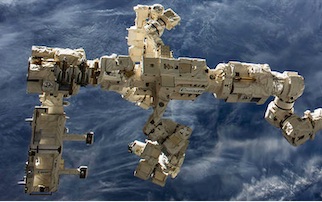
Robotics ground controllers in NASA’s Mission Control Center at the agency’s Johnson Space Center in Houston successfully replaced a failed Main Bus Switching Unit (MBSU) on the International Space Station with a spare using robotic operations on Thursday, May 2. The operation to replace the failed unit was conducted using the station’s Canadarm2 and Dextre, both part of Canada’s contribution to the International Space Station.
Using complex robotic work to perform critical maintenance allows astronauts to spend more time working on scientific experiments and helps develop better technologies and procedures for future human and robotic exploration beyond low-Earth orbit.
“Developing new robotic systems is extremely important to get our astronauts back to the Moon by 2024,” Robotics Operations Systems Officer Mike Ferullo said. “The techniques and methods that we are developing with Dextre and Canadarm2 are directly applicable to future missions, and the construction and repair of any Moon-based mission will be done with robotics wherever possible. It’s an extremely exciting time to be involved in space robotics.
Dextre is a versatile robot used to perform routine maintenance on the station. Equipped with lights, video equipment, a tool platform, and four tool holders, Dextre’s dual-arm design and precise handling capabilities reduces the need for spacewalks to conduct maintenance outside the orbiting laboratory.
The Canadarm2 serves as the station’s robotic arm. It’s used to move supplies, equipment, Dextre and even astronauts. The robotic arm is also used to capture visiting spacecraft and attach them to the station.
The completion of the robotics work was the second time an MBSU was swapped out without the need for a spacewalk.
“Previous replacements allowed us to review different arm configurations and the force with which we pulled the unit out,” Ferullo said. “Every operation we do gives us a better understanding about how to move forward with future repairs and the support of payloads.”
The failure on April 29 of the station’s MBSU-3, one of four power distributors on the station’s backbone truss structure, reduced the station’s power supply by nearly 25 percent. Following the failure, the station crew installed a series of jumpers in the station’s Unity connecting module (Node 1) to reroute power to experiments and hardware and ensure limited impact to continued station operations.
“Installing the power jumpers allowed the recovery of several critical pieces of equipment,” Power and Thermal Flight Controller Jay Boucher said. “Even though the jumpers helped continue station operations, replacing the failed unit would be required to regain the redundant power supply required for the US robotic arm to capture SpaceX’s Dragon cargo spacecraft that was scheduled to launch.”
Dragon launched successfully on May 4 and was captured and installed on the Earth-facing side of the station two days later to deliver more than 5,500 pounds of research, crew supplies, and hardware to the International Space Station.
Source: Mark Garcia, MORI Associates
Share on:


Testimonial
"Advertising in PCB007 Magazine has been a great way to showcase our bare board testers to the right audience. The I-Connect007 team makes the process smooth and professional. We’re proud to be featured in such a trusted publication."
Klaus Koziol - atgSuggested Items
Global AI Optical Transceiver Market to Reach US$26 Billion in 2026
04/20/2026 | TrendForceTrendForce’s latest research indicates that the global market for AI-focused optical transceivers has entered a phase of rapid growth, with market size projected to expand from US$16.5 billion in 2025 to $26 billion in 2026, representing over 57% YoY growth.
Alpha and Omega Semiconductor Begins IPM5 Production at Kaynes Semicon Launch in Gujarat
04/16/2026 | Alpha and Omega Semiconductor LimitedAlpha and Omega Semiconductor Limited, a designer, developer, and global supplier of a broad range of discrete power devices, wide bandgap power devices, power management ICs, and modules, marks a historic expansion of its global manufacturing footprint with the official inauguration of Kaynes Semicon’s state-of-the-art OSAT facility in Sanand, Gujarat.
From AI to AEP, an Impressive Array of Keynotes at APEX EXPO 2026
04/17/2026 | Marcy LaRont and Nolan Johnson, I-Connect007Each year at APEX EXPO, the Global Electronics Association provides an impressive lineup of keynote speakers to kick off the largest electronics manufacturing event in North America. This year included four keynote speeches, on topics ranging from the promise and peril of AI to the power of electronics, quantum computing, and the importance of heterogeneous integration in advanced electronics packaging.
HYFIX Raises $15M to Build U.S.-Made Chips for Next-Gen Drones and Robots
04/15/2026 | PRNewswireHYFIX Spatial Intelligence, Inc., a U.S.-based semiconductor company, announced a $15 million seed round to build and manufacture a new class of American-made chips designed to power high-precision drones and autonomous robots.
Koh Young Highlighting its Smart AI Solutions at the SMTA Monterrey Expo and Tech Forum
04/15/2026 | Koh YoungKoh Young, the industry leader in True 3D measurement-based inspection solutions, will exhibit at the upcoming SMTA Monterrey Expo & Tech Forum on Thursday, April 23, 2026, at Cintermex, located at Av. Fundidora 501, Colonia Obrera, Monterrey, Nuevo León, Mexico.