












 It’s Only Common Sense: Leadership Isn’t a Democracy—Stop Running Your Company by Committee
 The Marketing Minute: New Year, New Marketing Momentum
 Punching Out: Former Owners Talk About Life After Selling





KP Performance Antennas Unveils New ProLine, 8-Port, Horizontal/Vertical Polarized Sector Antenna
November 21, 2019 | Infinite ElectronicsEstimated reading time: Less than a minute
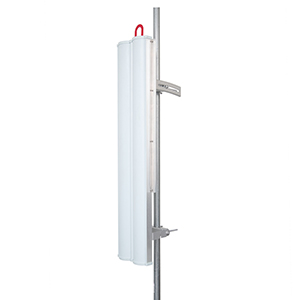
KP Performance Antennas, a manufacturer of wireless network antennas, has just launched a new horizontal/vertical polarized, 8-port ProLine sector antenna that is ideal for broad-frequency, point-to-point, point-to-multipoint and backhaul applications.
KP’s new KPP-2HV5HVX8-65 ProLine horizontal/vertical polarized sector antenna operates in the 2.3 GHz to 2.7 GHz and 4.9 GHz to 6.4 GHz frequency ranges. It features a 65-degree azimuth beamwidth and zero-degree fixed electrical downtilt. It also boasts 8 ports, gain performance of 17 dBi and 16.8 dBi respectively and excellent front-to-back of 31 dB and 34 dB. This antenna is engineered to deliver high, stable gain over wide bandwidths and suppress side-lobes and back-lobes for mitigating inter-sector interference.
“Our new horizontal/vertical polarized ProLine sector antenna combines two individual radiating systems within a single rugged radome, allowing complete dual-spectrum coverage while reducing leased space on the tower and installation costs,” said Ken Izatt, Antenna Product Line Manager.
Share on:


Testimonial
"In a year when every marketing dollar mattered, I chose to keep I-Connect007 in our 2025 plan. Their commitment to high-quality, insightful content aligns with Koh Young’s values and helps readers navigate a changing industry. "
Brent Fischthal - Koh YoungSuggested Items
UHDI Fundamentals: An Overview of UHDI Layer Types
01/02/2026 | Anaya Vardya, American Standard CircuitsUHDI layer types include core, sequential lamination build-up; microvia; embedded and passive antennas and inductors; and embedded functional, protective, and hybrid rigid-flex layers. Together, they enable ultra-fine features, dense interconnects, high-frequency performance, and miniaturized system designs. UHDI typically requires multiple SBU cycles, where thin dielectric and copper layers are drilled for microvias, plated, imaged, and laminated sequentially to build up to the final design from the inside out.
Global Electronics Association Releases Q4 Standards and Revisions Update
12/24/2025 | Global Electronics AssociationEach quarter, the Global Electronics Association releases a list of standards that are new or have been updated. To view a complete list of newly published standards and standards revisions, translations, proposed standards for ballot, final drafts for industry review, working drafts, and project approvals, visit electronics.org/ipc-standards. These are the latest releases for Q4 2025.
Advances in Conformal Coating Materials and Methods
11/19/2025 | Saskia Hogan, MacDermid Alpha Electronics SolutionsHigh-performance electronics must endure everything from rain, dust, and oil to extreme temperatures, shock, and vibration. These reliability demands now share the stage with other priorities such as size reduction, lightweighting, and environmental sustainability. Combined with constant pressure to cut costs, accelerate production, and boost manufacturing efficiency, material suppliers are racing to develop advanced conformal coatings that deliver it all: compatibility with finer-pitch circuitry, durability, eco-friendliness, and manufacturing efficiency.
Voices of the Industry Features Elephantech’s Satoshi Konagai on the Future of Sustainable PCB Manufacturing
11/19/2025 | I-Connect007I-Connect007 is pleased to announce the release of the latest episode in its acclaimed podcast series, Voices of the Industry. In this episode, host Marcy LaRont speaks with Satoshi Konagai, Executive Officer and Head of Marketing of Elephantech, about the company’s groundbreaking additive manufacturing technology that’s reshaping the printed circuit board (PCB) industry.
Beyond the Board: Why More Defense Primes Are Moving Toward Rigid-flex for Lighter, More Reliable Systems
11/18/2025 | Jesse Vaughan -- Column: Beyond the BoardOver the past decade, the conversation around PCB innovation in aerospace and defense has often centered on high-density interconnects, advanced materials, and tighter design-to-fabrication collaboration. But the move toward rigid-flex is a quieter shift that has been gaining momentum, and it’s changing how primes and system integrators approach the physical architecture of mission-critical electronics.