













 Dan’s Biz Bookshelf: ‘Abundance: How We Build a Better Future’
 Trouble in Your Tank: In Complex Systems, Design Rules Aren’t Optional
 It’s Only Common Sense: The Phone Is Still Your Competitive Advantage





Selling in a Post-COVID Environment, Part 2
July 22, 2020 | Nolan Johnson, PCB007Estimated reading time: 6 minutes
To read Part 1 of this conversation, click here.
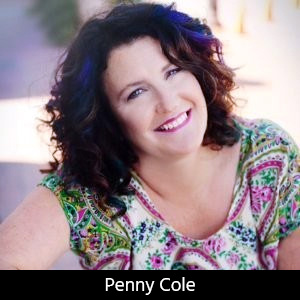
In Part 2, I continue my conversation with Penny Cole about how COVID-19 has affected her industry’s distribution channels and supply chain, as well as how she has adapted to the shifting dynamic as a salesperson.
Nolan Johnson: What do you anticipate you’re going to be doing that’s different as far as connecting with your accounts, selling, and moving forward? What will be the new process?
Penny Cole: I just had a call with a broker earlier this morning, where we talked about the same thing. We think that buyer meetings in the future are probably going to become virtual with Zoom calls instead of having you fly to their offices for a face-to-face meeting. I have a feeling that’s going to become the go-to as far as buyer meetings. I don’t think trade shows will happen for at least a year. Expo West, the big trade show in March that was canceled, isn’t so much a selling show; it’s more of “be there and be seen” show. In fact, it was even getting so big that people were starting to say things like, “Why are we even going? It costs so much money and does nothing for the company. I’m already an established brand.” I’m not sure what trade shows will look like in the future.
The distributor trade shows and the retailer shows have always been more selling shows, and they’ve already pivoted to become virtual shows. We have our first virtual show coming up with one of our distributors. I’m sure there will be hiccups since it’s the first one like this, but that could be the way of the future. Distributor shows may become virtual because the buyers will be able to get all the deals they would get at the show without having to travel. I’m sure at some point they may come back because it’s also a way for the distributors to give their key accounts a trip.
As far as visiting stores, we’ll start doing that again, but it will also depend on when everybody feels comfortable traveling. Our company has a complete kibosh on any travel right now. My counterpart on the East Coast wanted to do a store reset in the next state over from him, and our CEO said no. It’s going to take a while, maybe through the end of the year, before we can travel.
To make the most of it at home, we’re trying to make as many connections as possible with our brokers and broker reps and ensure that they have all the tools they need. That’s especially true with our reps in California because they’re starting to go back out into the stores, but they’re doing it in baby steps. They’re looking at what feels good for them and what doesn’t. They’re only going to visit two stores a day and see how that works. Stores might not even want to see them, and it depends on what the stores’ procedures are going to be for now. It’s going to be completely changing over the rest of the year.
Johnson: Do you think that you will be returning to the old methods, like traveling to the store with a broker, or do you think that is something to be done remotely/virtually?
Cole: You need to have that personal touch. You need to get in stores, see people, talk to them, give them information, and educate them. Right now, we’re doing the best we can with phone calls, but having that personal touch makes a difference on the natural food side. On the conventional grocery side, not so much because their model is a little bit different. Our brokers who go into the stores and make sure that things are on the shelves that need to be there.
Johnson: What do you think is never going to happen again?
Cole: I don’t think big trade shows like what we’ve seen are ever going to happen again. They have to figure out some way of doing them, or maybe they will have it again once a vaccine has come out, people feel safe doing that. But that’s going to be a long way down the road.
Johnson: Although our frontline workers in fabs on the manufacturing floors aren’t as exposed to risk the way the frontline workers at the grocery store are, there are a lot of similarities, nonetheless. And I hear you suggest some of the same solutions: adjusting upstream buys ahead of time and getting your supply chain to be as predictable as possible so that you can be as predictable as possible for your customers. What’s the most surprising thing you’ve learned out of this whole experience so far?
Cole: Things can change on a dime like this, and you have to figure out how to still make things happen. This came out of nowhere. It’s not like the recession in 2007, where we had indicators it was coming and had time to change things. Being able to pivot and figure out how to keep doing business is critical. Though not to this extent, the food business has had to do this before.
Johnson: It’s the same industry, but all of a sudden, nothing is the same. Overall, it’s amazing how continuous everyone kept the product flow.
Cole: It has been crazy to see how our industry has been able to keep up on all parts. In the beginning, the retailers and the distributors were so thrown off guard, but then they had to pivot and figure out how to do things. To see large chains say, “We’re going to change doing this to this way now,” was great to see. While they had all these procedures and stuff in place, they realized if they wanted to keep stores stocked, they couldn’t keep doing it that way.
Johnson: From their perspective, what do you think have been the lessons learned? Perhaps that they don’t need so much procedure?
Cole: I think so. There have been a lot of webinars over the last couple of months for retailers. People who have been in the industry for a long time have been talking about what they see going forward and what buyers want. A big thing that’s going to come out of this is the number of products people carry. You don’t need to have a million different types of ketchup; you only have the ones that people want.
Once Amazon started coming on the scene with groceries, when they bought Whole Foods, you started to see that. But that’s something other retailers are going to start looking at now as well because they’re going to be able to keep the shelves stocked better. And this is something that’s being told to manufacturers. Don’t do line extensions for the sake of doing another flavor of something. Concentrate on your best sellers. Make sure you have them and that they’re out there. Don’t do five more flavors of something you already have—at least not until things calm down, and we see how everything goes.
Again, many big companies have gotten so bogged down with a lot of procedures. They’re going to see that there’s a lot they don’t need to have, which is making things harder. The big thing with retailers that I’ve seen come out is their receiving procedures. They would have so many different receiving procedures, depending on if it involved dry, refrigerated, or frozen goods—each had a unique set of procedures. One retailer issued a statement saying to disregard all of that: “Bring in the products, and if they don’t match exactly the invoice, that’s fine. We’ll still pay for them.” That was quite a change because if the shipment didn’t match the invoice exactly, they would refuse it all. Now, if there’s a case missing, that’s fine. They just ask to note it because they still want the product.
Johnson: It’s about being accepting of the allocation environment. I asked you what your week was like before. What do you see your week being like now, as things open back up, with all that we’ve learned and the new behaviors in place?
Cole: The personal relationships and interpersonal communications with your buyers and your salespeople will be the biggest thing you can leverage until we figure out how things are going to be. We’ve spent so much time over the last few years being electronic and shooting off emails that it might be time to get back to basics and talk to people more.
I’ve found that I now have a more structured day than I’ve ever had in the past. I’m doing more stuff for myself as well, such as meditating and exercising in the morning and having a more set workday. Before, when I traveled so much, I did stuff when I could, such as in airports or hotel rooms. This has been a great time to catch up on projects that were sitting on the back burner—ones that were important but urgent enough. It has been a good time to get all your ducks in a row, clean up files, and work on projects you had not before. Take advantage of the time as much as you can.
Johnson: I want to find out how the virtual trade show goes. Penny, thanks for talking with me.
Cole: That’s going to be interesting. You’re welcome, Nolan.
Share on:


Testimonial
"Advertising in PCB007 Magazine has been a great way to showcase our bare board testers to the right audience. The I-Connect007 team makes the process smooth and professional. We’re proud to be featured in such a trusted publication."
Klaus Koziol - atgSuggested Items
When Quality Is Personal: The Human Stakes Behind Electronics Reliability
05/06/2026 | Kelly DackIn electronics manufacturing, quality is often discussed in terms of specifications, standards, and process controls, but as industry veteran Doug Pauls reminds us, the stakes are far more human. In this conversation, Doug, a recipient of the Global Electronics Association’s Hall of Fame Award, draws on more than four decades of experience to illuminate the real-world consequences of reliability, where even a single defect can carry profound implications. He brings into sharp focus why quality isn’t just a metric, but a responsibility shared by everyone on the manufacturing floor.
PCBAA, AAM Take on the Fight to Rebuild U.S. Manufacturing in New Documentary
05/05/2026 | Marcy LaRont, I-Connect007Throughout most of the 20th century, manufacturing was central to the American Dream of providing stable jobs and pathways to upward mobility. Today, more than 80% of global electronics manufacturing capacity resides in China and greater Asia, raising serious concerns about supply chain resilience and national security.
India’s Vasantha Advanced Systems: EMS Success for 30 Years
04/22/2026 | Marcy LaRont, I-Connect007Based in one of India’s premier manufacturing regions, Vasantha Advanced Systems is an EMS provider that has built a reputation for quality, reliability, and long-term customer partnerships, earning repeated recognition from the Indian government through its National MSME Awards. Now, with a full spectrum of capabilities spanning PCB assembly, box build, and wire harness, and a workforce of more than 500, Vasantha is expanding its presence into the U.S. market. At APEX EXPO, I met Dr. Chidambaranathan and learned how this rising global player is positioning itself to meet the evolving needs of North American customers.
April Issue of I-Connect007 Magazine: Beyond the Rulebook
04/14/2026 | I-Connect007 Editorial TeamIn this month’s I-Connect007 Magazine, we asked PCB designers, fabricators, and suppliers what it really means to operate without a rulebook. Their perspectives vary, especially between seasoned designers and experienced fabricators, but a common thread emerges: progress depends on pushing boundaries and finding a way forward, even when the path isn’t clear. In many ways, this mindset has always been part of what we do, whether we’ve called it that or not.
Defense Speak Interpreted: Hypersonics Report Back After Six Years of Silence
04/07/2026 | Dennis Fritz -- Column: Defense Speak InterpretedIt’s been six years since my Defense Speaks column about hypersonic weapons. Back then, these weapons were the most sought-after technology as there was little defense for them. They were the cornerstone of the “strike any location on earth within one hour” scenario. Of course, the war in Ukraine, and now the action in Iran, have grabbed the weapons headlines, but hypersonics still play a role and development continues. Here is the update.