














 Dan’s Biz Bookshelf: ‘Everybody Matters'
 The Chemical Connection: Some Amusing Stories from APEX EXPO
 It’s Only Common Sense: Stop Managing and Start Teaching





Catching Up with Vector Fabrication’s Quang Luong: Here Comes Vietnam!
June 24, 2015 | Dan Beaulieu, D.B. Management GroupEstimated reading time: 5 minutes
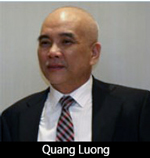
I have known Quang Luong, the owner of Vector Fabrication, for many years now, and I have always been interested in his business and how it operates, especially since he is the only PCB shop owner I know of who has a company both in the U.S. and in Vietnam.
Saigon Silicon City Based on Silicon ValleyQuang recently sent me a news story about a multimillion dollar industrial park that is opening in Ho Chi Minh City (HCMC). The plan is to have a new Saigon Silicon City based on California’s Silicon Valley. Vector Fabrication Vietnam LTD and VIET REMAX are the developers for this new 128-acre industrial park located inside Saigon Hi-Tech Park, already home to Intel, Samsung, Jabil, FPT Software, and NIDEC, to name a few. Vector Fabrication has already been located in an industrial park near Ho Chi Minh City since 2005. This will be the second location for Vector Fabrication, Vietnam. When the industrial area is fully developed we estimate it will have over $1.4 billion in investments.
I had the opportunity to sit down with Quang recently and talk with him about his business, Vietnam, and what this new development means to him, his company, and the PCB industry in general.
Dan Beaulieu: Quang, it’s good to talk with you again. So it seems that a lot has been happening since we last met.
Quang Luong: Yes, absolutely. As you know, I have been spending a lot of time in Vietnam getting my company built and now we are finally there.
Beaulieu: Congratulations! So tell me about Vector Fabrication in the new Saigon Silicon City.
Luong: The new park will be developed in three phases. The first phase will open on 15 acres in the fourth quarter of 2016 with about five companies. Vector Fabrication PCB and PCBA will be one of these. The other companies will be related infrastructure companies such as precision sheet metal, precision machinery, and R&D, software, semi-conductor and component suppliers. Vector’s group of companies will employ approximately 600 people. The PCB fabrication facility will have the same advanced capabilities and high technology PCBs as well as
high-mix, low-volume manufacturing.
Beaulieu: Tell us a little bit about yourself. What is your background?
Luong: I immigrated to the U.S. in 1975. Before that I was actually an army paratrooper. I started working in the industry in 1978 at a printed circuit board photo-tooling company. In 1987 I opened my first company, which was also in the photo-tooling service bureau business.
Beaulieu: When did you get involved in PCB fabrication?
Luong: In 1978.
Beaulieu: When did you start Vector Fab here in California and Vietnam?
Luong: We started in 1995 in Milpitas, California and Vietnam in 2005, with a local partner.
Beaulieu: So, is your company going to handle business for Asian customers or are you going to be selling here in North America for product to be built in Vietnam?
Luong: We service customers in Asia and Europe (70%), and in North America (30%). Vector Fabrication in Milpitas is still doing low-volume quick turn here. Much of what we do here is DUT (design under test) boards.
Beaulieu: Tell me about Vietnam and this new investment you are involved in—Saigon Silicon City.
Luong: Our initial capital investment is 40 million USD. One of the major objectives is to bring in high-tech infrastructure companies. One of the current missing links in Vietnam is a robust supply chain and related services. This issue is recognized by the Vietnamese government and is one of the reasons we were granted the license to develop the new park.
Beaulieu: How many companies do you expect to be located in this Silicon City?
Luong: Approximately 27 companies.
Beaulieu: I am fascinated by the whole idea of doing business in Vietnam. What is the country like today?
Luong: The population is about 90 million with more than 75% in the labor force. About 50% are young workers from 18 to 40 years old. In the last few years, many tier 1 high tech companies (Korean, Taiwanese and Japanese) have invested heavily in the country.
Beaulieu: What are the advantages of doing business in Vietnam?
Luong: As mentioned before, a young work force which is intelligent, hard working, motivated to learn and enthusiastic. The Vietnamese government supports high tech investments with various incentives including tax incentives.
Beaulieu: Are there other PCB companies in the area?
Luong: There are a few captive and low-end shops.
Beaulieu: How about supporting industries and vendors?
Luong: As I mentioned, the supply chain is weak in Vietnam. That is why we are working on this project.
Beaulieu: So I would think that there would be some good opportunities for other companies to start selling their equipment, commodities and other products in Vietnam as well then, is that correct?
Luong: Yes, that is absolutely correct.
Beaulieu: Are you looking to attract American companies to set up operations in Saigon Silicon City as well?
Luong: Yes, that’s also correct.
Beaulieu: How do you see things progressing in the next few years? What do you think the future will bring?
Luong: We believe that this is the region that offers the most business opportunities.
Beaulieu: Thanks so much for spending time with me today. Do you have any last words to our readers before we finish?
Luong: Yes, Dan, I do. I would urge those companies who are looking to do business in a new and exciting region of the world to start looking at Vietnam. Those of us in the PCB industry want to invite our vendors to come to Vietnam and support us. Right now this is a country with a very promising future in all kinds of high-end manufacturing, especially electronics. This is the time to come to Vietnam and start investing in your future.
Beaulieu: Well, readers, you saw it here first. If you have that entrepreneurial spirit and are looking for a new frontier, the place is Vietnam and the time is right now, if not yesterday. Please feel free to contact me at danbeaulieu@aol.com if you want to find out more about these opportunities.
Share on:


Testimonial
"Our marketing partnership with I-Connect007 is already delivering. Just a day after our press release went live, we received a direct inquiry about our updated products!"
Rachael Temple - AlltematedSuggested Items
Punching Out: M&A Deals in North American PCB and EMS Sectors for 2025
02/19/2026 | Tom Kastner -- Column: Punching Out!Mergers and acquisitions activity in the EMS and PCB sectors in North America in 2025 was certainly slow compared to previous years as well as compared to expectations. When we started 2025, there was a feeling that with a deal-making president coming into office, it would be a positive factor. Baby Boomers were riding a silver wave of retirements and there was a ton of dry powder private equity money waiting to buy their businesses. Private equity-owned firms were looking for acquisitions to grow their companies and there was a big network of young entrepreneurs looking to take out SBA loans and buy board shops.
American Made Advocacy: Restore the Domestic PCB Industry to Support National Drone Initiatives
02/17/2026 | Shane Whiteside -- Column: American Made AdvocacyUnmanned aerial vehicles, or drones, once cast only as secret weapons in movies, are now central to modern warfare, law enforcement, and a plethora of industrial applications. Drones carry out a wide range of tasks, from reconnaissance operations providing precise data on enemy positions, to delivering ammunition, equipment, and supplies to soldiers in combat, to being used as weapons in direct engagements and for striking distant targets.
EMS Leadership Summit: A Smarter Way to Gather EMS Leaders
02/11/2026 | Nolan Johnson, SMT007 MagazineMark Wolfe is a career EMS and electronics expert, whose leadership has helped expand and improve the EMS Leadership Summit at APEX EXPO. Last year’s event received a huge approval rating from attendees: a whopping 96% said they’d be back. Not content to rest on those laurels, Mark and his team have put together a program that preserves the Summit’s strengths while finding ways to improve. In this interview, Mark makes a strong argument why EMS leadership at all levels should take a day to examine the wider picture of our industry.
EIPC Winter Conference 2026 Review: The Keynote Sessions
02/11/2026 | Pete Starkey, I-Connect007Aix-en-Provence (pronounced “ex-ahn-pro-vonse”), a historic city and commune in the south of France, about 20 miles north of Marseille, was the pleasant venue for EIPC’s Winter Conference in early February. Industry delegates from 11 European countries, as well as from the U.S. and China, gathered at the Renaissance Hotel for a two-day programme, “Driving the Future: Innovation, Energy, and Sustainability in PCB Technology.” An added attraction was a privileged visit to the ITER fusion power project at the Cadarache research and development centre.
Global Sourcing Spotlight: The New Landscape of Manufacturing
02/11/2026 | Bob Duke -- Column: Global Sourcing SpotlightFor decades, manufacturing followed a familiar pattern: design in the West, production in China, and distribution elsewhere. That map no longer works. The shocks of the past five years—the pandemic shutdowns, trade wars, logistics meltdowns, and geopolitical uncertainty—have redrawn the boundaries of global manufacturing. The question every OEM is asking isn’t “How cheap can we make it”? but “How certain are we that we can obtain it?” We are witnessing a seismic shift in the landscape of making things. The work hasn’t disappeared; it’s just moving.