



Researchers Find Vulnerabilities in Cars Connected to Smartphones
September 2, 2016 | NYU TandonEstimated reading time: 2 minutes
Many of today's automobiles leave the factory with secret passengers: prototype software features that are disabled but that can be unlocked by clever drivers.
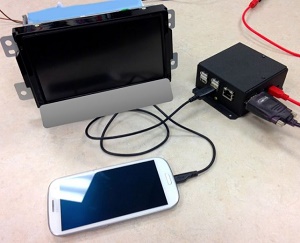
In what is believed to be the first comprehensive security analysis of its kind, Damon McCoy, an assistant professor of computer science and engineering at the NYU Tandon School of Engineering, and a group of students at George Mason University found vulnerabilities in MirrorLink, a system of rules that allow vehicles to communicate with smartphones.
MirrorLink, created by the Connected Car Consortium, which represents 80% of the world's automakers, is the first and leading industry standard for connecting smartphones to in-vehicle infotainment (IVI) systems. However, some automakers disable it because they chose a different smartphone-to-IVI standard, or because the version of MirrorLink in their vehicles is a prototype that can be activated later.
McCoy and his colleagues found that MirrorLink is relatively easy to enable, and when unlocked can allow hackers to use a linked smartphone as a stepping stone to control safety-critical components such as the vehicle's anti-lock braking system. McCoy explained that "tuners" - people or companies who customize automobiles - might unwittingly enable hackers by unlocking insecure features.
"Tuners will root around for these kinds of prototypes, and if these systems are easy to unlock they will do it," he said. "And there are publically available instructions describing how to unlock MirrorLink. Just one of several instructional videos on YouTube has gotten over 60,000 views." The researchers used such publically available instructions to unlock MirrorLink on the in-vehicle infotainment system in a 2015 vehicle they purchased from eBay for their experiments.
The automaker and supplier declined to release a security patch - reflecting the fact that they never enabled MirrorLink. McCoy pointed out that this could leave drivers who enable MirrorLink out on a limb.
The authors hope their research, presented at the 10th USENIX Workshop on Offensive Technologies (WOOT '16) in Austin, Texas, will raise the issue of drivers unlocking potentially insecure features before IVI protocols such as MirrorLink are even more widely deployed.
Subscribe
Stay ahead of the technologies shaping the future of electronics with our latest newsletter, Advanced Electronics Packaging Digest. Get expert insights on advanced packaging, materials, and system-level innovation, delivered straight to your inbox.
Subscribe now to stay informed, competitive, and connected.
Suggested Items
Kymeta Joins Red Cat Initiative for Maritime Connectivity
05/15/2026 | Globe NewswireRed Cat Holdings, Inc. , a U.S.-based provider of advanced all-domain drone and robotic solutions for defense and national security, announced that Kymeta, a world-leading flat-panel satellite terminal manufacturer, has joined the Red Cat Futures Initiative, the company’s industry-wide consortium accelerating advanced autonomous systems for modern warfare.
SPARK Microsystems Selected for CAD $1M in Government of Canada-backed FABrIC Funding
05/14/2026 | BUSINESS WIRESPARK Microsystems, a Canadian fabless semiconductor company specializing in next-generation short-range wireless communications, has been selected by FABrIC as a CAD $1 million grant recipient funded by the Government of Canada.
System Architecture Beyond the Die With Advanced Packaging as the Scaling Factor
05/14/2026 | Chetan Arvind Patil, Marvell TechnologyIn conventional monolithic semiconductor design, system integration was achieved within a single die and constrained by reticle limits. Compute cores, cache, memory controllers, and input output (I/O) interfaces were all co-optimized on a single process node, with performance closely tied to transistor density and on-die interconnect efficiency. This monolithic system-on-chip (SoC) approach enabled low-latency communication and relatively straightforward power delivery. However, as design for compute-intensive SoCs approaches reticle limits and advanced-node costs increase, the ability to continue scaling within a single die begins to diminish.
Rethinking Reinforcement Materials for Advanced Packaging
05/14/2026 | Ivana Ivanovic, Flexiramics B.V.Materials that once quietly supported the industry are now becoming limiting factors. The electronics industry is experiencing unprecedented pressure as RF systems push into mmWave frequencies, high-speed digital architectures advance into their next performance generation, and power densities climb across automotive, telecom, aerospace, and computing. Reinforcement materials, long treated as a background detail in laminate design, are suddenly at the centre of performance, reliability, and supply‑chain discussions.
Below the Surface: Active Component and Module Submounts—The Architecture Behind Performance
05/14/2026 | Chandra Gupta -- Column: Below the SurfaceIf you were to peel back the layers of a modern electronic system, such as a satellite transceiver, a LiDAR module, or a 5G base station, you would not immediately notice a specific component doing some of the most important work. It doesn’t amplify signals, emit light, or process data, yet without it, none of those functions would be stable, reliable, or scalable. That component is the active device submount.