


















 Knocking Down the Bone Pile: Precision Milling of Underfilled SMT Components
 Learning with Leo: Drones—Meeting Demand Without Compromise
 Nolan’s Notes: Our Spotlight on North America





Seika Announces Inventory Sale on Stock SAYAKA PCB Routers
June 1, 2022 | Seika Machinery, Inc.Estimated reading time: 1 minute
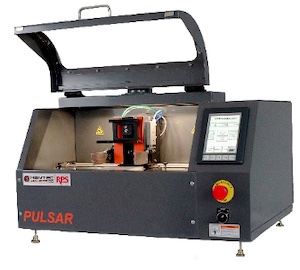
Seika Machinery, Inc., a leading provider of advanced machinery, materials and engineering services is pleased to announce an inventory sale on stock SAYAKA PCB routers, including the SAM-CT23Q, SAM-CT23S, SAM-CT35Q, SAM-CT23NJ and SAM-CT56NJ. Additionally, the SAM-CT34XJ PCB Router is now available for demonstration at Seika’s Headquarters and Demonstration Center in Torrance.
The SAM-CT34XJ standalone works as an in-line and off-line router. It features a slide table for fast and easy loading/unloading of PCBs, repeatability ±0.01mm and low maintenance. The color CCD camera makes it easy to program, along with an automatic QR code reading and uploading program. The SAM-CT34XJ offers broken/slip bit detection and extended bit life with automatic bit position control.
There is no better way to depanel a printed circuit board than with the SAYAKA PCB Depaneling Router. This PCB depaneler is the answer for hassle-free PCB depaneling through the employment of a router bit that minimizes stress on components. The high-speed spindle included in the machine speeds up cutting and maintains precision, while also allowing for flexible panel designs with various cutting patterns.
Additionally, the SAM-CT34XJ PCB Router cuts down on bit replacement with its router bit depth adjustment system, which automatically shifts up to five depth levels. The PCB router bit maximum cutting speed is 50mm per second, while the traveling speed is a maximum of 800mm per second. With a built-in fixture-based dust vacuum system, the system is sure to be clean and efficient. This prevents warping, and takes full advantage of vacuum strength for the most effective dust collection.
Share on:


Testimonial
"Your magazines are a great platform for people to exchange knowledge. Thank you for the work that you do."
Simon Khesin - Schmoll MaschinenSuggested Items
SPARK Microsystems Selected for CAD $1M in Government of Canada-backed FABrIC Funding
05/14/2026 | BUSINESS WIRESPARK Microsystems, a Canadian fabless semiconductor company specializing in next-generation short-range wireless communications, has been selected by FABrIC as a CAD $1 million grant recipient funded by the Government of Canada.
System Architecture Beyond the Die With Advanced Packaging as the Scaling Factor
05/14/2026 | Chetan Arvind Patil, Marvell TechnologyIn conventional monolithic semiconductor design, system integration was achieved within a single die and constrained by reticle limits. Compute cores, cache, memory controllers, and input output (I/O) interfaces were all co-optimized on a single process node, with performance closely tied to transistor density and on-die interconnect efficiency. This monolithic system-on-chip (SoC) approach enabled low-latency communication and relatively straightforward power delivery. However, as design for compute-intensive SoCs approaches reticle limits and advanced-node costs increase, the ability to continue scaling within a single die begins to diminish.
Rethinking Reinforcement Materials for Advanced Packaging
05/14/2026 | Ivana Ivanovic, Flexiramics B.V.Materials that once quietly supported the industry are now becoming limiting factors. The electronics industry is experiencing unprecedented pressure as RF systems push into mmWave frequencies, high-speed digital architectures advance into their next performance generation, and power densities climb across automotive, telecom, aerospace, and computing. Reinforcement materials, long treated as a background detail in laminate design, are suddenly at the centre of performance, reliability, and supply‑chain discussions.
Below the Surface: Active Component and Module Submounts—The Architecture Behind Performance
05/14/2026 | Chandra Gupta -- Column: Below the SurfaceIf you were to peel back the layers of a modern electronic system, such as a satellite transceiver, a LiDAR module, or a 5G base station, you would not immediately notice a specific component doing some of the most important work. It doesn’t amplify signals, emit light, or process data, yet without it, none of those functions would be stable, reliable, or scalable. That component is the active device submount.
Road to Reliability: Engineering High Uptime EV Charging Infrastructure
05/13/2026 | Stanton Rak, SF Rak CompanyThe transition to EVs is no longer constrained solely by vehicle capability. Instead, it is increasingly defined by a simpler, but more unforgiving question: Will the charger work when I arrive? This high uptime does not happen by accident. As EV technology has matured, limitations in battery range, power electronics, and thermal management are no longer the primary barriers to adoption.