














 Connect the Dots: What Designers Should Know About Non-conductive Via Fill
 Target Condition: The Modern Masters of Signal Integrity and AI-driven Design
 Fresh PCB Concepts: Repair and Risk in Electrical Test Failures in PCB Manufacturing






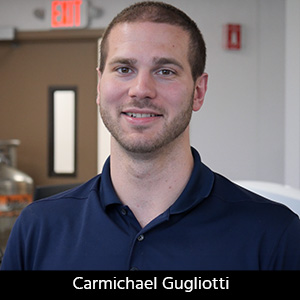
I recently spoke with Carlos Plaza, senior director of education for IPC, about expanding educational efforts in the PCB design, fabrication, and assembly segments. As Carlos explains, PCB design is a hot topic, but onboarding may be the hottest one of all.
Andy Shaughnessy: Carlos, as IPC’s senior director of education, I know you’ve been busy preparing for IPC APEX EXPO. Why don’t you give me a brief overview of what that entails?
Carlos Plaza: Sure. As the senior director of education, I work with industry experts and IPC learning specialists to help identify and meet the training and certification needs of our members. That’s my job in a nutshell. Certification is an essential part of the workforce training equation. Customers should be confident that their boards are being fabricated and assembled by personnel who have demonstrated their ability to adhere to IPC standards, particularly for high precision and reliability applications.
However, a few years ago, we discovered that there were many new employees having a hard time getting certified because they didn’t know the terminology, materials, or processes and tools used to build and assemble PCBs and wire harnesses. Of course, when you think about it, it doesn't make much sense to teach someone about the criteria that apply to things like turrets, conductors, and annular rings if they don't know what they are and how they're used.
That’s why we created workforce training programs: to help people acquire the knowledge and skills they need to do the job of an operator, a technician, or an engineer. Once they’ve learned to build, assemble, and inspect Class 2 and 3 boards, they’re ready for certification. That’s the sequence. You don't take the bar exam to learn about law; you take it to validate what you learned in law school.
What does IPC workforce training encompass? We said we would create training for industry job roles. How do you perform the job of an operator, a technician, an inspector, an engineer, a program manager, or a PCB designer? Those are the major disciplines, and there are sub-levels as well. The engineer could be a manufacturing engineer or a production engineer. One operator might focus on hands-on soldering, and another could operate a reflow oven on an SMT line. A third operator could be doing rework and repair. We dedicated ourselves to the saying, “Let's find the jobs that are the most critical and start filling in those gaps.” In the process, we discovered that onboarding was the most critical point.
To read this entire conversation, which appeared in the April 2024 issue of Design007 Magazine, click here.


