












 Beyond the Board: How a Diminished Supplier Base Affects Complex PCB Manufacturing Readiness in Defense
 Defense Speak Interpreted: Hypersonics Report Back After Six Years of Silence
 American Made Advocacy: American Microelectronics Power the Future of High Technology





Duality AI Contracts with NASA JPL for Phase II of DARPA RACER Program
September 13, 2024 | BUSINESS WIREEstimated reading time: 2 minutes
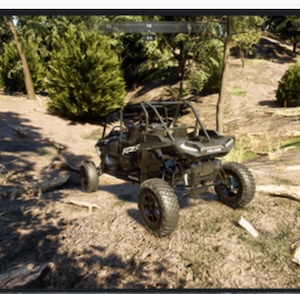
Duality AI, the company behind Falcon, a digital twin simulation platform, today announced an agreement with NASA’s Jet Propulsion Laboratory (NASA JPL) in Pasadena to continue its work on Defense Advanced Research Projects Agency’s (DARPA’s) Robotic Autonomy in Complex Environments with Resiliency program (RACER). This announcement follows Phase I of the RACER project, where Duality successfully completed the program, as one of only two simulation providers selected by DARPA. The agreement accelerates autonomy development for NASA JPL by allowing rapid iteration and discovery of flaws through simulation, reducing risks and providing the synthetic data vital to training advanced AI algorithms that push the boundaries of robotic autonomy.
During the second phase of the RACER program, teams will have to display their ability to create advanced AI solutions that allow large-scale vehicles to travel autonomously at faster speeds and over longer distances than in Phase 1. The team from NASA JPL will use Duality’s advanced digital twin simulator, Falcon, to overcome the challenges associated with autonomous high-speed, off-road vehicles, including mapping, perception, planning, and responding to hazards and obstacles. The ultra-realistic synthetic data generated by Falcon is pivotal in the training and testing of the next-generation AI systems.
"Success in the RACER program relies on training intelligent systems to complete complex tasks that traditional autonomous vehicles do not face. From unexpected obstacles to unpredictable weather challenges, the number of scenarios these AI systems must be trained and tested against is astounding,” said Mike Taylor, Chief Product Officer and co-founder of Duality AI. "Simulation technology enables a practical way for NASA JPL to train their systems in virtual environments and generate synthetic data that is essential for highly-capable AI models to be ready for any challenge.”
As part of the agreement, Duality will provide the tools and processes required to train AI through the use of digital twin simulation and aid in the development of NASA JPL's next generation of autonomy technologies. The contract also provides NASA JPL with access to expansive, highly realistic digital twin environments necessary for robust testing and training of autonomy software. The digital twins of real locations enable the NASA JPL team to generate relevant synthetic data and test their autonomy software with a higher percentage of code coverage than possible with conventional simulators. By leveraging Duality's AI-powered tools to build digital twin environments from satellite imagery, as well their library of configurable virtual sensors, NASA JPL can easily manipulate digital twin environments with different rocks, trees, weather, and more. This level of precise control helps NASA JPL transition cutting-edge ideas from simulation into the real world.
Duality’s contract with NASA JPL advances Duality’s mission to build a digital twin simulation platform that helps solve the most complex robotics problems. Working alongside top minds in robotics allows Duality to enhance its simulation capabilities and demonstrate the power of its technology by overcoming immense real-world challenges.
Share on:


Testimonial
"Our marketing partnership with I-Connect007 is already delivering. Just a day after our press release went live, we received a direct inquiry about our updated products!"
Rachael Temple - AlltematedSuggested Items
Boeing-built Space Launch System Core Stage Powers First Crewed Artemis Mission around the Moon
04/02/2026 | BoeingNASA's Space Launch System rocket, powered by the Boeing-built core stage, lifted off at 6:35 p.m. ET. Eight and a half minutes into flight, the core stage successfully completed its mission and separated from the upper stage of the rocket, enabling NASA's Orion spacecraft, Integrity, to carry humankind around the moon.
Renesas’ Radiation-Hardened ICs Take Flight on NASA’s Artemis II Crewed Lunar Mission
04/02/2026 | BUSINESS WIRERenesas Electronics Corporation, a premier supplier of advanced semiconductor solutions, today announced its radiation-hardened (rad-hard) ICs are being used in NASA’s Artemis II mission, which successfully launched from the Kennedy Space Center in Florida on April 1.
DesignCon Taps NASA, Purdue, and Agentrys for Keynote Slate
02/24/2026 | GlobeNewswireDesignCon, the premiere event for the latest in high-speed design tools, technologies, and developments, has announced the keynote speakers for the 2026 edition.
Starlab Completes NASA Commercial Critical Design Review
02/23/2026 | BUSINESS WIREStarlab Space LLC, developer of a next-generation commercial space station, has successfully completed its Commercial Critical Design Review (CCDR) with NASA in attendance, marking a decisive transition from design to manufacturing and systems integration.
NASA’s SunRISE SmallSats Ace Tests, Moving Closer to Launch
01/26/2026 | NASA JPLThe small satellites passed a crucible of tests, ending with a simulation of the intense vibrations of launch.