


















 Nolan’s Notes: Automotive Is Gearing Up Again
 Standard of Excellence: Engineering Collaboration Has Become the New Sales Strategy
 Bridging the Pacific: Why Global Manufacturing Is No Longer Optional





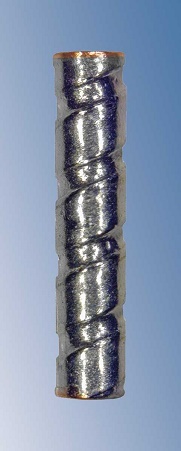
TopLine has announced the availability of new low-void solder columns, developed by TopLine engineers using new proprietary processes. The absence of voids in the column's high temperature core makes the columns structurally stronger and more reliable.
Martin Hart, CEO of TopLine, says that “The low-void nature of the columns isn’t visible or apparent from the exterior; the consistency exists inside the structure. These columns are stronger than ones with a higher incidence of voids, and strength is what our customers want.” Solder columns are 10x more reliable that solder balls, he adds, when attaching large size ceramic IC packages to FR-4 or polyimide PC Boards operating in harsh environments. The large CTE (Coefficient of Thermal Expansion) mismatch of ceramic puts stress on the interconnections (I/O) over wide temperature cycles.
Eventually, the connections between the ceramic IC and the mother board will break over time after enduring thousands of temperature cycles. “Solder columns are compliant and absorb CTE mismatch, thereby lengthening the life of the circuit.”
Additionally, the new low-void solder columns exceed the requirements of Mil-STD-883K. This standard establishes uniform methods for testing microelectronic devices and components suitable for use within military and aerospace electronic systems, with an emphasis on ensuring a uniform level of quality and reliability suitable to the intended applications.
TopLine offers a wide range of solder columns to meet individual needs. Typical solder core materials include both Pb90/Sn10 as well as Pb80/Sn20.
About TopLine
TopLine manufactures a wide range of daisy chain semiconductor packages for process development, experimentation, machine evaluation, solder training, and SMT assembly practice. TopLine products provide hands-on learning for engineers.


