















 The Fearless Connector: Why I Chose the Hard Road
 The Clean Truth: The Clean Truth About No-Clean Flux
 Global Sourcing Spotlight: Beyond China Plus One—Building a Truly Global Supply Network





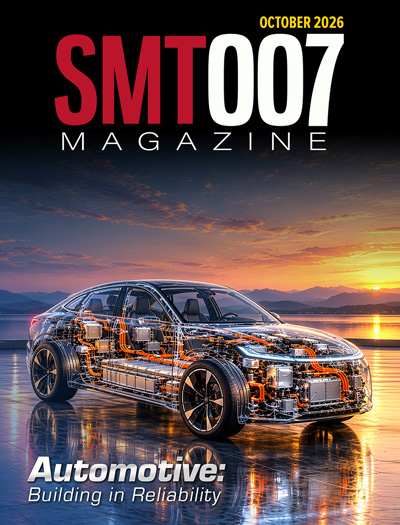
e-Mobility is the defining transformation of 21st-century transportation. As legacy OEMs, startups, and governments race to electrify vehicle fleets, the landscape of e-Mobility is expanding into previously unimaginable territory.
But with innovation comes complexity, and with complexity, a need for systems that are not only high-performing but also reliably engineered for the long haul. Understanding the diversity and scale of the EV marketplace is essential to grasping the reliability challenges ahead. From compact urban commuters to heavy-duty trucks and city buses, each category of EV presents distinct performance demands and environmental challenges that shape both the design of its electronics and the manufacturing processes behind them.
The Expanding Scope of e-Mobility
e-Mobility now touches nearly every transportation sector. Beyond battery electric vehicles (BEVs), the industry includes hybrid electric vehicles (HEVs), plug-in hybrids (PHEVs), fuel cell electric vehicles (FCEVs), and micromobility platforms such as e-scooters and e-bikes. Electrification is also advancing rapidly in transit fleets, mining equipment, agricultural machinery, and even aerospace. While the Road to Reliability series focuses on automotive use cases, it's worth noting that advancements in adjacent e-Mobility domains often push the envelope of what's possible in vehicle design, materials, and power electronics. Lessons learned from industrial EVs, such as off-road autonomous haulers in mining, or fast-charging e-buses in congested city centers, can influence next-generation reliability strategies in passenger cars and trucks.
EV Applications: A Platform-centric View
Today’s EV architectures can be classified into several major categories, each presenting distinct electronic system requirements. Passenger EVs and light-duty vehicles comprise the most visible vehicles in the public eye, including cars, crossovers, and SUVs. Key design goals include long-range, consumer-facing infotainment, seamless OTA updates, and compact thermal and electrical systems. Powertrain voltages range from 400V to 800V, demanding high-voltage insulation and lightweight, thermally robust electronics. Commercial and heavy-duty truck applications require very reliable electronics for long-haul durability, regenerative braking, higher voltage requirements, and extensive diagnostics. Transit and city bus platforms, some with fuel cells, face aggressive duty cycles with frequent stop-and-go operation and thermal cycling.
To continue reading this article, which originally appeared in the October 2025 edition of SMT007 Magazine, click here.


