














 It’s Only Common Sense: Make Your ‘Account’ the Whole Organization
 Dan’s Biz Bookshelf: ‘Building a Story Brand 2.0’





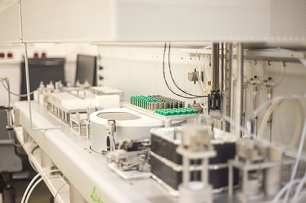
In line with the goal of creating globally connected plants, lab analytical instrumentation vendors are implementing artificial intelligence (AI), cloud services, machine learning, and Big Data Analytics to improve visibility across the supply chain, operations, and manufacturing. The provision of instruments that are sophisticated, automated, and simple to use and maintain is expected to drive the $9.08 billion market toward $14.22 billion at a compound annual growth rate of 6.6%.
"In addition to product development, favorable regulations related to food, environmental, and pharmaceutical industries to ensure safety and authenticity are driving the growth of the lab analytical instrumentation market,” said Srividhya Murali, Senior Research Analyst for Measurement & Instrumentation at Frost & Sullivan. "Furthermore, there is high demand for faster, more accurate, less human-centric operations and automated operations, which translates to greater revenue opportunities."
Frost & Sullivan’s recent analysis, Analysis of the Global Lab Analytical Instrumentation Market, Forecast to 2025, provides key findings and the CEO’s perspective to highlight important findings. It presents the revenue forecast of different regions, price and unit shipment trends, market shares of key participants, and their competitive analysis. It also offers detailed information about product application, product selection requirements, and key companies involved in the product sales of the respective sub-segments.
"Meanwhile, changing customer needs are driving a transformation in the business model from product centric to service focused. Due to the high competition in the market, manufacturers are looking to provide differentiated services such as extended warranty, services provided by certified engineers, repair services including parts, and software/hardware phone support," noted Murali. "Product customization helps vendors serve each customer segment rather than producing ‘generic,’ off-the-shelf products."
For additional growth opportunities, vendors need to:
- Engage with different groups of suppliers depending on whether the components required are specialized or general units.
- Invest in growth fields such as healthcare, infrastructure, materials, and environment/energy.
- Promote solutions that integrate analytical and medical technologies.
- Provide subscription offers based on project timeline, prices, and level of services needed.
- Develop software tools to perform Big Data analytics and observe historical data trends to predict future requirement of system maintenance service.
- Focus on environment management. As these products have a wide range of application in life sciences, they will help resolve environmental issues and achieve business goals.
About Frost & Sullivan
For over five decades, Frost & Sullivan has become world-renowned for its role in helping investors, corporate leaders and governments navigate economic changes and identify disruptive technologies, Mega Trends, new business models and companies to action, resulting in a continuous flow of growth opportunities to drive future success.