















-
- News
- Books
Featured Books
- smt007 Magazine
Latest Issues
Current Issue
Spotlight on North America
A North America spotlight exploring tariffs, reshoring, AI demand, and supply chain challenges. Plus, insights on cybersecurity, workforce development, and the evolving role of U.S. electronics manufacturing.
Wire Harness Solutions
Explore what’s shaping wire harness manufacturing, and how new solutions are helping companies streamline operations and better support EMS providers. Take a closer look at what’s driving the shift.
Spotlight on Europe
As Europe’s defense priorities grow and supply chains are reassessed, industry and policymakers are pushing to rebuild regional capability. This issue explores how Europe is reshaping its electronics ecosystem for a more resilient future.
- Articles
- Columns
- Links
- Media kit
||| MENU - smt007 Magazine
Delo’s Reliable Sealing of Silver Pins in Automotive Connectors
July 22, 2020 | Delo Industrial AdhesivesEstimated reading time: 2 minutes
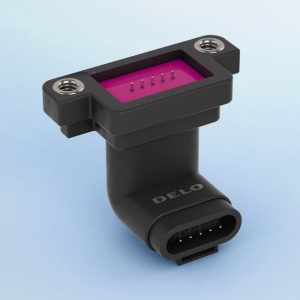
DELO has introduced a light- and humidity-curing sealant for connectors that are often found in vehicle control units or sensors. DELO DUALBOND GE4918 offers very good pin sealing properties, increases connector life, and allows efficient production.
It is necessary that connectors are reliably sealed to protect electronics from humidity, media, and corrosion. Automotive suppliers generally use silver coated connector pins since they are more cost-efficient than gold and more reliable than copper. The silver is given an additional passivation layer to protect it from tarnish and abrasion. This coating is usually based on mercaptan and has been considered difficult to bond – until now.
DELO DUALBOND GE4918 has been optimized for reliable sealing for these types of pins. It not only adheres very well to the mercaptan coating, but also adheres to the typical connector housing materials PA and PBT, even under the stringent conditions of the automotive sector. Since this new sealant is flexible in the cured state, it also compensates for the different thermal expansions of metal pins and plastic housings. It offers very good temperature resistance, up to +150 °C, and is able to keep the connectors tight after thermal shock tests ranging in temperature from -40 °C to +150 °C.
Suitable for mass production of connectors
DELO DUALBOND GE4918 enables fast and simple production processes with a high level of safety. The one-component product is easy to dispense, shows good flow properties, and can be fixed in 10 to 20 seconds with the help of high-intensity UV light. In shadowed areas that cannot reached by light, a second curing mechanism allows the adhesive to cure under the influence of air humidity. An in-line tightness test can be performed immediately after UV light fixation.
With this new sealant, automotive suppliers can benefit from its silicone-like properties without having to take special precautions in their production, as is the case with silicones. The outgassing of silicone often leads to contamination of other processes, which is particularly undesirable in painting or coating processes.
Testimonial
"We’re proud to call I-Connect007 a trusted partner. Their innovative approach and industry insight made our podcast collaboration a success by connecting us with the right audience and delivering real results."
Julia McCaffrey - NCAB GroupSuggested Items
Driving Innovation: Selecting the Right Laser Source
04/28/2026 | Simon Khesin -- Column: Driving InnovationWhen I first joined Schmoll Maschinen, I brought experience from almost every PCB process, except for laser. As I immersed myself in laser processing, I realized why it can seem so daunting to a newcomer. The complexity arises from three intersecting factors: A vast variety of laser sources: CO2, UV-nano, green-pico, UV-pico, IR-pico, and others; a diverse range of applications: Drilling, cutting, ablation, and more; and an extensive list of materials: These have vastly different absorption rates. Choosing the right machine or laser source is rarely trivial. Even for experienced engineers, answering "Which source is best?" requires examining the business's specific goals.
Institute of Circuit Technology Spring Seminar 2026: A Bright Future in Europe
04/23/2026 | Pete Starkey, I-Connect007Through the leafy lanes and spring flowers of Warwickshire and back to Meridan, the traditional centre of England, and now officially part of the Metropolitan Borough of Solihull in the county of the West Midlands, I attended the Annual General Meeting and Spring Seminar of the Institute of Circuit Technology (ICT) on April 14. Out of the AGM came notable changes in leadership at the top of the Institute: the retirement of Mat Beadel as chair and Emma Hudson as technical director. Effective May 1, Steve Driver is the new chair, and Alun Morgan is the new technical director.
ACCM Unveils Negative and Near-zero CTE Materials for Large-Format AI Chips
04/21/2026 | Advanced Chip and Circuit MaterialsAdvanced Chip and Circuit Materials, Inc. (ACCM) has launched two new materials: Celeritas HM50, with a negative coefficient of thermal expansion (CTE) of -8 ppm/°C to offset the positive CTE and expansion of copper with temperature on circuit boards, and Celeritas HM001, with near-zero CTE and the low-loss performance needed for high-speed signal layers to 224 Gb/s and faster in artificial intelligence (AI) circuits.
Fresh PCB Concepts: Designing PCBs for Harsh Environments—Reliability Is Engineered Upstream
04/23/2026 | Team NCAB -- Column: Fresh PCB ConceptsWhen engineers hear the phrase “harsh environment,” they usually think of the extreme temperature swings, vibration and shock, pressure changes, or radiation in aerospace. However, aerospace is not the only harsh environment where electronic assemblies must survive. Automotive power electronics, downhole oil and gas tools, marine controls, rail systems, defense platforms, and industrial automation equipment all expose PCBs to environments that are equally unforgiving. The stress mechanisms may differ, but the physics does not.
Advanced Packaging for AI: Reliability Starts at the Cu/Cu/Cu Microvia Junction
04/20/2026 | Kuldip Johal, MKS' AtotechThe rapid growth of AI computing, from training clusters to inference at scale, is reshaping demand across the entire electronics supply chain. Advances in technology requirements, such as higher bandwidth, lower latency, and greater compute density, are driving the development of advanced packaging technologies and transforming the PCB industry across design, manufacturing, testing, and even architecture.