












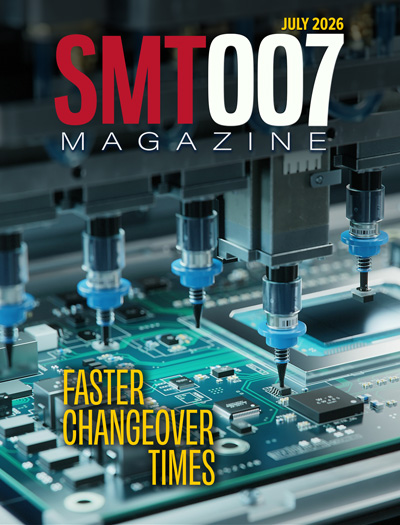



 Knocking Down the Bone Pile: Hot Air vs. Infrared PCB Rework
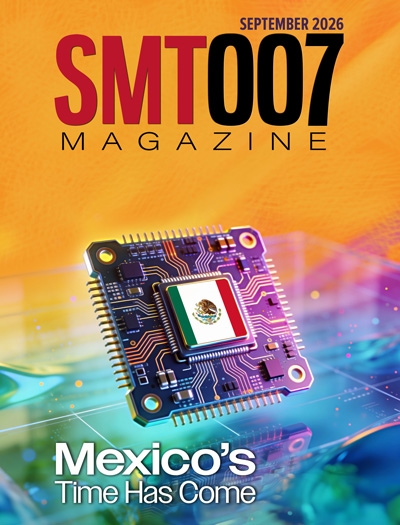
 Nolan’s Notes: Why Mexico’s Time Has Come
 Standard of Excellence: ‘Quality’ Is Your Company's Greatest Competitive Advantage





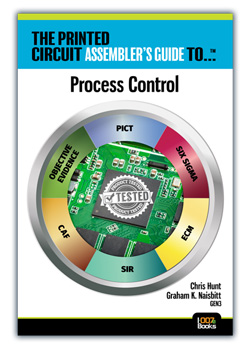
Excerpt from: The Printed Circuit Assembler’s Guide to...Process Control
Chapter 2: Objective Evidence—The Simple and Convenient Route
SIR Testing
Firstly, and most importantly, work by the standards; they make it easier for you. They have been created for your benefit by a group of respected experts. If you are considering SIR testing, whether using a test house or setting up an in-house facility, then the following complementary documents are essential reading:
- IPC-WP-019B: An Overview on Global Change in Ionic Cleanliness Requirements—revised and published in 2020
- IPC-9201A: Surface Insulation Resistance Handbook
- IPC-9202: Material and Process Characterization/Qualification Test Protocol for Assessing
- Electrochemical Performance Using the IPC-B-52 Test Assembly
- IPC-9203: Users Guide to IPC-9202 and the IPC-B-52 Standard Test Vehicle
- IPC-TM-650: Method 2.6.3.7.1 is in DRAFT, but the GEN3 original is included, unfinished, at the back of this book as useful reference material
In addition, there are these following International Standards from the International Electrotechnical Committee (IEC):
- IEC TR 61189-5-506:2019 General test methods for materials and assemblies. An intercomparison evaluation to implement the use of fine-pitch test structures for surface insulation resistance (SIR) testing of solder fluxes in accordance with IEC 61189-5-501
- IEC 61189-5-501:2021 General test methods for materials and assemblies. Surface insulation resistance (SIR) testing of solder fluxes
- IEC 61189-5-502:2021 General test methods for materials and assemblies. Surface insulation resistance (SIR) testing of assemblies
- IEC 61189-5-504:2020 General test methods for materials and assemblies. Process ionic contamination testing (PICT)
- IEC TR 61191-9 ED1:2023 Printed board assemblies—Part 9: Electrochemical reliability and ionic contamination on printed circuit board assemblies for use in automotive applications—Best practices
Using standards ensures that there is a common global measurement platform that helps catch technical errors, determines quality compliance and, thereby, reduces risk when bringing a new product to market. As can be seen in the two lists above, IPC does not have a stand-alone test method for SIR testing of assemblies. In IPC, one must refer to the guidance documents IPC-9202 and IPC-9203. The only international test standard is the IEC 61189-5-502:2021. To remedy this, GEN3 have submitted a new draft test method to IPC. (See Annex at the end of this book.)


