












 Nolan’s Notes: Automotive Is Gearing Up Again
 Standard of Excellence: Engineering Collaboration Has Become the New Sales Strategy
 Bridging the Pacific: Why Global Manufacturing Is No Longer Optional





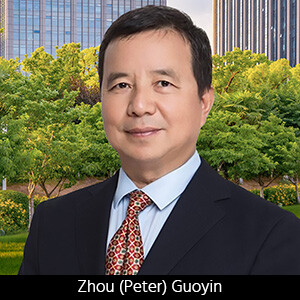
With more than 30 years of experience in corporate social responsibility (CSR) and environmental, social, and governance (ESG), Zhou (Peter) Guoyin has not only witnessed the evolution of CSR and ESG globally but has also been a key force in driving their development. As chair of the IPC-1401 standard committee, Zhou has led numerous innovative projects over the past 11 years and was awarded the SEDEX Supply Chain Impact Award in August 2024. In this exclusive interview, he shares valuable insights into the ESG field and the profound impact of IPC-1401 on the electronics manufacturing industry.
Please introduce your work experience in the CSR and ESG fields and your collaboration journey with IPC.
Zhou (Peter) Guoyin: I have been working in the CSR and ESG fields for over 30 years, with experience at every key stage in the global development of ESG. I have held significant roles with upstream suppliers, downstream customers, and third-party service organizations in the global supply chain, managing CSR and ESG responsibilities for companies such as SGS, PUMA, and Best Buy. In 2011, I joined Huawei to manage global procurement CSR. In 2014, I formed the IPC-1401 standard committee, leading 400 expert volunteers to develop IPC-1401, which has been successfully implemented in companies like Huawei, Foxconn, and Fujifilm, and their supply chains.
Congratulations on receiving the ESG Impact Award from SEDEX. Could you briefly introduce SEDEX and your main contributions?
Founded in 2004, SEDEX is one of the world's leading platforms for responsible business information exchange, helping companies manage, analyze, share, and report on ESG performance within their supply chains. It currently has more than 80,000 member companies in more than 100 countries, making it one of the most influential organizations in the ESG field.
Since 2002, I have published four professional books, including the introduction of the CSR classic, The Social Responsibility of Businessmen. Additionally, I have participated in formulating seven standards, and five of the ESG cases I was involved in received excellence awards from the UN Global Compact (UNGC) and the Joint Audit Cooperation (JAC) in the telecommunications industry. As chair of the IPC-1401 standard committee, I have led the development and promotion of IPC-1401 since 2014. After retiring from Huawei in 2023, I continue to research ESG investments and the ESG strategies and practices of international companies.
What motivates you to continue working in the CSR and ESG fields, and could you briefly introduce the characteristics of the IPC-1401 standard?
The wave of globalization in the 1990s inspired me to enter the CSR and ESG fields. My early work experience in foreign companies allowed me to observe and compare international ESG strategies and practices from multiple dimensions, leading to a deep understanding of ESG.
One of my most fulfilling achievements is developing IPC-1401, known as the "ISO 9001 of the CSR field." It distills global CSR best practices, providing companies with a simple and practical CSR tool that integrates CSR into cost leadership and differentiation strategies, marketing, R&D, procurement, manufacturing, after-sales, human resources, and facility management. It recommends that companies compare their compliance obligations with laws, ethical standards, industry norms, customer requirements, and strategic needs, proactively identifying and managing CSR and ESG risks and opportunities, and achieving four expected outcomes: compliance assurance, customer satisfaction, risk control, and efficiency improvement.
Read the rest of this interview in the Fall 2024 issue of IPC Community.


