








 Dan’s Biz Bookshelf: Four Important Books You Need to Read (Not Just Say You Have)
 Marcy’s Musings: Advancing the Advanced Materials Discussion
 The Marketing Minute: Cracking the Code of Technical Marketing





Advancements in Thermal Management: Material Talk With DuPont
February 6, 2025 | Marcy LaRont, I-Connect007Estimated reading time: 6 minutes
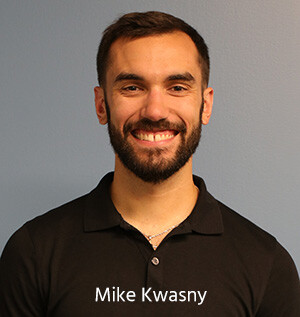
As our DesignCon coverage continues, this insightful discussion featuring Mike Kwasny, business development manager at DuPont™, delves into technologies and innovations in electronics manufacturing featuring their unique material solutions, including their Kapton® film and Pyralux® laminate lines.
Marcy LaRont: Mike, it’s good to see you. It is day two at DesignCon. The expo opened a few hours ago and I know you are seeing some solid booth traffic. Let’s talk about heat and materials. We are all dealing with a lot of heat. What has DuPont been up to in this area?
Mike Kwasny: DuPont has been doing a lot of exciting work in thermal management and these materials we're developing span our entire Interconnect Solutions business. Here at DesignCon, we are showcasing products from our Films business, our Laird business, and our Laminates business.
We have the Kapton MT and MT+ films, which have been around and remain an ideal solution for certain applications, both of which also have excellent electrical insulation. We're always working to push the boundaries and achieve even more thermal conductivity. We are actively working with customers to create better materials that contain the properties they’re looking for.
Similarly, on the Laminates side, we announced last year that we launched our Pyralux ML product, which is a heat-generating material for flexible heaters in medical, automotive, and other applications. Then, we are developing a thermally conductive laminate as well, which helps dissipate.
LaRont: The laminate side is attacking both giving heat if you need it or taking it away if you don’t. We don't talk about heat generation as much as heat dissipation but extreme cold is also a harsh environment for electronics.
Kwasny: One of the unique opportunities we have seen is in the automotive and EV spaces. Typically, you want to take heat out of the battery. But if you are in cold weather and you have an EV in the winter, these batteries don't last long. So, you actually may want to put some heat back into it to help the batteries work more efficiently and last longer. That's a unique opportunity for heat generation that you may not think about when having a thermal management conversation.
LaRont: I was in Chicago last year during a record cold front, and it was all over the news that EVs were dead on the sides of the road.
Kwasny: Yes, you hear a lot of those stories.
LaRont: Mike, I’m somewhat familiar with your Pyralux and your Kapton products used in flex circuitry. What is the Laird technology that you’ve partnered with for the Tgard™ product?
Kwasny: That's a really cool product. It's a collaboration between our Laird business unit and our films business unit, combining that Kapton MT+ films I mentioned with Laird's adhesive systems, as well as their processing capabilities to make parts.
We did this in a collaboration working directly with the customer who came to us saying, “We need something that has easy adhesion to the product that we're trying to develop, but also gets the heat out and maintains electrical insulation.” So, we worked together to identify what properties they needed and basically, how we could solve their problems. Through that collaboration with that customer, between Films and Laird, Tgard came out as a new product for the Laird portfolio, capitalizing on the thermal conductivity and dielectric strength of Kapton with the adhesive and parts manufacturing elements that Laird has.
LaRont: Wow, that is interesting and is just another example of how material science is evolving so rapidly right now.
Kwasny: Yes, we’ve got to push the boundaries every day.
LaRont: Can you elaborate further on specific market sectors and the problems that you are solving with these products?
Kwasny: I mentioned automotive batteries. That's an important segment where we're seeing big needs in thermal management, trying to put heat back in. But also, with the Tgard product, we get heat out of the batteries and keep them from overheating, which can also be a significant challenge in terms of thermal runaway in the batteries.
In terms of aerospace, these airplanes need to be in working order for decades, 20-30 years, and having too much heat in the circuits and the electronics of those airplanes will degrade them faster. They may not short out instantly, but they'll degrade faster over time. Having better thermal management in those electronics will help the airplanes to continue operating at peak function for a longer period of time.
The defense segment is another big area where the products face harsh and extreme environments. Warfighters go into every imaginable environment, whether it's deserts in the Middle East or extreme cold in the Arctic. The electronics need to function whether it's hot or cold, not overheating or getting too cold. They must keep that balance to function well, so the warfighters stay safe and complete their missions.
LaRont: It's pretty important stuff. That's for sure.
Kwasny: It's getting more important every day.
LaRont: Material technology and heat dissipation have got to be one of the hottest topics in electronics today, pun intended.
Kwasny: Yes, almost every customer we talk to says, “What can we do about heat? How can we get this heat out better? How can we manage this heat that we're seeing as we're trying to make our electronics stronger and more powerful?” More power creates a lot of heat.
LaRont: I attended a presentation this morning that said that the challenges of heat dissipation and thermal management with signal integrity and reliability requirements have created quite a puzzle for electronics manufacturers that just gets more and more difficult to solve.
Kwasny: Especially with AI and supercomputing. Yes, it is going to get increasingly difficult.
LaRont: Which is why it's great that DuPont has these products.
Kwasny: We're here to help.
LaRont: Mike, is there anything else you'd like to share?
Kwasny:, I would just say that DuPont is dedicated to being a good partner for our customers and helping them solve their problems. If customers are out there having problems with heat and they don't know what types of materials to use, you can talk to us. We'd be happy to work through it with you as we did with Tgard. We can develop new products to meet your needs.
LaRont: I know you work really closely with customers on R&D. I had the opportunity to visit your technology center last year, which was very interesting. It’s a live lab available to customers, which is a unique and important offering.
Kwasny: That’s a really good point. Our Sunnyvale Technical Center is based right near where DesignCon is happening and it is a full lab. We have all the capabilities and technical expertise there. We always welcome customers to come out, bring their parts, and let’s work through your challenges together. We help them find solutions and we can help them. We show the material seets we have the capabilities for testing and development, and other things like that to help them understand what they need and how our materials meet those needs.
LaRont: Mike, it's been good talking to you. This is interesting stuff. I will look forward to hearing more as new products develop.
Kwasny: Thank you, Marcy.
Sponsored Link: DuPont Industries & Applications
Share on:


Testimonial
"In a year when every marketing dollar mattered, I chose to keep I-Connect007 in our 2025 plan. Their commitment to high-quality, insightful content aligns with Koh Young’s values and helps readers navigate a changing industry. "
Brent Fischthal - Koh YoungSuggested Items
Aismalibar North America Showcases Advanced Thermal Management Solutions at The Battery Show North America 2025
09/18/2025 | AismalibarAismalibar North America, a leader in high-performance thermal management solutions, will present its latest innovations at The Battery Show North America and Electric & Hybrid Vehicle Technology Expo 2025 in Detroit, Michigan, October 6–9, 2025, where attendees can meet the team at Booth #5929 to explore materials engineered for demanding EV and high-power electronics.
September 2025 PCB007 Magazine: The Future of Advanced Materials
09/16/2025 | I-Connect007 Editorial TeamMoore’s Law is no more, and the advanced material solutions being developed to grapple with this reality are surprising, stunning, and perhaps a bit daunting. Buckle up for a dive into advanced materials and a glimpse into the next chapters of electronics manufacturing.
Akrometrix Announces Next Generation Thermal Warpage Measurement Tool the PS600T
09/05/2025 | Akrometrix LLCAkrometrix, LLC, the leading provider of Thermal Warpage and Strain Metrology Equipment for semiconductor and electronics industries, recently announced the next generation in thermal warpage metrology with its PS600T system.
Flexible Circuit Technologies to Host Free Flex Heater Webinar
08/18/2025 | Flexible Circuit TechnologiesGlobal Supplier of flexible circuits, flex design services, and assembly/box-build services, Flexible Circuit Technology will host their latest webinar, "Thermal Precision Meets Flexibility: The Technology Behind Heater Circuits" on Tuesday, August 26th, 2025 at 11 AM EDT.
Candor Elevates PCB Fabrication Services with Continued Facility Upgrades
04/28/2025 | Candor CircuitsOntario-based circuit board manufacturer, Candor Circuit Boards has recently completed a series of facility upgrades to improve their PCB offerings. These investments will allow Candor to provide higher volumes of complicated boards more efficiently with better yield. The new technology has allowed the company to take on exciting high technology projects and collaborations in industries such as Military and Aerospace, Medical, Energy and more.