


















 Elementary, Mr. Watson: Waking Up Europe's PCB Giants
 Connect the Dots: Getting the PCB Quote Right
 Powering the Future: What Engineers Get Wrong About Designing for Reliability





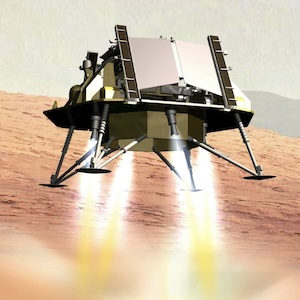
Airbus has been selected by the European Space Agency (ESA) and Thales Alenia Space (TAS - a joint venture between Thales (67%) and Leonardo (33%)), the ExoMars industrial prime contractor, to build key systems for the ExoMars lander that will safely place the Rosalind Franklin rover on the surface of the Red Planet.
After entry and descent through the Mars atmosphere and a parachute assisted braking phase, the landing platform provided by Airbus will ensure a safe landing on the surface of Mars and support the deployment of the rover onto the surface.
Kata Escott, Managing Director Airbus Defence and Space UK said: “Getting the Rosalind Franklin rover onto the surface of Mars is a huge international challenge and the culmination of more than 20 years’ work. We are proud to have built the rover in our state-of-the-art Stevenage cleanroom and delighted now to develop the project to ensure its safe delivery to Mars. Rosalind Franklin will be the first Martian rover able to analyse samples from two metres below the surface in its search for past or present life. The mission will supercharge our space know-how in the UK, and will advance our collective understanding of our solar system."
UK Technology Secretary Peter Kyle said: “This inspiring example of world-class British science will bring us one step closer to answering long-asked questions on potential life on Mars. Landing the first ever home-grown rover on Mars, Airbus will not only help Britain make history and lead the European space race but also bring hundreds of highly skilled jobs and investment as we secure Britain’s future through our Plan for Change.”
Under contract from TAS, who are leading the Rosalind Franklin mission, Airbus teams in Stevenage will design the mechanical, thermal and propulsion systems necessary for the landing platform to ensure the touchdown is safe in 2030. This will include the landing structure, the large propulsion system used to provide the final braking thrust, and the landing gear to ensure the lander is stable on touchdown. The lander will feature two ramps that will be deployed on opposite sides to enable the rover to be driven onto the Martian surface using the least risky route.
Airbus teams in Stevenage have designed and built more than 120 propulsion systems for more than 90 spacecraft, providing chemical, electric and cold gas systems for telecoms, Earth observation, science and exploration missions. The ExoMars landing system will need to slow the landing platform from 45m/s at the end of the parachute descent phase to less than 3m/s before touchdown using retro rockets.
Airbus designed and built the Rosalind Franklin rover in the bio-burden cleanroom in Stevenage, before delivering it to TAS in 2019. Launch was originally scheduled for 2022, but the mission had to be postponed due to the Russian-Ukraine conflict.
Airbus is working with TAS, ESA and NASA to maintain and upgrade various elements of the Rosalind Franklin rover in preparation for its planned launch in 2028 on a NASA supplied launcher. This includes the accommodation of NASA provided Radioisotope Heater Units (RHUs) to keep the rover warm on the Martian surface as well as a new software mode to allow the rover to quickly transition into an autonomous state after landing. The rover is planned to touchdown on the surface of Mars in 2030 to avoid landing during the planet’s global dust season.


