
















 It’s Only Common Sense: When the Cheapest Board Becomes the Most Expensive
 The Chemical Connection: Employee and Operator Empowerment in the Age of AI
 The Big Picture: Not One, But Three Grey Rhinos





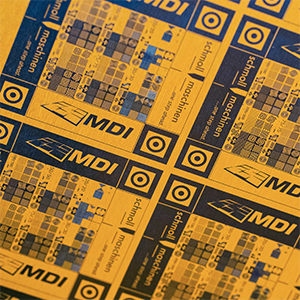
Orbel Corporation in Easton, PA, proudly becomes the first PCM facility in the U.S. equipped with Schmoll’s MDI Direct Imaging system. This installation empowers Orbel to support customers with greater precision and quality.
Key benefits include:
- Compact Design: Easily replaces older units without increasing cleanroom footprint.
- Granite Stability: Ensures precision for high-accuracy demands.
- Automation: Reduces operator inputs and maximizes efficiency.
- Advanced Imaging: Automatic target recognition, even on challenging surfaces (RGB+IR Combi Ringlight).
- Superior Alignment: UV-Marker system for precise front-to-back alignment.
- Optimal Etch Quality: High-res photohead for straight sidewall profiles, tuned to specific photoresist.
"The MDI Direct Imaging system from Schmoll has made a real impact on our production capabilities. We’re seeing faster turnarounds and more consistent results across the board. From design input to the final printed image, everything moves quicker and more smoothly. The automatic alignment feature has noticeably enhanced our accuracy, and being able to serialize each product adds both value and enhancing traceability to our workflow," shared members of the Orbel team. " The system also gives us detailed production logs, which have improved how we monitor and manage our operations. Most importantly, we’re seeing more uniform, repeatable quality—which means higher yields and greater overall efficiency."
They went on to state, "What stood out to us right away was the improved image quality. The level of detail and consistency we can now achieve is simply on another level. This has had a noticeable impact on our end product, especially in applications requiring tight tolerances and sharp feature definition."
The Schmoll MDI system utilizes advanced photohead technology, combining a powerful UV-LED light source with a DMD (Digital Micromirror Device) chip to generate high-resolution images.
The DMD chip itself consists of millions of micromirrors whose precise orientation controls the direction of the UV light, effectively shaping the projected image. This technology enables the transfer of intricate design features onto photosensitive resist materials.
To ensure the stability and definition of these imaged features, the system allows for adjustment of the needed wavelength ratio used during exposure. Operating across multiple UV wavelengths, the MDI system can be finely tuned to accommodate a wide range of photoresists and substrate materials. This broad compatibility makes it a highly versatile and flexible imaging solution for diverse manufacturing requirements.
The team commented, “Having this kind of imaging power on the production floor gives us more confidence in what we deliver. It’s not just about meeting specs, it’s about exceeding expectations."
The Schmoll and Orbel partnership is a strong example of how modern manufacturing technology, backed by effective collaboration and expertise, can drive real progress.
From the initial conversations to the final installation, the partnership between Orbel, Schmoll America, and Schmoll Maschinen Germany was built on open communication, trust and a shared vision for innovation. Each team brought its own strengths to the table, localized support and responsiveness from Schmoll America, deep technical know-how from Germany, and Orbel’s forward-thinking approach to adopting advanced technology.
By working closely together at every stage, from sample testing to operator training, we ensured a smooth implementation of direct imaging technology. The result: faster ramp-up, minimized downtime, and a system running at full potential from day one.
This collaboration reflects what’s possible when the right partners come together with a common goal: pushing manufacturing forward through smart, connected solutions.


