
















 The Fearless Connector: Why I Chose the Hard Road
 The Clean Truth: The Clean Truth About No-Clean Flux
 Global Sourcing Spotlight: Beyond China Plus One—Building a Truly Global Supply Network






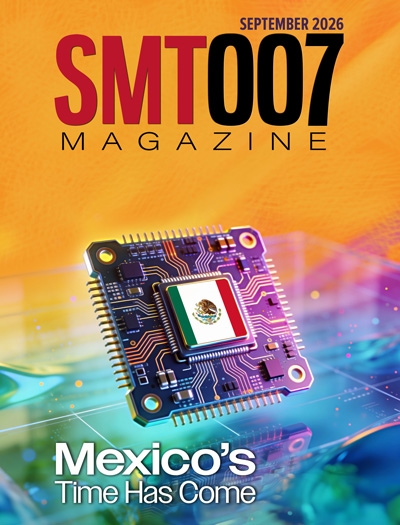
On a weekday morning in the Bajío, Mexico, a training lab reviews accept/reject criteria before a line changeover. By mid-afternoon, a cross-border shipment clears in El Paso that left Ciudad Juárez at dawn. Farther south, a university team finalizes intake for a new electronics pathway blending online modules with factory practicums. These scenes—routine yet transformative—explain whyMexico is becoming the most strategic partner for the United States to ensure a resilient, innovative, and sovereign electronics supply chain in North America.
In a world shaped by constant disruption, the Global Electronics Association has tracked a decisive shift: Supply chains are being redesigned around regional resiliency and workforce capability, not just unit cost. Our “Interconnected: Global Electronics Trade in an Age of Disruption” analysis underscores five durable realities:
- Supply chains are de-risking and regionalizing
- Standards-based quality is the universal language of trust
- Trade policy is now a design constraint
- Digital traceability is moving from optional to essential
- Sustainability has become a board-level requirement
Mexico sits at the confluence of all five.
From Fragility to Resilient Design
A decade ago, electronics were optimized for scale and cost. Today, they are engineered for resilience and responsiveness. Logistics variability, tariff regimes, export controls, and end-market expectations now shape what gets built and where. Mexico’s advantages—proximity to North America, time zone alignment, deep manufacturing know-how, and a rapidly maturing technical workforce—are turning constraints into competitive strengths. When a buyer in Austin or Detroit can start the morning with real-time quality data from Guanajuato, the business case speaks for itself.
(Editor’s note: Some insights were gathered from “Interconnected: Global Electronics Trade in an Age of Disruption” by the Global Electronics Association.)
Continue reading this article in the November 2025 issue of SMT007 Magazine.


