













 It’s Only Common Sense: No One Is Buying Because Your Brand Is Boring
 Dan’s Biz Bookshelf: ‘Deep Future: Creating Technology That Matters’





Estimated reading time: 5 minutes
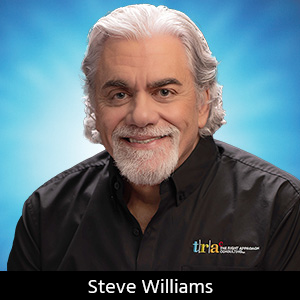
The Right Approach: The Uncomfortable Truth Behind Government Shutdowns
This is not a political piece. Government shutdowns, like the one we experienced in November, hurt everyone, and our industry is feeling the impact. My MilAero/Defense clients are reporting business softening because of the stalling of new programs and economic uncertainty. You may be surprised to find that history reveals the strategy behind shutdowns as well as the solutions.
Shutdowns: A Notorious Power Play
At 40 days, the latest government shutdown was the longest in U.S. history, but every shutdown follows the same script: Politicians posture, deadlines pass, and federal workers go without paychecks. Americans watch in frustration, wondering why their leaders can't simply do their jobs. Shutdowns aren't failures of leadership; they're calculated power moves from a playbook that spans millennia.
I’ve spent decades studying leadership, both firsthand in corporate boardrooms and reading about history's bloodiest battlefields during my research for my latest book, Notorious: Leadership Lessons from History's Most Notorious Leaders. My discoveries are disturbing: Today's political brinkmanship is a strategy that Catherine the Great, Napoleon Bonaparte, and Genghis Khan would recognize instantly.
The Ancient Playbook of Crisis Manipulation
Catherine the Great didn't stumble into power; she orchestrated a coup during Russia's most chaotic moment. Napoleon didn't wait for France to stabilize after the revolution; he seized control during the crisis. Genghis Khan didn't inherit a unified Mongolia; he weaponized tribal instability to forge the largest contiguous empire in history. Same tactics, different centuries, but the same results.
Every shutdown is essentially a hostage negotiation. Catherine the Great mastered this principle: Create a crisis, force an impossible choice, then consolidate power while everyone else scrambles for survival. She understood that when people feel threatened, they'll accept solutions they would reject during stable times. Sound familiar? That's because you were watching it play out in real time on Capitol Hill.
Creating Enemies to Unite Followers
Genghis Khan faced a fragmented Mongolia of warring tribes with no loyalty beyond their immediate clan. His solution was to create a common enemy. Unite disparate groups against a shared threat. Transform chaos into purpose.
Politicians unite their bases using the same strategy. During shutdowns, watch how quickly "the other side" becomes the enemy threatening America's future. Both sides weaponize shutdowns to solidify their bases, knowing that fear and anger drive political engagement far better than policy discussions ever could. Khan's descendants conquered most of the known world with this tactic. Modern American politicians use it to win midterm elections.
Strategic Chaos: Not Accidents, But Playbooks
What Americans find frustrating is the feeling that our leaders are incompetent, and shutdowns happen because Washington is broken. That narrative is comforting, suggesting the problem is fixable through better people or reformed processes. The reality is far more cynical. These aren't accidents. These are strategic power moves politicians have been deploying for centuries.
Napoleon Bonaparte rose from artillery officer to emperor by recognizing what others missed: Crisis creates opportunity. While France's Directory government was floundering during instability, Napoleon positioned himself as the leader who could restore order. He didn't solve the crisis; he used it as a stepping stone to absolute power.
Today's politicians are no different. A shutdown creates urgency, dominates the news cycle, forces opponents into difficult positions, and energizes base voters who see their representatives "fighting" for principles. The chaos isn't a bug in the system; it's a feature that savvy politicians exploit.
The Incentive Problem: Who Feels the Pain?
Here’s where history offers not just a diagnosis, but a prescription. Genghis Khan instituted a revolutionary leadership principle that modern Washington desperately needs: His officers didn't eat until their soldiers ate. Leaders shared the hardship. They felt the consequences of their decisions first, not last. Contrast that with Congress during a shutdown. Federal workers, from TSA agents to park rangers and air traffic controllers, go without paychecks, with many forced to continue working and driving Ubers to pay the bills after their day job ends. Meanwhile, members of Congress continue to receive their healthy six-figure salaries without interruption.
Fix the incentives, and you fix the problem. Make it the law: During government shutdowns, congressional salaries should be the first to stop. No back pay. No exceptions. Watch how quickly "principled stands" become negotiated solutions when politicians face the same financial pressure as the workers they're supposed to serve.
The Sun Tzu Solution: Strategic Pressure
Sun Tzu wrote in The Art of War that supreme excellence consists of breaking the enemy's resistance without fighting. Applied to shutdowns, this means creating consequences severe enough to prevent the tactic from being deployed in the first place. What if those consequences extended beyond paychecks to automatic triggers that freeze campaign fundraising, provisions that delay federal contracts to districts of representatives who vote against funding bills, or mechanisms that make the political cost of shutdowns exceed their strategic value? The goal isn't punishment, but the realignment of incentives. Make crisis manipulation more costly than collaboration.
Al Capone's Lesson: Follow the Money
Al Capone understood that people respond to incentives, and the most powerful incentive is money. He built an empire, ensuring everyone in his organization benefited from cooperation and suffered from betrayal.
Apply this ruthlessly simple principle to Washington: Politicians should benefit from a functional government and suffer from dysfunction. Instead, we've created a system where a crisis creates fundraising opportunities, media attention, and base mobilization. Instead, demand the same accountability of our elected officials as we do of our businesses.
The Uncomfortable Truth
History doesn't repeat, but it rhymes. Catherine the Great’s tactics in 18th-century Russia work just as effectively in 21st-century America because human nature doesn’t change. Leaders still crave power, fear still motivates, and crises still create opportunities to exploit. The question isn't whether politicians will stop using these tactics, but whether Americans will demand a system where such tactics become self-defeating.
Genghis Khan's officers didn't eat until their soldiers did. It's time Congress lived by the same principle. Are we ready for that conversation?
This column originally appeared in the December 2025 issue of PCB007 Magazine.
Share on:


More Columns from The Right Approach
The Right Approach: Electro-Tek—A Williams Family Legacy, Part 2The Right Approach: Electro-Tek—A Williams Family Legacy, Part 1
The Right Approach: Get Ready for ISO 9001 Version 6
The Right Approach: ‘Twas the Night Before Christmas (Harley-style)
The Right Approach: I Hear the Train A Comin'
The Right Approach: Culture Change is Key to a QMS
The Right Approach: Leadership 101—Be a Heretic, Not a Sheep
The Right Approach: Leadership 101—The Law of Legacy