











 Flex Connections: Material Selection in Nickel vs. Copper Tabs
 Flex Connections: Four Lessons in Engineering Judgment for PCB Designers
 Flexible Thinking: ‘Let There Be Light’–Emitting Diodes!





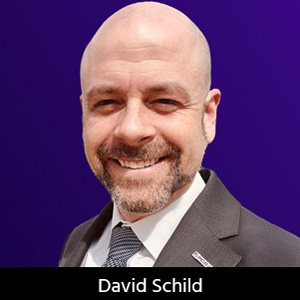
David Schild, executive director of the Printed Circuit Board Association of America (PCBAA), leads an organization focused on the domestic manufacture of PCBs and substrates to support America’s critical microelectronics supply.
In the continuation of this interview, David talks about the ways his organization is aligning its priorities with Washington, in particular, the Executive Branch. It might feel like a snail’s pace, but progress could mean financial support and more domestic security, even for the smaller companies.
Marcy LaRont: David, it’s a new year, and a new legislative and budget cycle. What's on deck for the PCBAA in 2026?
David Schild: I'm really excited for what will be our fifth year. We now have 81 active members, which is incredible considering we started with five. I'm very confident we will pass the 100-member mark this year. Our membership isn't just getting bigger; it's getting more diverse. We welcome training and testing companies, and specialty metals and solder companies.
Most interestingly, the drone community is getting on board. Recently, the Federal Communications Commission weighed in the availability allowance for critical components from what's called the Covered Entities list. Paraphrasing the commission, in December they said, “Hey we're going to block new foreign-made drones because we see a national security risk."
LaRont: What has been the attraction for drone companies to PCBAA?
Schild: Drones are electronic platforms. Most of its manufacturing is done overseas. Some U.S. drone manufacturers have joined PCBAA because they understand that microelectronics are a critical component for defense and security. The government will buy these products and begin restricting the importation of foreign military aerospace drones.
LaRont: How does this diversity in membership affect your ability to have a political impact?
Schild: I'm always very focused on how many congressional districts, how many states are available, because it opens doors in the House, the Senate, and at Pennsylvania Avenue. From a membership perspective, I think this will be our biggest year ever.
From a legislative perspective, we are focused on engagement with the Executive Branch. There are positive indications from the Department of Commerce, the Department of War, and the Department of Transportation.
To be clear, it's a different approach than we saw under the Biden administration. Co-investment and partnership will be some of the buzzwords, and I’m encouraged by the efforts of Secretaries Lutnick and Duffy.
On Capitol Hill, We’re focused on the introduction of a Senate companion bill to HR 3597, the Protecting Circuit Boards and Substrates Act. We are adding co-sponsors, which is very important. Our legislative process requires the House and the Senate to pass bills in parallel, and then we send them onto the President.
I'm confident there are many senators who believe in this idea. We will write and introduce that bill, and then must lobby for support.
LaRont: David, can you clarify the process in getting the bill passed in both the House and Senate? How do you approach that?
Schild: Both the House and the Senate have their own priorities. With any piece of legislation, the bills must go through both bodies, and then we reconcile those differences in a conference committee before they go to the President. While it won't be identical to HR 3597, I'm confident the Senate bill will contain some of the same major provisions. Whether you're a senator from Montana or you're a member of the House from Connecticut, the goal is the same: to reshore and restore industrial manufacturing capability and capacity in the United States.
The Senate is a more deliberate body and moves at what feels like a glacial pace. Just getting a Senate bill written and introduced is its own achievement, and we shouldn't undersell the amount of work necessary to get that done. After that, we need to sign up co-sponsors, have the relevant committees, and hold hearings. The legislative process is slow.
For those who make products for a living and have to move at the speed of business, this legislative pace can be frustrating. But remember that Intel and Micron had to suffer through this same laborious process to get to the pot of gold at the end of the rainbow with $52 billion in it.
LaRont: David, the core of American business—no matter the industry—has traditionally been small- to mid-sized companies. As PCBs and substrates are recognized as critical components in electronics systems for domestic defense and security, is there room for the smaller PCB manufacturer?
Schild: I often get asked about this in Washington. There is contraction in our industry, sometimes through consolidation. Some of our largest U.S. PCB fabricators became so through the acquisitions. We’ve seen that on the supplier side as well. But there are many smaller companies that do specific work to put PCBs in tractors or autonomous systems or in the water and power grid. That need will continue to exist.
As much as the federal government is helping the biggest organizations, there are aspects of federal policy focused on supporting small business. If you are a $50, $100, or even $500 million microelectronics company in the United States, nobody in the government wants to see you go under. In those situations, they know $1 million or $5 million could be a game changer.
I would hate to see fewer producers overall, simply because it introduces risk. Whether it's cars or the critical infrastructure sector, we want a diverse supply chain. Washington wants a resilient supply chain.
If you're a small or medium-sized business, don’t give up hope. There’s certainly a lot of love and affection from Congress for family businesses—community members who have been doing this for multiple generations. I believe that diversity in size and scope for electronics manufacturing will continue.
LaRont: David it's always interesting to hear your perspective. Here's to 2026 and all that will come out of it, in very positive ways.
Schild: Thank you, Marcy.


