











 The Fearless Connector: Why I Chose the Hard Road
 The Clean Truth: The Clean Truth About No-Clean Flux
 Global Sourcing Spotlight: Beyond China Plus One—Building a Truly Global Supply Network





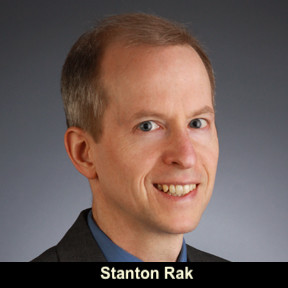
Rebranding as the Global Electronics Association is not the only major change happening at APEX EXPO this year. There’s also a shift in the scope of the technical program as heterogenous integration and other advanced packaging methodologies come into the mainstream at both the component and system levels. We spoke with Matt Kelly, CTO and conference general chair, Devan Iyer, chief strategist for advanced electronic packaging, and Stan Rak and Udo Welzel, now in their fourth year as chairs of the Technical Program Committee, about what distinguishes the conference this year.
Nolan Johnson: Matt, what is the vision of the Global Electronics Association for advanced electronic packaging (AEP), and how do you see that reflected in this year’s technical conference?
Matt Kelly: Thanks, Nolan. We're really excited. This year will be important for the conference as we're making many changes. The first thing attendees will notice is we have shifted the name to the Advanced Electronic Packaging Conference. This is synonymous with the messaging of silicon-to-systems that we have been discussing for the past few years.
In an engineering context, advanced electronic packaging is a well-known term and is synonymous with silicon to systems. It refers to a combination of component-level and system-level packaging that together form a complete system.
Johnson: Devan, what are the reasons for focusing the technical conference on AEP currently?
Devan Iyer: In March 2025, Matt and I, along with Peter Tranitz, Chris Jorgensen, and Tracy Riggan of the Technology Solution team, created an advanced electronic packaging strategy for the benefit of the global electronics industry. We executed that strategy throughout the year. We started with one joint session at IEEE’s 75th Electronic Components and Technology conference in May, which was the first time we officially talked about why we are doing what we are doing. The reception to that session was very positive.
Then, in July, we developed and hosted a workshop in Berlin specifically focused on component-to-system level packaging for automotive and industrial applications. In October, we expanded our focus into Asia with a fully packed session in Taiwan at the IMPACT conference, that brought together OEMs, IDMs, OSATs, and EMS and PCB professionals. We extended that approach to Malaysia in November for an AEP workshop primarily centered on high-performance computing and memory.
We have been steadily advancing this concept of system-level and component-level packaging integration over the past year through these different technical sessions and workshops. Now, we are turning it into a full-fledged conference for APEX EXPO 2026.
Kelly: Devan and I have been told over and over that there is a big need for a multidisciplinary approach to helping OEMs and IDMs solve their product development challenges. In other words, many conferences are siloed by a particular topic. The value of this conference is the cross-pollination it enables, having one spot to get information on leading-edge design, testing, materials and assembly, including PCB and PCBA. What better place than APEX EXPO to have that take hold and take shape? Where better to bring the industry together to discuss all the domains? So, this year’s technical conference is an expansion of what we've been offering through the Association for many years.
Johnson: It sounds like this is not the same type of advanced packaging conference as many people might think when they hear the term.
Kelly: That’s correct. It’s unique, and that distinction is important. It is also worth mentioning that we are not trying to compete with the other conferences organized by professional societies like IEEE and others. The objective is to bring component and system level packaging experts together to share their views about upcoming challenges and discuss possible paths to mitigate those challenges.
Johnson: Let’s now talk about the conference programming. Udo and Stan, you are quite experienced in your roles as co-chairs of the Technical Program Committee (TPC). What do you want readers to know about the program schedule for this year’s technical conference?
Stan Rak: Traditionally, the technical conference took place on Tuesday, Wednesday, and Thursday. It now starts at 1:30 p.m. Monday. If you want to learn the latest and greatest in advanced electronic packaging for high performance computing, Monday will be a great session.
Udo Welzel: We have created a schedule for Tuesday and Wednesday to allow for as many time slots as possible over these two days. To maximize time use, we'll have sessions presenting five papers in a row. We will also run sessions until 5:30 p.m., instead of ending at 5 p.m.
Johnson: Will all the focus of the conference be on advanced packaging?
Welzel: Consider this a strategic evolution. Matt and his team have introduced the concept of “silicon to systems.” The TPC has been working with Matt and Devan, embracing this evolution in the setup of sessions and the topics covered. That doesn't mean we are throwing overboard what has always been the conference's strength. The topics that have been going strong for many years are preserved.
Johnson: What was the quality of abstracts received this year and what is the acceptance rate for the ones that become conference presentations?
Rak: We received over 100 abstracts, with an acceptance rate of about 70%. The quality of the abstracts was excellent, covering design, materials, assembly, and test domains.
The most significant process change we instituted was the Early Indication of Interest by participants to submit an abstract that fit best into the session topics. This provided the TPC early insight into the abstracts well before the deadline.
Johnson: Devan, you were instrumental in securing new contributions and new contributors. Tell us about that.
Iyer: We have about 21 invited speakers lined up across the three special sessions on Monday and Thursday, and for the regular sessions on Tuesday and Wednesday. We tried to identify and solicit speakers who bring expertise into the six foundational blocks under the advanced electronic packaging strategy: design, materials, assembly, reliability and metrology, test, and manufacturing.
Each session has a theme. The theme for Monday afternoon is advanced electronic packaging for next-generation compute, with a mix of speakers across the ecosystem. The same methodology—inviting speakers based on their market domain and expertise—is applied to automotive and industrial sessions and the aerospace and defense sessions.
Johnson: For traditionalists—printed circuit board fabrication, design, assembly, solder and metallurgy—does this signal a move away from those sorts of traditional topics?
Rak: No, it doesn’t. Topics like solder joint reliability, materials, and protective materials are still very important and foundational. But the components are also evolving. HI packages can be relatively large and quite heavy, and it makes the interconnect process more challenging just to manufacture the assembly, let alone meet the reliability and environmental testing requirements.
We're definitely not backtracking on the reliability aspects that bring a lot of attention to our technical program. We're just making it more inclusive to the component world, because how the components are made and designed, and the materials they use, all affect overall reliability once that component is attached to a circuit board.
Johnson: What if someone wants to attend but doesn’t feel that their business touches advanced packaging or advanced electronics?
Welzel: That’s the misunderstanding or the narrow view that we would like to break up. This packaging influences what you are doing in your daily life. I agree with Stan: Reliability is one of the most important aspects, and we have always been very strong in reliability topics, harsh environments, automotive, defense, and aerospace.
These sectors are looking very deeply into reliability. Attendees definitely appreciate that we are looking beyond traditional topic boundaries.
Advanced electronic packaging also affects thermal design in particular. Because that is a very important aspect, there are dedicated sessions on thermal design, as well as general electrical design. In many cases, you must strike a balance between reliability and design aspects. Sometimes you design for reliability, but you also design for electrical function, electromagnetic compatibility, and so on. Hence the co-design and system co-optimization aspects will also be discussed.
Rak: Thermal management impacts almost every market application, from high-performance computing for AI applications in a data center, to a microprocessor for advanced driver-assisted system (ADAS). Managing heat is a recurring theme across many presentations, with papers on thermal interface materials and specific cooling methodologies.
The core pillars are still with the conference. We have design and simulation, materials, and components. We have assembly, test, and manufacturing. We have quality, metrology, reliability, and digital manufacturing. Those core pillars are still there. We're adding the chip-level packaging to the discussion, but we still look at the same five core pillars—not silos—that you need as a foundation to be successful.
Johnson: What are each of you most excited about with the changes to the technical conference?
Iyer: My excitement centers on this being a conference that connects the component- and system-level packaging worlds. In my decades of experience in this field, I have seen too many conferences and events that are siloed. Our conference will attempt to bring in expertise from the component and system levels to focus on the commonalities in design tools, materials, assembly and test. Having a conference that brings the interdisciplinary expertise from the entire ecosystem together to engage in discussion is unique and that is very exciting to me.
Kelly: I'm most excited about the number of OEM and IDM leadership companies that are coming to APEX EXPO. We have IBM, Intel, NXP, AMD, and Raytheon, along with an impressive list of EDA, equipment, and materials suppliers. We have attracted the key movers and tech influencers in the industry, the ones that drive new technologies forward in the core market segments of HP compute, EV/automotive, industrial, aerospace, and defense.
This is where the needle is being moved in electronics, and that technology trickles down into other segments over time. This is no longer just a PCB-focused or assembly-based conference, though those segments are absolutely critical to what we're doing. But this approach is through the lens of what the OEMs or final producers need and want, and that's why the expansion into design, materials, test, and other areas augments our base in PCB and PCBA.
The caliber of speakers is very high, and their senior leadership—including the CTOs and those in charge of worldwide operations—will be in attendance. Beyond our core engineering speaking base, we've got higher-level technologists, and I’m really excited about it.
Welzel: I am excited that high-voltage remains a strong topic at the conference. I'm looking forward to having an exchange on that. At the same time, with autonomous driving, we are moving into an era where electronics inside the car are primary to the car’s operation, something we have not had before.
Then there is high-performance computing and advanced substrate technologies: stacked microvias and embedded circuitry. Reliability will be well covered at the conference. I’m looking forward to discussing high-voltage electronics and reliability at the conference.
Rak: Udo and I, both coming from the automotive industry, have been consciously trying to grow that aspect of the standards process, and the conference is a good way to do that. These technical papers often serve as the basis for discussions and the adoption of new standards. I’ve estimated that over 30% of the submitted papers have some impact on the automotive industry, related to EV, automotive, harsh environment, or solder joint reliability. These things are still important to our aerospace and defense colleagues, but we've made significant strides in expanding these things as they relate to automotive electronics.
Johnson: There are so many traditional attendees from EMS suppliers, PCB fabrication, and design, but this is a shift in scope. Matt, what does this conference signify as to where the industry is going?
Kelly: I want attendees to come away with a true grasp of the rate and pace of technology that is occurring. Based on our industry experience, we know there's a lot of reinvention and innovation underway. The rules are changing. Roles in the ecosystem are changing. To stay competitive, companies are working hard to reinvent themselves. We're doing the same things at the Global Electronics Association: Developing the conference as we've described shows that we're reinventing ourselves for the market because we need integration of all these advances—in chips, chip-based technologies, and HI packaging. It has a direct impact on next-generation UHDI PCBs, and we know how those are assembled. So, there's a direct connection between the advances in silicon and packaging and their impact on our conventional attendee base in PCB and PCBA.
Nolan, if we're not looking forward as we are now, then what inevitably happens is that our conventional base gets surprised and is unprepared for adaptation. We're reaching forward to say, “Here's what's coming, here's the impact, and here's what should matter to you.”
Johnson: I look forward to the upcoming technology conference. Do you have any closing thoughts?
Welzel: I want to thank the Technical Program Committee (TPC) for their work. The team comprises 23 industry volunteers and seven association members. It is a very collaborative effort, and we are 100% on schedule, which is a notable accomplishment. It is a great team.
Rak: This is a very hands-on committee; we're doing what amounts to peer review of the abstracts, the papers, and the presentations. A typical TPC member is asked to review 10 papers and provide thoughtful feedback to the authors on how to improve or modify them. We're seeing that, as people return year after year, they're getting stronger at writing technical papers.
Iyer: I want to acknowledge and appreciate the work done by our colleagues on the Technology Solutions team. Chris Jorgensen’s work, in particular, is meticulous, and his dedication and follow-up are highly appreciated. He was instrumental in bringing the conference to life; following up with all the speakers and in having all the sessions ready to deliver this March.
Johnson That’s a great way to end our conversation. Thank you.


