











-
- News
- Books
Featured Books
- I-Connect007 Magazine
Latest Issues
Current Issue
Beyond the Rulebook
What happens when the rule book is no longer useful, or worse, was never written in the first place? In today’s fast-moving electronics landscape, we’re increasingly asked to design and build what has no precedent, no proven path, and no tidy checklist to follow. This is where “Design for Invention” begins.
March Madness
From the growing role of AI in design tools to the challenge of managing cumulative tolerances, these articles in this issue examine the technical details, design choices, and manufacturing considerations that determine whether a board works as intended.
Looking Forward to APEX EXPO 2026
I-Connect007 Magazine previews APEX EXPO 2026, covering everything from the show floor to the technical conference. For PCB designers, we move past the dreaded auto-router and spotlight AI design tools that actually matter.
- Articles
- Columns
- Links
- Media kit
||| MENU - I-Connect007 Magazine
Vern Solberg: A Designer's Focus on High Density
April 30, 2026 | Marcy LaRont, I-Connect007 MagazineEstimated reading time: 2 minutes
Vern Solberg is a distinguished member of the Global Electronics Association Raymond E. Pritchard Hall of Fame and has served as chair or vice chair of many committees, developing technical standards and implementation guidelines, including the IPC-7090 series, which focuses on design for manufacturing and reliability for electronic assemblies. He’s a long-time contributor to Design007 Magazine, and he conducted a half-day tutorial at APEX EXPO 2026, where he addressed 2D, 2.5D, and 3D packaging and ultra-high density hybrid bond interconnect. I caught up with Vern at the show and asked about his pivot from addressing more standard design challenges to his focus on high-density circuits.
Marcy LaRont: Vern, it's always good to see you. You are an icon in our industry. Tell us about how you got started in the electronics industry and found yourself in this wonderful place.
Vern Solberg: Coming out of school, I was trained to be an industrial designer, but I couldn't find work, as the term “industrial design engineering” wasn’t terribly meaningful at that time. So, I found a job as a draftsman with ITT, a communications company at Vandenberg Air Force Base. It just so happened they had an R&D facility in Palo Alto that needed help. One of the guys who was working on a new technology asked if I knew how to design printed circuit boards. I did not. He became my mentor in PCB design, and that really kicked off my career.
LaRont: It is always interesting how we end up doing the exact thing that becomes central to our careers.
Solberg: I eventually moved to Southern California for a job where they needed someone with a mechanical background, which I had. At that point, my work went beyond just PCB design to more of a full mechanical system design, including the PCBs. At my next company, they needed somebody who could design PCBs for volume manufacturing. This company was getting into automation and needed all its PCBs redesigned accordingly. Eventually, I moved back to Northern California (South Bay Area) and pretty much stayed there. As one’s career progresses, though, you end up in management, and I wanted to be back on the engineering side. Finally, I started my own small design company, NuGrafix Group, in Los Gatos, focusing on surface mount technology, which was becoming an important technology in the design and fabrication of PCBs.
To continue reading this interview, which appeared in the April 2026 edition of I-Connect007 Magazine, click here.
Testimonial
"Advertising in PCB007 Magazine has been a great way to showcase our bare board testers to the right audience. The I-Connect007 team makes the process smooth and professional. We’re proud to be featured in such a trusted publication."
Klaus Koziol - atgSuggested Items
Designing Without a Rulebook: When Engineering Becomes Innovation
05/05/2026 | Stephen V. Chavez, Siemens EDAWhat if the very rules that made you successful as a PCB designer are the ones now holding you back? This reminds me of walking the floor and attending sessions at both PCB West 2025 and APEX EXPO 2026, where one common theme stood out: More designs with traditional PCB “best practices” simply don’t apply. It’s not because they’re wrong, but because the problems we’re solving have fundamentally changed. In some cases, those best practices can actually limit performance. This is where PCB design moves beyond optimization and into something far more challenging: designing without a rulebook.
Custom LIDAR Optics Support Mission-Critical Performance
05/05/2026 | PRNewswireMeller Optics, Inc. has introduced custom fabricated LIDAR optics that can be engineered for specific UV to IR transmission requirements featured in airborne, ground, and maritime defense systems.
Trouble in Your Tank: In Complex Systems, Design Rules Aren’t Optional
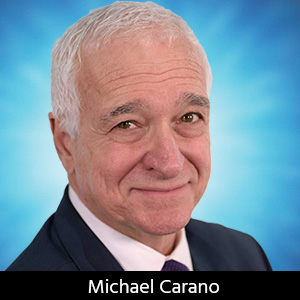
05/06/2026 | Michael Carano -- Column: Trouble in Your TankThere is no question that the electronics industry, especially in circuit board design and fabrication, advanced packaging, and innovation throughout the value chain, has seen a significant transformation, whether it be in materials, system architecture, HDI and ultra HDI, semiconductors, or chiplets. AI and high-performance computing (HPC) are driving change across several fronts, including material properties, assembly techniques (think hybrid bonding), and power management.
EMI Strengthens Test Capability with Acculogic Flying Probe System
05/04/2026 | Express Manufacturing, Inc.Express Manufacturing, Inc. (EMI), a global electronics manufacturing services (EMS) provider, has added the Acculogic Scorpion 980E Flying Probe Test System to its inspection and test operations, giving the company greater flexibility in how it validates and supports today’s increasingly complex electronics.
SEMI Appoints Julie Rogers Executive Director of the ESD Alliance
05/01/2026 | SEMISEMI, the industry association serving the global semiconductor and electronics design and manufacturing supply chain, announced the appointment of Julie Rogers as Executive Director of the Electronic System Design Alliance (ESDA), a SEMI Technology Community.