













 It’s Only Common Sense: Make Your ‘Account’ the Whole Organization
 Dan’s Biz Bookshelf: ‘Building a Story Brand 2.0’





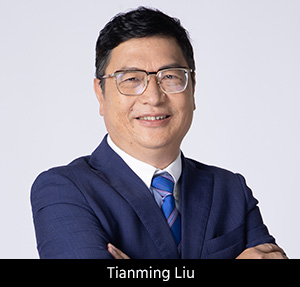
I recently interviewed Mr. Tianming Liu, founder of FUJI PCB and FSQuality. His company is built by blending Japanese manufacturing discipline, Chinese execution speed, and an unwavering commitment to quality and customer service. His story is anything but ordinary. From studying and working in Japan for more than a decade to transforming a struggling PCB factory into a profitable operation before launching FUJI PCB, he has shown vision, determination, and continuous innovation.
We discussed the company's impressive capabilities, its growing presence in North America, the impact of AI on PCB technology, and why resilient global supply chains matter more than ever. He also shares the philosophy that has guided every decision he has made. His insights are valuable whether you're designing the next generation of electronics or simply interested in where our industry is headed.
Dan Beaulieu: Mr. Liu, it is a pleasure to meet you. Today, we will discuss your company and your views on the global PCB market as well. Tell me about the name of the company.
Mr. Tianming Liu: The pleasure is mine, Dan. Good to meet you as well. The name of my company is FUJI PCB. The name "FUJI" originates from my personal experience and also represents the starting point of our company. In 2009, after returning from Japan, where I had studied and worked for 13 years in Japanese enterprises, I co-founded FUJI PCB together with three Japanese PCB companies. Additionally, our brand identity is FSQUALITY. “FS” represents our Chinese company name “Fu Shi” (富仕), while also standing for FAST—fast response, fast delivery, and continuous evolution.
We are a PCB manufacturer that takes speed and quality as our core competitive advantages.
Beaulieu: I think your company’s name might be confusing. Are you part of the larger FUJI Corporation?
Liu: FUJI PCB is the parent company of FQC (our Thailand factory) and is not currently part of any larger corporate group. However, with the continued support of our customers, our vision is to grow into a larger global enterprise capable of providing continuously enhanced products and services.
Beaulieu: Very good. What does the company do?
Liu: We specialize in the research, development, manufacturing, and sales of PCBs, and are committed to providing high-reliability, high-technology PCB solutions to customers around the world.
Beaulieu: Please describe your capabilities in detail.
Liu: We primarily provide high-end PCB products to leading global customers in industrial automation, automotive electronics, communications equipment, and medical electronics. Our product portfolio includes ultra high layer count PCBs (up to 50 layers), HDI boards (any-layer interconnection and HDI), high-frequency and high speed PCBs (for 5G/6G, AI servers, and optical modules), metal-core PCBs for high heat dissipation applications, rigid-flex PCBs for 3D packaging, embedded capacitance and embedded resistance PCBs, as well as embedded copper coin PCBs designed for highly integrated and miniaturized solutions.
Whether customers require highly customized, technically challenging, high-reliability products or large-volume production, we have mature manufacturing capabilities and proven delivery performance.
Beaulieu: Now, what is your story? What is your background and how did you get involved in electronics?
Liu: I was born in 1966. After graduating from Beijing University of Chinese Medicine, I worked as a civil servant for the State Administration of Traditional Chinese Medicine of China. In 1992, I went to Japan to study and later attended the Faculty of Pharmaceutical Sciences at the University of Tokyo.
In 1997, I joined a Chinese factory of a Japanese PCB manufacturer as a translator. At that time, the factory was newly established and operating at a loss. When my initial two-year contract expired, I chose to stay and become the factory manager. Although the Japanese general manager, who had more than 30 years of experience, questioned my decision, I implemented a series of bold reforms that turned the factory from loss to profitability within just three months.
Afterward, I was gradually promoted to Acting Deputy General Manager. However, I soon realized I had reached my career ceiling at this company. On Aug. 28, 2009, together with my partner Huang Zhicheng, I founded FUJI PCB in Sihui, Zhaoqing, combining Japanese Lean manufacturing with China's fast execution.
This cross-cultural and cross-industry background has enabled me to understand both the Japanese pursuit of manufacturing excellence and the speed and flexibility of the Chinese supply chain.
Beaulieu: What is your philosophy of doing business?
Liu: Our business philosophy can be summarized in one sentence: People first, quality above all. I believe that only when employees achieve both material and personal fulfillment can they devote themselves wholeheartedly to their work and produce truly high-quality products.
Only these products can earn the long-term trust of high-value customers, which in turn promotes the growth of both our employees and our company. This creates a positive and sustainable cycle. This is not just a slogan.
When I started the company, many employees left stable jobs to follow me, which means I have a responsibility to help them build better lives. That commitment remains the starting point of every business decision we make at FUJI PCB.
Beaulieu: What are your plans for North America?
Liu: Our core philosophy remains the same, but in North America, we place greater emphasis on compliance, transparency, and local responsiveness. In North America, integrity, quality, technology, service, communication, and compliance are all part of our corporate DNA.
In addition, we attach great importance to supply chain transparency, full traceability from raw materials to finished products, and strict data security and IP protection.
Through our U.S. office, we can also provide technical communication without time zone barriers. Although the market is different, our roots remain the same, while our branches adapt to the local environment.
Beaulieu: Can you talk about the market? How do you see things today?
Liu: The PCB industry is undergoing a profound structural transformation. High-end applications such as AI computing, high speed communications, and autonomous driving are driving explosive demand for high layer count PCBs, HDI boards, and high-frequency/high speed PCBs. The technological value and strategic importance of PCBs are being re-evaluated.
Meanwhile, the conventional multilayer PCB market for consumer electronics has become more competitive due to rising raw material costs and the inability to fully pass those costs on to downstream customers.
Overall, AI is redefining the value of PCBs. Changes in end-market demand are rapidly and directly reshaping the rules of our industry. In the future, highly reliable and technologically advanced PCBs will be revalued by the market. We are at the center of this transformation, and we are fully prepared for it.
Beaulieu: Why is this a good time to increase the company’s presence in North America?
Liu: First, the industry is at a unique window of opportunity. The AI-driven revaluation of the market is prompting North American customers to reassess and diversify their PCB supply chains. They are looking for new partners with both strong technical capabilities and resilient supply chains.
Second, we are ready. With the launch of our Thailand manufacturing facility, the establishment of our U.S. sales center, and the continued expansion of our AI-related production capacity, we now have the manufacturing capability, technology, talent, and localized service needed to support leading customers in North America.
Third, we offer differentiated value. Our business model combines Japanese quality, Chinese execution speed, and Southeast Asian supply chain resilience. This combination is exactly what I believe the North American customers need today.
Page 1 of 2