














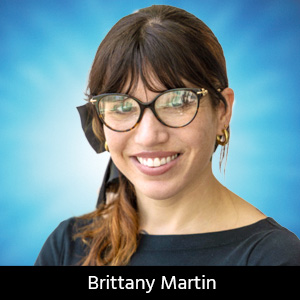
 The Marketing Minute: Why I Wrote 'Marketing in 17 Minutes'
 Happy’s Tech Talk #49: Stop! Do You Have a Digital Strategy for the Future?
 It’s Only Common Sense: Why Engineering Expertise Has Become the Ultimate Competitive Advantage





Beaulieu: By the way, what is FUJI PCB’s reach globally?
Liu: Our manufacturing capacity and sales network are built around two principles: staying close to our customers and reducing supply chain risk. We have a number of locations:
Our Rayong, Thailand factory has completed Phase I, with a monthly production capacity of 80,000 square meters for high layer count PCBs and HDI products. Phase II is adding an mSAP production line, overcoming the limitations of traditional subtractive processes for fine-line manufacturing. The factory began trial production in 2024 and is equipped with the most advanced manufacturing equipment available in the industry.
We have sales centers in Hong Kong, Japan, Taiwan, Singapore, and the United States. We establish our presence in the world's most active technology markets for one purpose only: to bring our engineering teams closer to our customers and to respond faster than our competitors.
Beaulieu: To your customers and potential customers, why should people choose to work with you?
Liu: Our greatest strength is our almost obsessive passion for PCB manufacturing itself. Personally, I have worked in this industry for 31 years. That passion has evolved into a corporate culture of treating people with sincerity, doing everything with dedication, and making customer satisfaction our only KPI.
Driven by this culture, we have built strong capabilities in product quality, delivery performance, and business integrity. More importantly, what we offer is a technology partnership, not simply a supplier-customer relationship. When your engineers encounter design challenges, our technical team actively participates in DFM optimization. When your project faces an urgent delivery schedule, we mobilize the resources of our entire company to ensure on-time delivery. When your supply chain requires greater diversification, our Thailand factory provides a reliable China+1 manufacturing solution.
If you have never worked with FUJI PCB before, you may never realize how much value a PCB company that combines Japanese lean manufacturing, Chinese execution efficiency, and Southeast Asian manufacturing capacity can bring to your products.
Beaulieu: Can you tell me about the special capabilities of your new facility in Rayong, Thailand?
Liu: Our Thailand factory has several unique advantages. First, we have implemented a one-piece flow production system. This is a production management model that we developed ourselves. If an abnormality occurs at any stage of the manufacturing process, the entire production line stops immediately. This forces every process to focus on preventing problems before they occur, ensuring that every PCB is manufactured in a controlled and compliant environment.
Second, our hardware is state-of-the-art. The factory began trial production in 2024 and is equipped entirely with the latest generation of advanced manufacturing equipment available in the industry. Third, it enjoys an excellent strategic location. The factory is only a short distance from Laem Chabang Port, allowing for extremely fast logistics and shipping response. Fourth, it has significant strategic value. The Thailand facility serves as the cornerstone of our China Plus One strategy for supporting North American customers, effectively reducing geopolitical and supply chain risks.
Beaulieu: I assume this facility was built for the China Plus One challenges?
Liu: Yes. At the same time, it is also a validation of our corporate culture. We want to prove that FUJI PCB's manufacturing standards and management philosophy can be successfully replicated and continue to evolve in another country.
Beaulieu: What are your plans for growth in the U.S.?
Liu: Our first objective is to build market awareness. Through industry exhibitions, technical seminars, and direct customer visits, we want more North American customers to understand FUJI PCB's technical capabilities and service strengths. Our second objective is to begin with small-volume validation projects. We welcome customers to start with small-volume, technically challenging projects. We believe our product quality and delivery performance will demonstrate our capabilities. Our third objective is to build long-term strategic partnerships. Once trust has been established, we hope to become a strategic supplier for our customers' core product lines, rather than simply serving as an alternative source.
Beaulieu: Do you have plans to partner with American companies as well?
Liu: Yes, absolutely. We are actively seeking partnerships with leading American companies in industrial controls, automotive electronics, AI computing infrastructure, and communications equipment. To support these partnerships, we are expanding our advanced manufacturing capacity in both China and Thailand while recruiting more internationally experienced talent.
Beaulieu: Are you planning to build or buy a factory in the U.S.?
Liu: We have great confidence in the long-term potential of the U.S. market. At this stage, our priority is to provide North American customers with a high-quality and highly resilient supply chain through our Thailand manufacturing facility and our U.S. sales center. In the future, if customer demand and market conditions are right, we do not rule out the possibility of further strengthening our presence in the U.S. through partnerships, joint ventures, or acquisitions. Every decision we make is driven by one core objective to serve our customers better.
Beaulieu: Are you looking for partnerships at this time?
Liu: Yes. We fully understand that even the best products need to be seen. We are actively reaching out to more North American customers through industry exhibitions, technical forums, and direct customer engagement.
If you are looking for a PCB partner that combines Japanese quality, Chinese speed, and Southeast Asian supply chain resilience, we would be delighted to start a conversation with you.
Beaulieu: What is your customer base? What technologies and markets are FUJI PCB and FS Quality best suited for?
Liu: At present, our core customers are concentrated in the industrial controls and automotive electronics sectors. However, our fastest-growing business is in AI servers and optical modules, and this segment is rapidly becoming a new engine of growth for our company. From both a technology and market perspective, we are best suited to serve the following applications: ultra high layer count PCBs, any-layer HDI, and high-frequency/high speed PCBs; AI computing infrastructure, including servers, switches, and optical modules; automotive electronics, including autonomous driving systems, LiDAR, and domain controllers; industrial controls and medical electronics requiring high reliability and long product life cycles. We have already established close partnerships with leading customers in cutting-edge fields such as humanoid robots and LiDAR and have built a number of strong technological advantages in these areas.
Beaulieu: What is your company’s specialty?
Liu: We do not simply manufacture PCBs; we build responsibility and earn trust. From a technical standpoint, we have the capability to support your most complex product requirements while creating measurable value for your business. From a service standpoint, we provide proactive communication and technical support that go beyond customer expectations. From DFM optimization to delivery tracking, what you experience is not a distant supplier, but a true technology partner who understands your needs.
Beaulieu: What are your plans? Where do you want to be in five years?
Liu: Five years from now, I hope FUJI PCB will become an AI-first global PCB company. Our specific goal is to increase the percentage of revenue generated by AI-related products from approximately 20% today to more than 60%. By then, FUJI PCB will not only have established a strong position in the AI era but will also become an indispensable part of the supply chain for leading technology companies in North America.
Dan: How do you plan to achieve this?
Liu: Our strategy is to strengthen our core business while going all in on AI. Industrial controls and automotive electronics are the foundation of our cash flow, and we will continue to strengthen these businesses.
However, our strategic focus is on the AI sector. We aim to establish substantial, large-scale partnerships with the world's leading customers in AI servers, optical modules, high speed switches, and other emerging applications. At the same time, Phase II of our Thailand facility, our mSAP production line, and our research and development of glass substrate technology will continue to progress according to plan. Our objective is to make our AI business the primary engine driving the company's future growth.
Beaulieu: Are there other related products in development?
Liu: Yes. We are currently focusing on two major technology development areas. The first is through-hole isolation technology. Our goal is to achieve any-layer interconnection through through-hole processing technology, breaking through the manufacturing limitations of traditional HDI technology. This will provide us with a significant technological advantage in the field of HDI.
The second is glass substrate technology. Although it is still at an early stage, we have already begun making strategic investments in this area. Glass substrates are widely regarded as one of the key materials for next-generation advanced packaging, and we do not want to be unprepared when that future arrives.
Our philosophy toward innovation is to keep our feet firmly on the ground while building today's products and keep our eyes on the future while preparing for tomorrow's technologies.
Beaulieu: As we close out this interview, is there anything you would like to add?
Liu: The PCB industry rarely stands in the spotlight, but it is the backbone of the entire electronics industry. In the AI era, that backbone is becoming stronger and more sophisticated, and FUJI PCB and FS Quality are positioned at the very center of this transformation. We are not striving to become the largest PCB manufacturer. Instead, we aspire to become the PCB company that customers trust the most. If you are re-evaluating your PCB supply chain, or looking for a reliable technology partner for your next AI project, give us an opportunity. Let us prove our capabilities with a single PCB.
Finally, I wish all of your readers, and everyone who cares about the PCB industry, good health and continued success.
Beaulieu: Mr. Liu, thank you very much for your time. Thhis talk has definitely been eye opening.
Liu: Thank you Dan.
Page 2 of 2


