















 Nolan’s Notes: Automotive Is Gearing Up Again
 Standard of Excellence: Engineering Collaboration Has Become the New Sales Strategy
 Bridging the Pacific: Why Global Manufacturing Is No Longer Optional





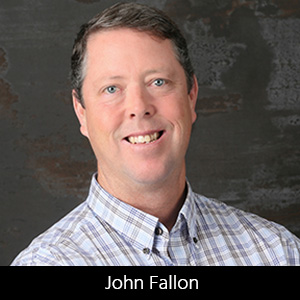
A strategic partnership between Minnesota-based All Flex Solutions and Flex Interconnect Technologies (FIT) will provide value-added engineering and quick-turn, prototype flexible PCB manufacturing with All Flex’s high-volume flex fabrication. The new alliance offers customers a more comprehensive flex solution and an opportunity to streamline their flex PCB supply chain. All Flex CEO John Fallon discusses the strategic rationale behind the partnership, the benefits of having a “100-year plan,” and how the combined organization is positioning itself for optimum growth.
Marcy LaRont: John, congratulations on your recent announcement. Can you share some background on All Flex?
John Fallon: We were originally founded in 1977 as Printed Circuits Inc. In 2020, PCI merged with All Flex Inc., which was founded in 1991 in Northfield, Minnesota. Now, we have joined with Flex Interconnect Technologies, which was founded in 1998 by Chetan Shah and Dean Matsuo in Milpitas California.
We provide interconnect solutions to mission-critical applications, such as defense and aerospace, medical, quantum computing, low-earth orbit satellites, launch vehicles, and all high-reliability applications.
LaRont: Before we get into the announcement, tell me a bit about your trademarked products, Maxi-Flex and CatheterFlex, and your molded flex offerings.
Fallon: We've always specialized in extended-length applications, which our Maxi-Flex refers to, and they can be built into anything. We build circuits up to 100 feet long. Our CatheterFlex is another product used in electrophysiology catheters, which are used to map or ablate the heart. They’re very thin circuits, up to about 10 feet long.
Molded flex is a legacy product that simply gives flexible circuits a more rigidized shape than they might otherwise have. Molded flex products hold their shape well.
We also have high temp flex for cryogenic circuits used in quantum computers, which can withstand extreme temperatures essentially as cold as deep space.
LaRont: Extreme thermal capabilities are certainly important right now between AI servers and quantum computers.
Getting into the announcement of All Flex’s recent acquisition, you are majority-owned with financial group, Granite Partners. How long has Granite Partners been involved with All Flex?
Fallon: Granite was a minority investor in All Flex in 2007 and took a majority stake in 2010. They are long-term, patient capital partners; they are private equity, not VC. They were founded by a group of families in St. Cloud, Minnesota, with a mission to grow and build companies headquartered in Minnesota, where we are.
As they were approaching seven years, they asked themselves why they would want to sell the great companies they had acquired. They decided to move to an evergreen fund where they don't buy and sell companies; they buy and hold them. They are looking at the long term, with a time horizon of 100 years, and beyond. That gives us the ability to think, not quarter-to-quarter or year-to-year, but over multiple years and decades.
As far as our culture and growing our value proposition, they are always asking, “Are we doing the right thing for our customers and our stakeholders over the long term?” They continue to build and grow companies that are headquartered in Minnesota, but many of these companies have since gone on to build partnerships out of state—like our partnership with Flex Interconnect Technologies—and out of country.
LaRont: You announced a formal partnership with Flex Interconnect Technologies (FIT). What does that mean exactly?
Fallon: We use “partnership” because we do not believe everything is simply transactional. We think of it as a partnership between two great organizations becoming one. But FIT is now part of All Flex Solutions. It is wholly owned by All Flex Solutions, and it will continue to be a partnership in how the facilities work together toward a total flex PCB manufacturing solution for our customers.
We've known Chetan and Dean for many years. Our cultures are very similar, and as they looked toward retirement, they thought All Flex and Granite would be the perfect stewards for the great company they created. They approached us, and we agreed it would be a natural and mutually beneficial fit.
LaRont: That's great. Tell me more about FIT.
Fallon: FIT and All Flex focus on similar core markets: milaero and medical. They build flex, rigid flex, heaters, and also offer some assembly. They are strong in engineering and prototype manufacturing.
Our core markets, mission, vision, and cultures were all clearly aligned. Merging our companies into one is a strategic step forward for us as we aim to be a fully integrated, end-to-end rigid-flex and flexible-circuit solution. This allows us to move further up the supply chain, engage with customers earlier in the lifecycle, have a bit more input on DFM, and provide our customers with a one-stop shop.
LaRont: It's particularly important in today's market to offer an end-to-end solution that can simplify your customers’ supply chain. Did you have similar customer rosters?
Fallon: There was some customer crossover, but we also have some new customers, and there will be expansion opportunities by deepening our relationships with some of our larger customers that have been looking for a partner for prototype work.
LaRont: How will bringing the two organizations play out logistically?
Fallon: We've been working in the background on pre-integration and pre-close activities even before the official partnership announcement. Of course, there’s still work to do at each organization. Chetan and Dean have graciously agreed to stay on through the end of this year to help with integration efforts and make for a smooth transition between the teams. They have a very close, family-like atmosphere at FIT.
Our next step is hiring a general manager who will take over the day-to-day operations of the FIT business from Chetan and Dean and allow them to enjoy their retirement.
LaRont: This is an exciting development for you and your customers. What are you most looking forward to?
Fallon: We're looking to continue our expansion and grow our share of business with our customers, provide them with solutions, and find new ways to partner with them. Now, providing rapid prototyping and early design collaboration will create a seamless pathway from concept through mid and long-term production.
LaRont: Thank you, John, congratulations once again, and good luck with everything that comes next.
Fallon: Thank you, Marcy.


