












 It’s Only Common Sense: Win the Sale Before the RFQ Arrives
 The Marketing Minute: Marketing Is a Team Sport





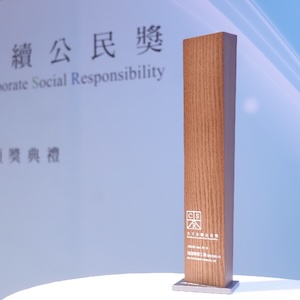
Foxconn Technology Group has been awarded 2nd place in the manufacturing category of the "CommonWealth Sustainable Citizen Award" by CommonWealth Magazine in 2026 , achieving its best result ever. Simultaneously, it also won 2nd place in the manufacturing category of the "CommonWealth Talent Sustainability Award ." This simultaneous improvement in both sustainability benchmarks demonstrates Foxconn's concrete results in continuously integrating technological innovation into ESG management and deepening sustainable governance and talent development.
This year, Foxconn's ranking improved across all four dimensions of the "Global Sustainable Citizen Award." In "Corporate Commitment," it rose from 5th place last year to 2nd place ; in "Environmental Sustainability," it rose from 5th to 3rd place; in "Corporate Governance," it rose from 8th to 6th place ; and in "Social Participation," it rose from 5th to 4th place, driving its overall ranking up from 6th to 2nd place.
Hon Hai adheres to the core concept of "Sustainable Operation = EPS + ESG " and continues to integrate sustainability into the group's operational strategy and daily management. In response to this year's theme of " AI Assisting ESG ", Hon Hai further leverages the group's technological advantages to extend AI from smart manufacturing to areas such as employee health, disability inclusion, employee care, environmental governance, and educational philanthropy, using technology to address the sustainability challenges faced by large-scale multinational manufacturing companies.
AI empowers talent sustainability: precisely safeguarding employee health and promoting diversity and inclusion.
In terms of talent sustainability and employee care, Foxconn has built an employee care system based on three levels: "disease prevention, capability recognition, and voice recognition." In preventive medicine, the group invested approximately NT$ 100 million throughout the year to promote employee health management and established a chronic disease risk grading and tracking mechanism. It completed 225 referrals for major abnormalities and managed 1,540 chronic disease cases. Furthermore, it assisted 3 employees in the early detection of cancer and facilitated their treatment. The relevant achievements were also recognized by the Health Promotion Administration of the Ministry of Health and Welfare with the "Healthy Workplace Benchmark Award - Gold Award".
In terms of diversity and inclusion, Foxconn is using AI technology to rethink the workplace possibilities for people with disabilities, shifting from "assigning jobs based on disability" to precise matching based on abilities and positions. Utilizing an AI- powered job suitability assessment system, by 2025 the group had developed over 3,000 disability-appropriate positions , matching 4,280 employees with disabilities , achieving a 100% job suitability rate and a 98% job satisfaction rate . Furthermore, through AI fatigue assessment, smart sign language, and intelligent captioning tools, the group has improved the work and learning environment and extended its disability inclusion philosophy to the supply chain. These practices have been recognized by Disability:IN in the United States as a " World's Top Disability Inclusive Business® " .
Faced with a global footprint and a large workforce, Foxconn is also building a more real-time employee support system using AI . Through mobile applications, generative AI , and data analytics, a 24/7 employee service mechanism has been established , serving 9.06 million employees and answering 24.85 million questions by 2025. Overall employee satisfaction reached 95.03 % , and AI functionality achieved a 94.12% success rate . Simultaneously, data alerts and analysis allow management teams to identify employee needs and potential risks earlier, transforming technology into more compassionate employee care.
Smart Water Management and Ecological Conservation: Creating a Governance Model for Mountains and Seas
In terms of environmental sustainability, Foxconn is using AI to drive industrial wastewater treatment towards a smart governance model that is more precise, more energy-efficient, and has a lower environmental impact . Through AI technology that can "see, calculate, and autonomously control ," the system can not only "understand" the wastewater treatment effect in real time through image recognition, but also "calculate" the appropriate dosage of chemicals based on water quality, water quantity, and on-site operational data. It can also continuously adjust the dosage based on the treatment effect, ensuring that every dose of chemicals is used where it is truly needed.
Real-world applications show that, while maintaining stable water quality, the amount of coagulant used per ton of wastewater can be reduced by approximately 30% to 50% . Reducing unnecessary chemical inputs also further reduces the generation of chemical sludge and the subsequent treatment load, resulting in multiple environmental benefits such as reduced chemicals, sludge, and carbon emissions, while also alleviating the operational burden on personnel. Through continuous accumulation and integration of water treatment data, the company is further transforming its successful experience into a replicable and scalable smart water management model. This allows AI to become not just a tool for improving efficiency, but also a crucial force for enterprises to save resources, reduce environmental burden, and practice sustainable development, driving industrial water treatment from "treating water well" to "treating every drop of water better with fewer resources."
Foxconn is also actively collaborating with businesses, academic institutions, and local communities to create demonstration sites that integrate biodiversity conservation, natural carbon sequestration, sustainable agriculture, and environmental education. Foxconn has not only established standardized processes for soil carbon sequestration surveys, biodiversity monitoring, AI- powered intelligent identification, and natural capital assessment , but also incorporated parent-child volunteer activities, allowing employees and their families to learn about the impact of invasive species on habitats through guided tours, assist in clearing and pruning dead branches and cleaning up environmental debris, conduct aquatic environmental education, and release fish fry, promoting sustainable marine resource recycling projects. This has resulted in a Satoyama -Satohai governance model that combines scientific research, community participation, and corporate ESG practices.
Science and technology education takes root in rural areas: The Starlight Project illuminates the lives of students in remote villages.
In terms of social engagement, the Hon Hai Education Foundation continues to transform the Group's technological advantages into educational influence, investing in projects such as the Hon Hai Technology Award, AI education in rural areas, AI curriculum in junior and senior high schools, and quantum education. In 2025 , it will invest NT$ 11.12 million to promote diverse technology education projects. Technology education in rural areas has evolved from hands-on workshops to long-term club involvement, with a cumulative total of 511 student club participants by 2025. Through equipment, teacher training, and competition support, the foundation is gradually building the capacity of rural schools to independently promote technology education.
In addition to science and technology education, the Hon Hai Education Foundation also continues to support disadvantaged students through the "Starlight Project." Since the project was launched, it has invested more than NT$ 110 million , taking care of 1,438 disadvantaged elementary and junior high school students, of whom 787 received one-on-one tutoring. In the 2025-2026 academic year, it supported the operation of 31 locations in 12 counties and cities across Taiwan , helping 473 students obtain after-school care and learning resources.
Hon Hai Precision Industry Co., Ltd. Vice President and Spokesperson Wu Chun-yi stated, "Sustainability is not only a corporate responsibility, but also a crucial force driving a company's long-term competitiveness. From using data to 'see diseases before they occur,' using AI to 'discover capabilities yet to be seen,' to using technology to 'hear voices yet to be spoken,' Hon Hai is continuously exploring more possibilities for combining technology and sustainability." In the future, the Group will continue to combine "technological strength" and "sustainability strength," deepen the integration of ESG and operational strategies, and work hand in hand with employees, customers, suppliers, and global partners to move towards a more resilient and sustainable future.


