












 It’s Only Common Sense: When the Cheapest Board Becomes the Most Expensive
 The Chemical Connection: Employee and Operator Empowerment in the Age of AI
 The Big Picture: Not One, But Three Grey Rhinos





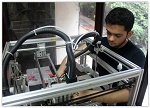
Over the past 15 years, the MIT IDEAS Global Challenge has helped MIT students turn their innovative ideas for a better world into reality. From projects such as a water-filter that provides clean drinking water to 350,000 arsenic-affected households in Nepal to the invention of a syringe that simplifies at-home injections for patients, IDEAS has recognized 128 teams that have implemented innovative service projects in 44 different countries. The program will be adding even more teams to the list of winning projects at the upcoming Innovation Showcase and Awards Ceremony on April 2. Through its focus on using innovation to help communities, MIT IDEAS embodies MIT’s mission to teach students to work wisely, creatively, and effectively for the betterment of humankind.
Innovation for the real world
At the forefront of innovation and impact, students have used their minds, hands, and hearts to apply what they have learned in the classroom to tackle some of the world’s most pressing challenges. MIT student and member of a 2014 IDEAS winning team Sidhant Pai co-founded a venture named ProtoPrint that collaborates with waste-pickers in Pune, India, to convert waste plastic into 3-D printer filament. Although Pai grew up there, he had never visited a waste facility in India until the summer after his sophomore year at MIT.
“The experience was very impactful and made me rethink a lot of my earlier convictions about poverty and upward mobility in India," he says. "I am fortunate and privileged that, during my time here as an undergrad, I was exposed to the power that well-designed technology had to disrupt the status-quo and enable social mobility.”
Combining what he learned on the ground with his engineering background, Pai created and tested prototypes to help waste pickers add value to the plastic they collected.
Beyond providing resources to create, test, and iterate a project, MIT IDEAS has provided an opportunity for students to learn valuable skills that go beyond the academic setting. Taking a project out into the world teaches students to be more adaptive, flexible, and resilient. After encountering initial roadblocks, MIT PhD student Kevin Kung’s project to turn waste into fuel transformed into an innovative organic fertilizer product for rural farmers. His company, Safi Organics, operates in Kenya.
Amrita Saigal Kamyin also pivoted her business, SaathiPads, which produces and sells sanitary pads made from locally available materials in India. Originally planning to work in rural areas with women’s groups who would run and manage their own manufacturing units, they discovered the cost would be prohibitively high. Now the company is selling the pads in urban areas at a slightly higher cost, which allows them to subsidize the products marketed in rural areas.
Page 1 of 2
Share on:



Subscribe
Stay ahead of the technologies shaping the future of electronics with our latest newsletter, Advanced Electronics Packaging Digest. Get expert insights on advanced packaging, materials, and system-level innovation, delivered straight to your inbox.
Subscribe now to stay informed, competitive, and connected.
Suggested Items
Zuken Launches E3.series 2027 With Expanded Engineering and Manufacturing Capabilities
09/08/2026 | ZukenZuken announced E3.series 2027, the latest release of its electrical design software for wiring, wire harness, fluid, and control systems design.
Battalion Advanced Technology, Penn State Launch National Security Research Collaboration
09/02/2026 | PRNewswirePenn State and Battalion Advanced Technology Ltd, have entered into two research agreements worth up to $6 million to develop advanced semiconductor platforms and high temperature materials that aim to enable next generation energy, transportation, aerospace and industrial systems while also providing critical capabilities for national security.
Target Condition: Life in the Engineering Ecosystem
08/25/2026 | Kelly Dack -- Column: Target ConditionA while back, I started thinking about the word ecosystem, a term that's become almost mandatory in discussions about electronics: the PCB ecosystem, the electronics ecosystem, and the design ecosystem. Is it more than an overused metaphor, or what if it really is an ecosystem? That question sent me down the kind of rabbit hole I enjoy. I started imagining electrical engineers, product managers, PCB designers, manufacturing and test engineers, supplier management, quality, and everyone else we work with fitting into the same kind of biological classification system we learned in high school.
Richardson Electronics to Deliver Energy Storage Solutions to Remote Alaska Communities
08/21/2026 | Richardson Electronics, Ltd.Richardson Electronics, Ltd., a global provider of engineered solutions for renewable energy and other power management applications, announced that, in collaboration with its technology partners, it will deliver 18 customized battery energy storage systems (BESS) for deployment across seven remote communities in Alaska.
Xen Project Launches Shared Functional Initiative for Safety-Critical Systems
08/17/2026 | PRNewswireThe Xen Project, an open source virtualization platform hosted by the Linux Foundation, today announced the Xen Safety Committee, a collaborative initiative for developing and maintaining shared engineering artifacts that support functional safety activities and expand Xen's role across automotive, industrial automation, avionics, robotics, and other safety-critical systems.