














 Marcy’s Musings: Additive Processes, Signal Consequences
 It’s Only Common Sense: Build Your Business on Reputation, Not Neglect
 The Marketing Minute: If Your Marketing Budget Gets Cut in Half, Then What?





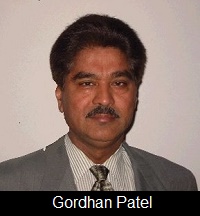
During a full day at IMPACT 2018, I had a chance to speak with American Standard Circuits’ founder and chairman Gordhan Patel. We had much to talk about after listening to several speakers from the departments of Defense and Education, and the International Trade Administration.
Patty Goldman: Well, Gordhan, we’ve had an interesting day so far. What were your impressions of the speakers and what was your motivation to attend IMPACT?
Patel: Well, we have learned a lot here as to how decision makers at Washington can help us, and what kind of policies they are discussing to do that. We're here looking for solutions to questions that we have, because it looks like the circuit board industry is a dinosaur industry, specially in USA, and dying at a fast pace. We came here to find some solutions on how we can keep this critical part of the defense supply chain from collapsing further.
Goldman: One fellow said, “Well, maybe this circuit board was meant for a TV, but they're putting it into a ballistic something-or-other.” And I was thinking, there are no two circuit boards alike. It's not a commodity. There are never two designs alike for anything.
Patel: No, there are not. That's exactly right. It's all custom. This is what makes it so difficult to compete. Every single circuit is a unique product. We are working on some boards right now that have six different technologies in them from flex to metal-backed to fine lines. I have been in this business a long time and I have never seen one like this. And now we are seeing technology like this and beyond every day.
Goldman: Is American Standard in the defense industry?
Patel: Yes, we are. Approximately 30% of our business is in the Mil/Aero sector. We have all the specs from MIL-PRF-31032, MIL-PRF-50884 and AS9100D. We work with many of the top defense contractors. I really don’t see the point of selling PCBs unless you can provide your customers with everything they need both today and in the future.
Goldman: So, what did you think about what Eric Chewning [Deputy Assistant Secretary, Department of Defense, Military Industrial Base Policy Office] had to say?
Patel: I really liked the way he approached the problems. He listened to us and he documented a lot of things that we discussed, and it looks like this is probably the most impressive and most important meeting that we’ve had out of all the other speakers. I was greatly encouraged by what he said. You know, so many times now we are seeing boards being built in places they should not be. ITAR is a good example of this. Many times, I suspect that ITAR boards are not being built by ITAR registered suppliers.
Goldman: And he did say, also, that you can come in and talk to him when time allows. Of course, that's not that easy to do, but hopefully perhaps it means you can also get a phone number or an email to send in your thoughts.
Patel: Yes. He is really focused on that. He's a true business guy—not a politician. He's looking for a solution. He's talking with people who are experts in the industry who can help him to create solutions to help this country and our business.
Goldman: How about Dr. Michael Wooten, who spoke on education and training? Was that of any use to you? I don’t know if you have the same issues that other companies have.
Patel: Yes, we do. Right now, the job market is getting tough. It's very hard to find qualified people. We've been working on that. We are hiring a lot of fresh graduates., and we're training them. We definitely have an aging high-level management team, they're all 50+, with some 60s, too.
We need to think 10, 15 years from now about where we want to take our company. My job at ASC is to provide them the long-term vision, not the short term. I'm not involved in the day-to-day business. So that's what we started doing. We started hiring the fresh college graduates. We train them, and we have internships too; every summer we have three to four interns, and if we like them, we can offer them a job.
Goldman: Do you have any trouble getting people to interview and work for you?
Patel: Yes, and everyone I talk to in our industry is having the same trouble. Over the last few years we have worked on improving benefits to our employees to help with this situation. Since Chicago area has several PCB shops, It’s easier for us to find experienced work force because we offer better benefits and better work environments than our competitors.
Goldman: What percentage would you say that you end up hiring from those that you train?
Patel: One candidate was looking for a job, but we didn't have an opening at that time. We just started this program in the last three years. So as of now we haven't hired anyone yet. We are looking in that direction for the long term. I like that because there are some work-based training programs, some grants provided for the training and everything, and that can help our business too. That will encourage us to have more people. That is one way the government can help us there. But I find the key to hiring young people either from college or a trade school is to not offer them a job but a career. People have been able to make good money in this industry and we have to point that out to the young people we are recruiting by showing them a career path.
Goldman: What do you think about the DOD getting involved in lower cost interest loans or similar for small business owners?
Patel: Lower interest loans always help if the government wants to get us rates below market, however, I think grants may be the better way to go. Subsidize us or give us additional tax incentives.
Goldman: You know, it used to be that a lot of big OEMs would sort of adopt a circuit board shop, would work closely with them, and everybody would work on new projects and such in the circuit board shop. The OEM would kind of pull them along, maybe buy specialized equipment to go in the PCB facility so that shop could make the OEM’s state-of-the-art boards.
Patel: We are doing that right now with a number of OEM customers. We are doing a lot of R&D. I'll give you a simple example. One of our larger customers was having a problem finding a supplier for one of their rigid-flex PCBs for a new medical device they were developing. It was a rigid-flex circuit board and they failed to get it from any other supplier, so they worked with us for about two years. We did a lot of prototyping and finally we were able to come up with the right design for them.
ASC is becoming our customer’s experts . A lot of OEMs have started cutting down on their R&D budget. We can be part of their R&D team. Sometimes it takes us two or three years to build the product for them, and we help them out.
Our philosophy at ASC is to invest in our customers’ R&D if they need it and they are the right partner. By that I mean a partner who will value what we are doing for them and be willing to pay the right dollars for it, then we will do it. In a way it is like paid tuition. We are learning a new technology and getting paid for it.
Goldman: That's probably something we should have brought up with the DOD because they could do that same kind of thing.
Patel: We are working with several DOD primes or sub-primes to develop new technology for them. The increase in defense spending is clearly driving innovation from our primes and we are working with them on a number of R&D projects that are testing the limits of what we might have thought was not possible several years ago.
Page 1 of 2


