











 Powering the Future: Why Thermal Management Defines the Future of Electronics
 Standard of Excellence: Engineering Is the New Sales—How Technical Collaboration Wins Business
 SMT Perspectives & Prospects: Artificial Intelligence, Part 7—Data Module 2





eSMART Factory Conference 2019, Day 1
September 2, 2019 | Happy Holden, I-Connect007Estimated reading time: 11 minutes
I had the pleasure of attending the eSMART Factory Conference in June in Dearborn, Michigan. This is the second annual conference on the smart factory. SMTA described it as "A technical conference with a focus on electronics manufacturing from software systems/processes to augmented reality and smart inspection." It was held at the rustic Dearborn Inn across the street from the Henry Ford Museum/Village and Ford Development Center.
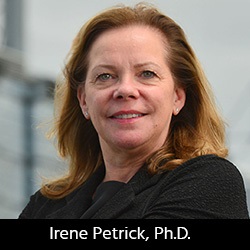
Trevor Galbraith, the conference chair, opened the conference and introduced the keynote speaker, Irene Petrick, Ph.D. Her keynote was titled, "Building an AI Ready Culture."
Irene Petrick is the director of Intel’s industrial innovations. Her keynote highlighted the overview of the elements of the intelligent factory, including:
- Software-defined industrial equipment and collaborative machines
- Self-organized, flexible production flow
- Self-aware production systems
- Human in the loop-enabled connected worker
- Real-time and reliable computer and connectivity
- Embedded equipment-to-equipment (E2E) security
In her talk, Petrick stated that AI has been a long time coming and may not be ready for everyone yet. But the technology underpinnings for AI are part of the strategic fit of a modern corporation and fit the competitive strategies and architectures for the future. As seen in Figure 1, the smart factory has already started. The underpinnings are currently in place, such as:
- Data collection
- Data aggregation and actions
- Data scoring, analytics, and model updates
- Business intelligence and results sharing
- Feedback to update models and achieve corrective actions
Figure 1: Opportunities for the eSmart Factory involve data collection analytics and resulting corrective actions (Source: Intel Presentation).
AI's contribution to data collection will be hindsight, insight, foresight, forecast, and act/adapt. Further, machine learning is one of the big opportunities for AI progression. The journey from unconnected machines to smart, connected machines leads to intelligent factories. In traditional machine learning, the output is known and has the least workload requirements; meanwhile, with advanced machine learning, the output is unknown and has the highest workload requirements.
Petrick shared that Intel’s own journey started in the ‘80s with wafer fabrication (hands-on) through the '90s until today’s lights-out wafer fabrication (no-hands). Intel conducted extensive interviews with industry professionals (411 participants and over 93 hours of interviews) to discover the stages the industry is today for digital usage [1]. The results included:
- Low usage (25%), medium usage (46%), and high usage (29%)
- The participants had multiple facilities in multiple countries (43%), changeovers or setups very frequent (73%), used no automation or control systems (19%), and work or support predominately discreet manufacturing processes (68%)
- Industries participating included petrochemical (27%), metal fabrication (29%), electrical equipment and components (17%), food and beverage (9%), wood and paper products (7%), and transportation (6%)
- All participants wanted the future intelligent factory
As important as machines are, automation and the smart factory is not going to replace all workers. AI must facilitate the coevolution of workers and operations. It will influence decision-makers and influencers at all levels. Foremost, it will address skill gaps and provide an understanding of gaps. It is the leaders and hardcore doers that will drive transformational changes.
In conclusion, Petrick emphasized leadership and how it’s all about data and trust. She advised the audience to think big, start small, be holistic, and be the partner of choice, which will be a competitive advantage.
The second presentation was by Michael Ford of Aegis Corporation on “How IPC Standards Are Pivotal for Industry 4.0 Achievement.” He provided a summary and report on how IPC-2581 and IPC-CFX (Connected Factory Exchange-2591) together are enabling the smart factory. Ford is chairman of the IPC-1782 Component Traceability Committee and has played a significant role in bringing CFX into fruition. CFX is the only free, open-source, consensus-based Industry 4.0 standard on the market for electronics assembly.
CFX was conceived and implemented because of numerous “standardless” interfaces being created all over the globe for electronics assembly. The dilemma that OEMs faced was a collection of different protocols that would require massive re-engineering to have a coherent operating system. Many were omnidirectional and incompatible, moving data from point to point but not achieving the real goal of Industry 4.0, which is improved productivity, profits, and quality. Thus, an IPC committee was formed to create a consistent, open solution that everyone could use. In a very short time, IPC-2591 was created with over 300 parties participating from over 100 companies around the world to produce a digital manufacturing standard suitable for “plug-and-play” connectivity. No licensing, contracts, or dependencies are required.
Page 1 of 3
Share on:


Testimonial
"Advertising in PCB007 Magazine has been a great way to showcase our bare board testers to the right audience. The I-Connect007 team makes the process smooth and professional. We’re proud to be featured in such a trusted publication."
Klaus Koziol - atgSuggested Items
SMTA Ultra HDI Symposium, Day 2: Fragile Supply Chains, Fierce Innovation
04/14/2026 | Marcy LaRont, I-Connect007The Arizona weather yielded another beautiful day as we gathered for the second day of SMTA’s annual UHDI symposium. After the first full day discussing the role of AI in business and the how-tos of implementation, Avondale Mayor Mike Pineda kicked off day two, proud to showcase his city and to declare its important place in the continued development of the West Valley, an increasingly important area for tech and manufacturing.
KYZEN Focuses on Aqueous and Stencil Cleaning Solutions at SMTA Monterrey Expo and Tech Forum
04/10/2026 | KYZEN'KYZEN, the global leader in innovative environmentally friendly cleaning chemistries, will exhibit at the SMTA Monterrey Expo & Tech Forum.
Solder Paste Innovations for Enhanced Reliability from MacDermid Alpha Electronics Solutions
04/10/2026 | Real Time with... APEX EXPOJason Fullerton of MacDermid Alpha Electronics Solutions discusses innovative alloys like Innolot MXE, low-temperature solder options, and polymer reinforcement strategies. Learn how these solutions address the growing demands of high-performance computing and larger component assemblies, ensuring optimal performance and cost-effectiveness.
Frank Sommer Discusses Selective Soldering Innovations for EVs
04/10/2026 | Real Time with... APEX EXPODan Beaulieu sits down with Frank Sommer, a selective soldering expert from Nordson Electronics Solutions, to discuss the resurgence of selective soldering driven by electric vehicle manufacturing, and the need for robust through-hole component integration. He also introduces Nordson's innovative SELECT Synchro selective soldering machine, designed for enhanced throughput and flexibility.
Double Win: Indium Corporation’s CW-807RS and Indium12.9HF Receive EM Asia Innovation Honors
04/07/2026 | Indium CorporationIndium Corporation®, a leading materials provider for the electronics assembly market, recently received Electronics Manufacturing (EM) Asia Innovation Awards for its halogen-free CW-807RS flux-cored wire and Indium12.9HF solder paste products.