












 It’s Only Common Sense: Win the Sale Before the RFQ Arrives
 The Marketing Minute: Marketing Is a Team Sport





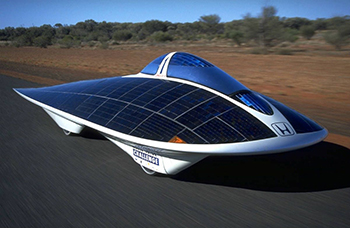
Solar vehicle bodywork has just progressed from curiosity to key enabling technology. The new 180-page IDTechEx report, “Solar Cars, Buses, Trucks, Trains 2020–2030,” explains why and forecasts the next 10 years with solar cars at $15 billion by 2030 as just the beginning. The focus is mainly road vehicles. Solar already provides significant car traction power. Learn why anyone now designing a car or car-like vehicle will be inept if they do not at least consider solar bodywork because a tipping point of viability has arrived, with big orders being placed. This is driven by newly affordable integral and conformal solar and solar sides to vehicles becoming viable (e.g., cars, camper vans, snow vehicles, small buses, boats). Prices drop for the more powerful single crystal silicon now preferred. Vehicles need less electricity. Targeting smaller batteries makes solar more appealing to combat battery shortages, fires with large batteries, size, weight, and cost of ownership.
The situation with buses, large trucks, and trains is also analyzed to understand how only special cases get at least 10% of power from onboard solar but it is becoming attractive. Learn the tipping points as new technologies become viable. Examples are affordable compound and multijunction cells (Toyota, Sharp) even as a wrap (Hanergy), expanding solar, solar windows, and adding onboard wind-power (several on-land and boats). New user propositions include transport-with-microgrid.
The expensive new Lightyear solar car has a substantial order book and record 730-km range with half the battery needed due to the best drag factor and powertrain efficiency plus good solar. Compare the parameters of the most successful solar family car, the affordable Sono Motors Sion. Over 10,000 ordered puts to shame many traditional car companies making similar pure-electric, five-seater cars without solar. For now, failure to meet the 320 km/200 mile tipping point for regular pure-electric vehicles to sell well and have good resale value is no impediment. That is because it is inspiring, offering complete energy independence for the many commuters using their cars sparingly, as does Lightyear.
The report shows how energy-positive vehicles will become commercially available. With hybrids, learn how the giant Hyundai is setting the pace with one model newly offering a solar roof adding 10% to range for many light users buying it and Toyota trials generating even more power. Others need to wake up. This is now key enabling technology. Hyundai has two other solar body types planned. There are many types of cars, car-like vehicles, boats, and planes that can be called solar vehicles (increasing range by at least 10%). Invisible or extending solar? Spray on solar? It is all here.
The executive summary, including 36 primary conclusions, assesses sales and technology, benefits and challenges, and forecasts numbers, value, and value market for solar cars for 2020–2030, separating premium from the mainstream. The introduction through Chapter 2 shows the widening choices of electric vehicle powertrain and comparison of photovoltaic parameters, benefits, challenges, performance, and manufacturers. Copper-indium-gallium-diselenide thin-film photovoltaics is pictured in action in four countries. Why? Best practice in solar boats and aircraft gives lessons. Ten key technologies for energy-independent electric vehicles are presented. High-power energy harvesting discussion puts it in context.
Chapter 3 explores solar cars in 18 countries with an emphasis on commercial success and benefits to society. Chapter 4 looks at truly solar buses and trucks and weaker precursors. Twelve countries are covered, even equatorial and Antarctic solar vehicles and multipurposing. Chapter 5 explains the modest benefit of solar on trains but the huge potential of off-grid solar power for trains mainly based on trackside panels. Chapter 6 looks at lessons from agribots, aircraft, and boats; then, the report ends with Chapter 7 on future enabling technologies, such as bodywork that both make and store energy. Learn about energy-positive and multi-mode vehicles coming, including their technologies and uses. The revolutionary “zero genset” concept of IDTechEx is explained with its $100 billion yearly potential for zero-emission mobile gensets some combining transport services.
“Solar Cars, Buses, Trucks, Trains 2020–2030” is part of ongoing research by globetrotting Ph.D.-level analysts in IDTechEx. They carry out technical interviews in local languages and access privileged databases and are respected presenters and consultants in the subject.
To find out more about Electric Vehicle research available from IDTechEx, visit www.IDTechEx.com/research/EV, and to connect with others on this topic, IDTechEx is hosting an event: "Electric Vehicles: Everything Is Changing," from November 20–21, 2019, in Santa Clara, California. Find out more at www.IDTechEx.com/EVUSA.
IDTechEx guides your strategic business decisions through its Research, Consultancy and Event products, helping you profit from emerging technologies. For more information on IDTechEx Research and Consultancy contact, research@IDTechEx.com or visit www.IDTechEx.com.


