






 It’s Only Common Sense: Make Your ‘Account’ the Whole Organization
 Dan’s Biz Bookshelf: ‘Building a Story Brand 2.0’





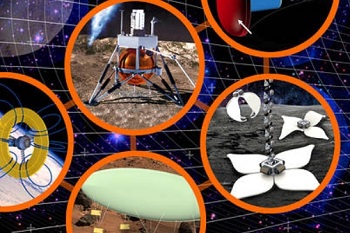
NASA is investing in technology concepts that include meteoroid impact detection, space telescope swarms, and small orbital debris mapping technologies that may one day be used for future space exploration missions.
The agency selected 25 early-stage technology proposals that have the potential to transform future human and robotic exploration missions, introduce new exploration capabilities, and significantly improve current approaches to building and operating aerospace systems.
The 2018 NASA Innovative Advanced Concepts (NIAC) Phase I concepts cover a wide range of innovations selected for their potential to revolutionize future space exploration. Phase I awards are valued at approximately $125,000, over nine months, to support initial definition and analysis of their concepts. If these basic feasibility studies are successful, awardees can apply for Phase II awards.
“The NIAC program gives NASA the opportunity to explore visionary ideas that could transform future NASA missions by creating radically better or entirely new concepts while engaging America’s innovators and entrepreneurs as partners in the journey,” said Jim Reuter, acting associate administrator of NASA’s Space Technology Mission Directorate. “The concepts can then be evaluated for potential inclusion into our early stage technology portfolio.”