












-
- News
- Books
Featured Books
- I-Connect007 Magazine
Latest Issues
Current Issue
Beyond the Rulebook
What happens when the rule book is no longer useful, or worse, was never written in the first place? In today’s fast-moving electronics landscape, we’re increasingly asked to design and build what has no precedent, no proven path, and no tidy checklist to follow. This is where “Design for Invention” begins.
March Madness
From the growing role of AI in design tools to the challenge of managing cumulative tolerances, these articles in this issue examine the technical details, design choices, and manufacturing considerations that determine whether a board works as intended.
Looking Forward to APEX EXPO 2026
I-Connect007 Magazine previews APEX EXPO 2026, covering everything from the show floor to the technical conference. For PCB designers, we move past the dreaded auto-router and spotlight AI design tools that actually matter.
- Articles
- Columns
- Links
- Media kit
||| MENU - I-Connect007 Magazine
Toyochem Develops Highly Flexible EMI Shielding Film for High-speed FPCs
January 22, 2020 | ToyochemEstimated reading time: 2 minutes
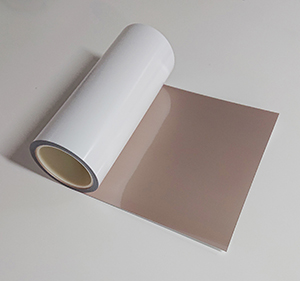
Toyochem Co., Ltd., a member of the Toyo Ink Group, has launched a highly flexible electromagnetic interference (EMI) shielding film, the LIOELM™ TSS510-HF, designed to meet the demanding performance requirements of 5G flexible printed circuits (FPCs). The newly developed TSS510-HF addresses the needs of today’s electronics designers for improved shielding performance for the transmission of high-frequency signals and for high flexibility so circuits do not break when bent.
The flexibility of FPCs has seen their adoption in a wide range of industrial and consumer electronic devices. As the mobile world transitions from 4G to 5G, the demand for higher performance flex circuits is expected to grow in line with demand for more advanced smartphones and 5G/IoT devices, including camera flex circuits, display flex circuits and wearable devices. While copper plating technology is typically used in the manufacturing of FPCs to absorb radio and other EMI waves, copper is not ideal for applications that require high flexibility, often cracking when the circuit is bent or folded, or burring during the die-cutting process.
![]()
Addressing these challenges, Toyochem technicians in Japan engineered the TSS510-HF shielding film to exhibit extraordinary flexibility, with no cracking even after bending the film 20 times at a 180 degree angle, 2kg load (see Image 2). Toyochem was able to achieve these advances by using a flexible and conductive urethane resin in place of traditional copper wiring as the EMI shielding material. The resin was first dispersed with a conductive filler, which generates a resin composite with enhanced compatibility between film flexibility and tensile strength. The optimized film structure enabled the company to solve the cracking and burring issues associated with copper foil shields.
Performance tests of the TSS510-HF shielding film demonstrated reduced transmission loss at the -6.5 dB level at 15 GHz, relative to -8.5 dB for conventional shielding films. Shielding effect testing generated values greater than 70 dB at 15 GHz, compared to 60 dB for conventional types, thereby making the TSS510-HF suitable for use in FPCs in the high-frequency band. Moreover, its exceptional bendibility offers FPC design engineers unlimited freedom in the shaping of flexible electronic devices.
Evaluation samples of LIOELM TSS510-HF are now available. The TSS510-HF and other advanced electronic solutions from Toyochem will be showcased at DesignCon 2020 from January 28 to 30, in Santa Clara, CA, USA.
Testimonial
"Advertising in PCB007 Magazine has been a great way to showcase our bare board testers to the right audience. The I-Connect007 team makes the process smooth and professional. We’re proud to be featured in such a trusted publication."
Klaus Koziol - atgSuggested Items
I-Connect007 Releases The Printed Circuit Designer’s Guide to… Direct Metallization: A Guide to Complex PCB Fabrication
05/13/2026 | I-Connect007As PCB complexity continues to accelerate, fabricators and OEMs are reevaluating long-standing manufacturing processes to meet the demands of AI, HDI, advanced packaging, and next-generation electronics. To address these evolving challenges, I-Connect007 is proud to announce the release of The Printed Circuit Designer’s Guide to… Direct Metallization: A Guide to Complex PCB Fabrication, authored by MacDermid Alpha Solution’s Carmichael Gugliotti.
Driving Innovation: Selecting the Right Laser Source
04/28/2026 | Simon Khesin -- Column: Driving InnovationWhen I first joined Schmoll Maschinen, I brought experience from almost every PCB process, except for laser. As I immersed myself in laser processing, I realized why it can seem so daunting to a newcomer. The complexity arises from three intersecting factors: A vast variety of laser sources: CO2, UV-nano, green-pico, UV-pico, IR-pico, and others; a diverse range of applications: Drilling, cutting, ablation, and more; and an extensive list of materials: These have vastly different absorption rates. Choosing the right machine or laser source is rarely trivial. Even for experienced engineers, answering "Which source is best?" requires examining the business's specific goals.
Institute of Circuit Technology Spring Seminar 2026: A Bright Future in Europe
04/23/2026 | Pete Starkey, I-Connect007Through the leafy lanes and spring flowers of Warwickshire and back to Meridan, the traditional centre of England, and now officially part of the Metropolitan Borough of Solihull in the county of the West Midlands, I attended the Annual General Meeting and Spring Seminar of the Institute of Circuit Technology (ICT) on April 14. Out of the AGM came notable changes in leadership at the top of the Institute: the retirement of Mat Beadel as chair and Emma Hudson as technical director. Effective May 1, Steve Driver is the new chair, and Alun Morgan is the new technical director.
ACCM Unveils Negative and Near-zero CTE Materials for Large-Format AI Chips
04/21/2026 | Advanced Chip and Circuit MaterialsAdvanced Chip and Circuit Materials, Inc. (ACCM) has launched two new materials: Celeritas HM50, with a negative coefficient of thermal expansion (CTE) of -8 ppm/°C to offset the positive CTE and expansion of copper with temperature on circuit boards, and Celeritas HM001, with near-zero CTE and the low-loss performance needed for high-speed signal layers to 224 Gb/s and faster in artificial intelligence (AI) circuits.
Fresh PCB Concepts: Designing PCBs for Harsh Environments—Reliability Is Engineered Upstream
04/23/2026 | Team NCAB -- Column: Fresh PCB ConceptsWhen engineers hear the phrase “harsh environment,” they usually think of the extreme temperature swings, vibration and shock, pressure changes, or radiation in aerospace. However, aerospace is not the only harsh environment where electronic assemblies must survive. Automotive power electronics, downhole oil and gas tools, marine controls, rail systems, defense platforms, and industrial automation equipment all expose PCBs to environments that are equally unforgiving. The stress mechanisms may differ, but the physics does not.