















 Fresh PCB Concepts: Managing PCB Trace Width and Spacing
 Elementary, Mr. Watson: The Rise and Fall of Europe's PCB Design Community
 Connect the Dots: What PCB Designers Should Know About Materials





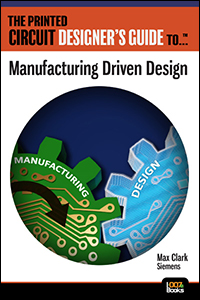
Introduction: The Printed Circuit Designer’s Guide to...™ Manufacturing Driven Design
Designers often say that their design release process isn’t broken and so it doesn’t need fixing. This line of thinking is the first hurdle anyone tasked with continuous process improvement must overcome—the desire to simply maintain the status quo. Perhaps the greatest irony in this mentality is that many of the printed circuit board products they are designing are based on incremental innovative improvements.
How many products are designed to reach end-of-life and be replaced only after they physically break? A computer from 2002 still works, yet we rarely see them in use. It has become common practice to upgrade phones, electronics, and computers before they reach the end of their lifespan, which is often factored into the initial purchase contract. Each upgrade is viewed as a way to improve efficiency, reflecting the incremental improvements that drive the electronics industry forward. Given this, why don't our design release processes operate in the same way?
Obviously, your current process is working—you wouldn’t be in business if it weren’t. But is it as good as it could be? How fast is your New Product Introduction (NPI)? Is your current NPI process as cost-effective as your competitors’? How high are you holding your hand?
This book introduces a new process workflow for optimizing your design called Manufacturing Driven Design (MDD) and is a distinct evolution from DFM. When defining Manufacturing Driven Design, it is important to recognize that this is, foremost, an element of the design stage. Manufacturing certainly plays a critical role in this process change, and manufacturers do certainly benefit from the improved process, but it is design teams that ultimately own their overall product workflow; they are the ones who need to drive this shift. Design teams are already invested in the success of their product; they just need to be empowered to control all the factors that go into this success.


