














 The Fearless Connector: Why I Chose the Hard Road
 The Clean Truth: The Clean Truth About No-Clean Flux
 Global Sourcing Spotlight: Beyond China Plus One—Building a Truly Global Supply Network






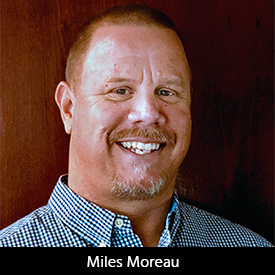
While at a conference in Dallas, Barry Matties listened to a presentation on digital twin from Don Kinard, a senior fellow at Lockheed Martin. Later, we reached out to Don, who was happy to provide a deeper understanding of digital twin’s role in the manufacturing space. What does digital twin mean when the product you manufacture is an eight- or nine-figure combat aircraft packed full of electronics?
Barry Matties: Don, let’s start with your background and experience at Lockheed.
Don Kinard: I got my PhD in polymer science at Texas A&M, and I worked for an oil company for a couple of years followed by a couple more years in marketing in Belgium. I came to Lockheed Martin because I didn't like being a salesman. Here, I worked in composite materials for a few years, then as a contract program manager. I was assigned to the F-22 as composites lead, then as a design team lead, followed by the engineering lead for the factory, and finally deputy director for the Mid Fuselage Build Team. Later, I became the director of F-35 production engineering and restarted the program with a large team in a new configuration, which we’re currently building. We’ve delivered nearly 1,000 F-35s to date. I’ve had the opportunity to be a senior fellow at Lockheed for the past 12 years, with the last seven or eight working in digital transformation in one form or another.
This is my 39th and last year with Lockheed because I'm retiring next year. I've been a program person for the F-22, F-35, and some F-16s, and now I’m just trying to head us on the right path with digital transformation as I walk out the door, so to speak.
Matties: How did you get started in digital transformation?
Kinard: Digital transformation in our industry started with 3D modeling. Lockheed got involved in the mid-’90s when we started developing 3D models and common PLM systems. I think Boeing even started a little earlier than that. The F-35, for example, started as a digital program. We used the digital thread—3D solid models—for everything. Everybody accessed a common database so those models could be passed along from engineering to manufacturing. That was the beginning of digital transformation.
Continue reading this feature interview in the August 2023 issue of SMT007 Magazine.


