

















 Fresh PCB Concepts: Don't Let Over-specification Come Back to Haunt You
 Elementary, Mr. Watson: A Nightmare on PCB Street
 Connect the Dots: Getting the PCB Quote Right





It was my first day in Anaheim for IPC APEX EXPO, and I arrived at John Wayne airport on Saturday to cool and sunny weather, which, coming from Arizona, is my favorite. The show starts with technical and standards work over the weekend as we prep for the show floor opening in the days to come. Exhibitors and union workers get busy building the impressive booths that make up the exhibition, which started on Tuesday and saw a steady flow of attendees all day long.
The show’s first reception was for the IPC Emerging Engineer program, where young professionals—many still college students or in their first couple of years in a new job—are placed with seasoned mentors. This three-year program is open to engineers who have worked in the industry for less than five years. Mentors must have at least seven years of experience and have some experience with IPC standards development as well. It’s no small commitment for both mentors and mentees, which is likely what leads to the program’s success.
As bedraggled folks drifted in after a long day of standards committee discussions, the beautiful third floor balcony space outside at the convention center came alive. The drinks and food line quickly filled up as roughly 50 young engineers and their mentors gathered for refreshment and face-to-face time, something that does not happen often. Young engineers must apply to be accepted into the Emerging Engineer program, which speaks to its relative popularity and success and IPC’s commitment to providing mentors for every emerging engineer.
At the event, I spoke with Gerry Partida of Summit Interconnect who brought nine young engineers to APEX EXPO. Summit has been a vocal supporter of IPC’s Emerging Engineer Program and is stalwart in its declaration of its benefit, not the least of which is the feeling newer employees get knowing that their employer is willing to invest in them. In addition to the training and experience that emerging engineers take back to their employers, Gerry says it helps with employee retention.
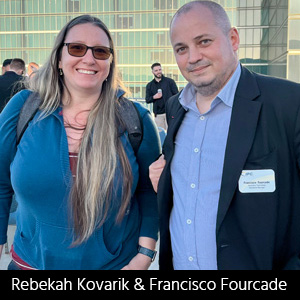
Attending the reception is a great way to learn more about the young professionals entering our industry. Rebekah Kovarik of Lockheed Martin is a mentor for Lindsey Fenton of Blue Origin, Diana Dunham of Lockheed Martin, and Matt Sak, at Johns Hopkins Applied Physics Laboratory. Cynthia Bedilla of Raytheon joined the group but has a different mentor (who wasn’t able to attend the show this year). You could feel the positive energy and enthusiasm from this table of Emerging Engineers. Diana and Cynthia both commented that having a mentor who also worked in their company benefits them, and all agreed that it’s just good to know there is someone senior to them and not necessarily connected directly to their jobs.
Additionally, they agreed that their work in standards development committees is interesting and valuable, exposing them to new processes and an opportunity to meet new people in the industry. They vocally appreciated the networking opportunities that the IPC Emerging Engineer program offers to participants, and they enjoyed the opportunity to attend IPC APEX EXPO each year.
Teresa Rowe leads the IPC Emerging Engineer program is looks for ways they can make an impact, get involved in their surroundings, and just have some fun. Each Emerging Engineer must complete a scavenger hunt of items at IPC APEX EXPO, like finding four IPC staff members, finding out what they do, and how long they have been with IPC, or taking a picture with a Hall of Famer. It was fun to see them huddled together, presumedly in their cohorts, working their scavenger hunts, and talking to anyone and everyone that came their way.
The Emerging Engineer Reception was well done, well attended, and clearly appreciated by all. I applaud IPC for this program and look forward to meeting more Emerging Engineers during the week.


