
















 Elementary, Mr. Watson: Waking Up Europe's PCB Giants
 Connect the Dots: Getting the PCB Quote Right
 Powering the Future: What Engineers Get Wrong About Designing for Reliability





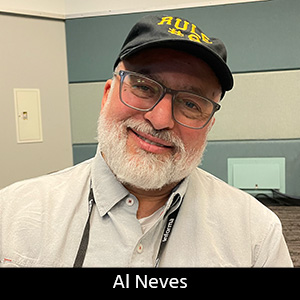
As the founder of Wild River Technology, Al Neves deals with some of the most challenging aspects of signal integrity. Wild River’s engineers consult with high-tech companies that work at very high speeds and frequencies, often above 100G.
Al is always a fun interview, so we asked him to share his thoughts on the current state of signal integrity engineering. He says much of the art of signal integrity comes down to reducing margins—and doing your homework.
Andy Shaughnessy: Al, it’s signal integrity time, and we had to get your thoughts for this issue. Give us some background on Wild River Technology. What would you say is the technology “sweet spot?”
Al Neves: Wild River Technology is a signal integrity company that started in 2010. Our sweet spot is designing space-aggressed systems, those with a high risk of crosstalk, and general signal integrity issues. We are doing a lot of work for folks in the range of 10G to 32G and then to 56G PAM4, a lot of 112G design work, including in the 224G space.
Common designs include BGA breakouts, differential via designs, packaged design/optimization, margin analysis of high-speed serial link systems, etc. We’ve added considerable capability this year with our routing/layout/signal integrity design team.
Shaughnessy: What kind of unique signal integrity challenges do you (and your customers) encounter at speeds over 100 GHz?
Neves: The electromagnetic fields become squirrely at these frequencies. You also need to consider second and third modes, along with all cavity size/geometry that creates resonance issues. Crosstalk is insidious at these frequencies as well.
To continue reading this interview, which originally appeared in the September 2025 issue of Design007 Magazine, click here.


