














 Fresh PCB Concepts: Don't Let Over-specification Come Back to Haunt You
 Elementary, Mr. Watson: A Nightmare on PCB Street
 Connect the Dots: Getting the PCB Quote Right





Elementary, Mr. Watson: Finding Balance on the Seesaw and in Life
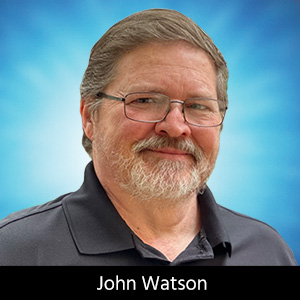
One of my greatest joys as a grandfather to nine (soon to be 10) grandkids is spending time with them at the park. It doesn't take long before I find myself wedged halfway down a slide that was never designed for someone my size, or sitting on a seesaw where my weight instantly teaches a real-time physics lesson—mainly that Grandpa is not as light as he feels inside, and yes, gravity loves me more. A seesaw may be one of the simplest pieces of playground equipment invented, but it carries a powerful lesson about balance and the fact that it doesn't come automatically. It's deliberate, dynamic, and requires both awareness and cooperation.
In my seesaw analogy, don’t overlook the fulcrum, the central and fixed point that supports everything and determines whether balance is possible. In life, the fulcrum represents our core priorities and values, with family at the center and foundation. When our decisions, routines, and commitments remain anchored to that center point, balance becomes manageable. But as work, ambition, or outside pressures pull us further from that core, the seesaw becomes harder to control, requiring more energy, strain, and emotional effort to keep things level. The closer we remain to what truly matters—the people we love and the relationships that define us—the steadier and more meaningful our life-balance becomes.
In our careers, especially in PCB design, which is driven by passion, purpose, and a desire to make a meaningful impact, it's easy for work to accumulate more weight on one side of life's seesaw. The workplace rewards measurable progress: completed projects, earned titles, new opportunities, financial gains, professional recognition, and pride in knowing we're contributing something valuable. These pursuits often come wrapped in the urgency of emails demanding replies, approaching deadlines, opportunities expiring, and growing expectations. Meanwhile, family can feel steady, familiar, and reliably present. As a result, it becomes the side of the seesaw we assume can patiently wait its turn.
But families, like seesaws, are not designed to stay suspended indefinitely. When the relational connection is held aloft for too long, the shift is subtle at first: conversations shorten, shared laughter becomes less frequent, routines replace memories, and presence becomes proximity rather than engagement. Over time, silence grows not out of conflict, but from distance. Connections wear thin, not because love disappears, but because attention relocates. Opportunities for memories slip quietly through the cracks with the soft passing of uncelebrated moments. The tragedy of imbalance is rarely catastrophic; it's cumulative. Most of the damage is not what we did, but what we didn't do in time. Unlike work, which often offers second chances, relationships operate on a different schedule. Childhood has an expiration date, aging parents won't always be there to call, and we cannot replay milestones the way we can reschedule meetings.
I teach at multiple universities with a demanding workload, and I'm often the first to justify my own imbalance. I tell myself, "It's just a busy season," even when that season has become my usual rhythm. I promise, "I'll slow down once I get through a semester," knowing that driven people rarely find that moment. I reassure myself with good intentions: "I'm doing this for my family; they know I love them." But in reality, we cannot replace presence with provision, and time doesn't accumulate like savings. Life is more like a live broadcast: Once a moment passes, you can’t replay it.
When I watch my grandkids on the seesaw, I notice they never give up. They scoot forward, slide back, switch sides, call for help, change tactics, and laugh at every failed attempt. They expect balance to require effort and approach it with curiosity, rather than frustration. Somewhere in adulthood, we lose that instinct and start believing balance should happen automatically, even as life gets heavier and more complex. Don’t look at balance as a destination, but as a practice built on intentional adjustments. On the seesaw, riders move closer to the center to steady the board; in life, we create healthier boundaries by saying no, protecting evenings, unplugging, and letting non-urgent work wait.
Similarly, we can adjust our priorities according to what is most important in a given season. Lean into your family’s milestones, illness, or emotional need, and lean into work during temporary deadlines rather than continuous urgency. When we can’t achieve that balance, children often ask someone else to join in, adding support to the lighter side. As adults, this translates into seeking help through teamwork, delegation, shared responsibilities at home, childcare support, or outsourcing tasks that drain time and energy.
On a seesaw, riders communicate constantly, agreeing when to push off, when to slow down, and when to pause. We mirror that in life through honest conversations with family and colleagues about schedules, expectations, fatigue, and emotional bandwidth, so that no one feels neglected or taken for granted. Finally, when things feel unsafe, uneven, frustrating, or exhausting, riders pause and reset, recognizing that forcing balance can lead to a fall. Likewise, in life, rest, reflection, and recalibration are not signs of weakness but wisdom, reminding us that burnout helps no one, and balance requires ongoing awareness. Riding a seesaw teaches us that balance is never a single decision but a repeated practice of minor adjustments, shared effort, and thoughtful presence—the same formula required to keep our work productive and our relationships strong.
While our careers, passions, and accomplishments may be meaningful and deeply fulfilling, they are not the ultimate measure of a well-lived life. Work gives us purpose, identity, and the ability to provide, but family gives us belonging, grounding, and legacy, which we cannot outsource, delegate, or automate. We can replace titles and refill jobs, but achievements will eventually fade into history. However, the impact we leave in the hearts of those we love is permanent.
Our most significant influence is found not in what we build, publish, or produce, but in the laughter shared around the dinner table, the confidence instilled in a child, the wisdom passed on through stories, the love offered without conditions, and the memories created intentionally.
Careers shape our résumés; family shapes our character. One defines what we accomplish; the other, who we are. When the seesaw of life finally returns to stillness, it won't be our deadlines, projects, or awards we wish we had more time for; it will be the moments, conversations, and relationships that remind us who we were beyond the work. Family is not an interruption to our purpose; it is the purpose that makes everything else worth pursuing.
This column originally appeared in the December 2025 issue of Design007 Magazine.


