













 It’s Only Common Sense: Win the Sale Before the RFQ Arrives
 The Marketing Minute: Marketing Is a Team Sport





The Right Approach: Reflections on 50 Years in the Business, Part 1
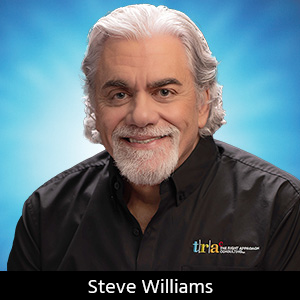
Last September and October, I wrote a two-part column, "Electro-Tek: A Williams Family Legacy Part 1" and "Electro-Tek: A Williams Family Legacy Part 2," which prompted me to reflect on the changes I have witnessed over the past 50 years in the PCB and broader electronics industry. The prior articles focused on the family business and my dad, so a follow-up on my journey is a logical next step. In this new three part series, I will be looking back as 2026 marks my 50th year in the business, beginning with the first 22 years of my career manufacturing PCBs.
Like so many true “PCB Rats” (as I affectionately refer to us old-timers), printed circuits are in my blood. My dad was running both Electro-Tek and supporting Electro Measure at the time, so I got my first taste of the business in grade school. He would bring home a box of components and a plastic triangular tool with slots for different components, with the width of each slot defining the correct distance between the leads. I would place a single component in the appropriate slot and bend over the leads with my fingers. This was well before components came on reels for automated pick-and-place machines, and I was paid a penny per component, so I was focused on quantity and felt sorry for the poor gals who would have to hand-place and solder these into PCBs. The concept of quality that would become the hallmark of my career was nowhere to be seen in these early years.
Before I was old enough to work there full-time, I was taking out garbage and cleaning toilets after school—and I can tell you that nothing is more humbling and character-building than cleaning toilets, especially when your Dad owns the company.
After escaping high school, working in the business became my first full-time job and the beginning of my PCB career in 1976. I never directly reported to my dad; there was always a plant manager between us. While I am fortunate to have had a few key mentors throughout my career, it started with my parents, who instilled my “Midwest Work Ethic” (yes, it’s a thing) at an early age. They also taught me how to run a successful business and how to treat my employees. Here’s what I learned from working in a family business.
Children of business owners realize there are two paths they can take:
- Embrace the privileged role of being the owner’s kid and all its perks. Everyone has probably experienced a scenario in which the owner’s kid feels that they don’t have to work hard and that the grunt work is beneath them.
- Work harder than everyone else and lead by example. That was the path I took. The collateral benefit from this work ethic is the respect you earn. I believe that great leadership comes from having been there and done the work.
Old School Processing
My first position was as a shear operator, cutting down 36" x 48" sheets of laminate into the working panel sizes needed for each order. Precut laminate was not a thing back then, and the shear was powered by my left leg (this was before electric or hydraulic shears). Cutting the corresponding backup and entry was also the responsibility of the shear operator. Math was involved (never my strong suit) since the shear operator had to determine the optimal shear strategy to maximize the number of panels per sheet, and the amount of backup and entry required based on the planned drilling stack height. This backup was used on both sides.
I must have done a good job, because my next position was fabrication, where I quickly became the supervisor. We had no CNC equipment, and orders were fulfilled in various ways. With a large enough tolerance, some orders were “shear to size,” using corner marks imaged on each board in a panel. All other boards were first sheared outside the corner marks (oversized). Most of our PCBs were square, which were routed to size by pinning two to three of the sheared boards onto a one-quarter-inch-thick phenolic template and manually running them through a bar router. It was basically a small table saw with a diamond blade. The template was machined and tooled on a manual milling machine.
For irregularly shaped boards, we used a pin router, which used the same type of template but cut on a bottom-mounted tabletop woodworking router with a diamond mill bit. The tolerance of the finished PCBs was determined by the accuracy of the template, the stack height, and the routing speed of the operator. We also had a punch press for single-sided boards, a bevel machine for gold tabs, and a manual slitting machine used to put slots into the gold tabs, or the exterior of the boards.
PCB design was very primitive: customer supplied artwork was simply black crepe tape on a transparent sheet to define the circuitry at a 2-4X scale. If the design required circuits on both sides of the board, one side was designed with red cellophane tape, and the other side was designed with blue cellophane tape. Filters on a camera the size of today’s drill machines would separate the sides when they were preparing the phototooling to manufacture the PCBs.
Drilling was also manual to semi-automatic. In addition to the single-station bottom drills used, we used a “Quad-Drill,” which had four spindles manually controlled by an operator following a “roadmap” path in a manually bottom-drilled template. The operator would lower a stylus into a template hole and pull a trigger to initiate the drilling of a single hole in the four stacks of panels.
Manual plating meant operators had to move the racks of panels by sheer might. We were not aided by overhead hoists until we moved into our third custom-built PCB facility. Screening was the PCB equivalent of printing T-shirts, making polyester or steel screens and hand pushing solder mask and silkscreen ink onto panels. With no automation involved, these processes were much more art than science.
The Excellon Revolution
When we purchased our first Excellon Mark IV Driller/Router and Opic Programmer, our plant manager tapped me to lead this “revolution” as the first CNC programmer. This required creating a color-coded roadmap on the component side of a mylar film. The programmer assigned a color to each drill size, and manually mapped the path to all the holes for each drill size using the print as a guide. Then the mylar was placed on the Opic glass table, electronically squaring the artwork with targets and setting the zero datum. Each tool number and size was coded into the system, and the programmer followed the roadmap that was magnified and projected on an elevated screen over the glass table. The table was moved from hole to hole with two hand wheels for the X and Y axes, and when a hole was centered in the bullseye target on the screen, a foot pedal was tapped, and the X-Y hole location was punched onto a paper tape that would become the drill program.
Later versions of the Opic had servo motors to move the table with the hand wheels, increasing the efficiency of the process 10X. Drill path optimization was fully dependent on how the programmer laid out the path manually. My next promotion was to plant supervisor, where I was mostly responsible for order scheduling and moving product through the plant.
Moving On
After five years at Electro-Tek, I moved to a competitor, Basic Electronics, which is now Midwest Printed Circuit Services (MPCS) where I served as mechanical process supervisor, overseeing programming, drill/routing, and multilayer lamination. MPCS is a client, and a few of the key folks I worked with during the Basic years are still with the company. This was my first quantum leap in technology, going from one Excellon to four, plus a dedicated router, and learning to build multilayer PCBs.
My lamination team developed some of the first metal core PCBs for a military contractor customer, learning the process as we went. We started by drilling the clearance holes in the copper core and filling them with nonconductive via fill powder using a flower sifter (yes, really!), pressing and curing the filled holes, and manually planarizing the copper core. I briefly left Basic to become a mechanical engineer for Motorola's PCB operations, but quickly realized I was not a good fit with the bureaucracy and the “small fish/big pond” syndrome that comes with a large company, and returned to Basic.
My boss must have predicted this, as my old position was not filled in my absence, and a few years later, I was offered a promotion to Quality Manager, my first exposure to the world of quality. I had to quickly get up to speed on managing the company’s Mil-Spec compliance and certification (MIL-P-55110). Mil-Spec was the only certification available at the time for PCB manufacturers as ISO was still years from development, but the quality aspects focused on product performance and not necessarily on systems. MIL-P-55110 evolved over the years with various revisions under MIL-PRF-55110 to the current MIL-PRF-31032.
Over the next 17 years in PCB manufacturing (22 years in total), I consistently pursued larger and more challenging opportunities, holding executive leadership positions at several PCB shops, primarily in quality but also in engineering and operations. This was a tremendous learning opportunity as these shops supported not only the military, but also medical, automotive, and industrial customers. It was during this time that I earned my undergraduate degree in organizational management, which would prove pivotal later in my career when I transitioned out of PCB manufacturing.
Many of these companies are no longer around, or have been acquired by other companies, including Kalmus & Associates (later Aurora Circuits, which closed in 2024), Pho-Tronics (now HT Global Pho-Tronics), Colonial Circuits (now FTG Circuits), and Viktron (ASC/Sunstone Circuits now occupies the West Chicago facility). I have kept in touch with many of my prior colleagues, many of which are current clients, and love to tell stories from the “good old days.” here are a couple of particularly memorable ones.
Pho-Tronics
At Pho-Tronics, I had risen to the position of operations manager, and after a number of challenging years, the company returned to profitability. Pho-Tronics was owned by ER Wagner, a large Wisconsin manufacturing company with additional divisions in metal fabrication, castings, and industrial hardware.
During one monthly staff meeting with our boss, ER Wagner’s CEO, he announced that the board had made the decision to sell the now profitable Pho-Tronics division. After the shock passed, he also stated that the senior leadership team, of which I was a member, would be tasked with presenting the dog-and-pony show to potential buyers until a suitable match was found.
One day, I found myself presenting the merits of Pho-Tronics to the current majority stockholder of Electro-Tek, sitting across the conference room table from me. He was the man who had forced my dad out of the company he had built. It was only after the meeting that we found out he was not there to buy Pho-Tronics, but rather to ask ER Wagner to buy Electro-Tek as he had developed a terminal illness. That meeting truly tested my ability to keep my emotions in check, and the company was eventually sold as planned to another shop, National Technology.
ISO Quality Management System
I was the director of Quality for the two Illinois facilities of Viktron, where I was charged with creating my first ISO Quality Management System (QMS) from scratch. I have to give a shout-out to my most influential quality mentor, Greg Masciana, the corporate director of quality over the five Viktron facilities. We had nothing in place: no procedures, work instructions, or any standardized work, so the task was daunting, and the timeline was less than a year.
While I was the driving force for the project, it was the culture change and willingness of every single employee to buy into the vision that made it happen. I still stay in touch with several individuals involved in the project who have moved on to other companies, and we all acknowledge that we were part of something truly special that will be one of the highlights of our careers. We became the first PCB company in the state of Illinois to achieve ISO certification, and passed every audit with zero findings due to the dedication of the workforce to “walk the walk” on a daily basis.
Part 2 of my story will detail the next 15 years of my career as I moved from PCB manufacturing to contract manufacturing and the challenges of establishing and managing a global supply base of PCB and other custom manufacturing suppliers.
This column originally appeared in the January 2026 issue of I-Connect007 Magazine.


