














 The Marketing Minute: Marketing Is a Team Sport
 The Right Approach: Old Philosophies, New Tools
 Trouble in Your Tank: HDI and UHDI—Building the Foundation of Advanced Packaging





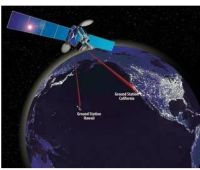
NASA’s Space Technology Mission Directorate (STMD) checked off a number of key accomplishments in 2015. These advancements pushed the technological envelope, not only for use near Earth, but also to support future deep-space exploration missions.
“In 2015 we have made significant progress with several of our larger technology demonstration initiatives,” explains Steve Jurczyk, NASA associate administrator for STMD.
One of STMD’s goals is to shorten the cycle of time needed to research and develop new space technologies and capabilities for flight demonstration. At the same time, the space agency’s mastery of new technologies enables high-payoff endeavors that strengthen aerospace activities in government, academia and industry. In sum, that helps keep America competitive as well as on the cutting-edge within the global space community.
The pace of progress is due in large measure to the STMD-managed nine major technology development programs carried out at each of NASA’s 10 field centers across the United States. Currently, STMD partners with 42 other government agencies on 61 programs and projects, and sponsors four projects with five international organizations.
Engaged and active
Throughout 2015, STMD was engaged and active in eight central areas:
- High Performance In-Space Propulsion;
- High Bandwidth Space Optical Communications;
- Advanced Life Support and Resource Utilization;
- Entry, Descent, and Landing (EDL) Systems;
- Space Robotic Systems;
- Lightweight Space Structures;
- Deep Space Navigation;
- Space Observatory Systems.
Within these target areas there were a number of notable achievements in fiscal year 2015. Here are a few select STMD snapshots of success.
Page 1 of 5


