












 Nolan’s Notes: Automotive Is Gearing Up Again
 Standard of Excellence: Engineering Collaboration Has Become the New Sales Strategy
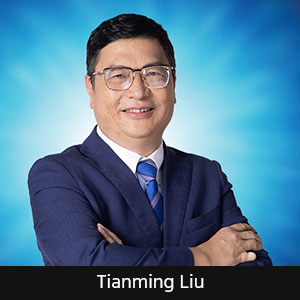 Bridging the Pacific: Why Global Manufacturing Is No Longer Optional





Liu: We call it integrated PCB production.
Matties: But you’re still a broker. Do other brokers have equipment in factories like this?
Liu: I'd say it's difficult, so probably not. You have to have the size to do it. Our strategy is very simple. We want to work with the factories as partners. We have been together with many of our major factories for more than 10 years. In order to have these partnerships, we have a goal to achieve 20% to 30% of their revenue, and thus we reserve the capacity. If it’s 20%, it will be worth for our factories to follow NCAB way.
Matties: Why don't more board shops go to this model where they work with you? Do board shops come to you and say, "We want you to represent our facility," or do you go to board shops and say, "We need to place orders"?
Liu: As answer to your first question: It's too difficult! NCAB is a quite well known PCB company, and this factor together with our size makes us interesting for the factories. We also are one of the first PCB companies in the world to meet the ISO 26000 standard for the social responsibility certification. This is an important factor for us and when we consider factories to work with, we don’t only look at the factory’s ability of producing high quality PCBs, the ability of doing it in a sustainable way is equally important.
Matties: When a customer does have a quality problem, it might be cosmetic or something along those lines, how do you guys take care of that?
Liu: This is very important. Unfortunately, quality problems do occur. And in these cases, we always start with taking care of and solving the problem. For example, if you are my customer and you have problems with 20 pieces, NCAB will first check our stock and send the pieces to you so you can continue your assembly. Secondly, we’ll dig into what the problem is and find out why the problem has occurred.
Matties: Well, it sounds like a good model that’s been successful. What do you think of the market conditions? How's the market right now?
Liu: The market is very dynamic. Many industrial trends are going towards low volume and high reliability. The cost of failure is much higher than before, and it's much quicker. The speed of the time to market becomes very, very crucial. In order to do that under the shorter lead times, you have to do it right at the first time. Therefore, we are providing a lot of service to our customers like DFM and material selection, stack up selection and so on.
Matties: What about the China market? There's been talk that it's starting to improve.
Liu: The China market, I think, is very good for us right now. I think I've been asked this question three times today already.
Matties: I have no doubt; a lot of people are very interested.
Liu: I think the market is more about integration at the moment.
Matties: So you think there's a transition going on?
Liu: There is a transition. Of course, the market as you can see is a little bit down, and a lot of things, like the currency, have an effect on that. We actually did some research in March, about what is really happening in China and how the stock market, the currency, and the housing prices in China are influenced and what is related to the PCB business. We think the companies who really put a lot of focus on this integration or innovation will see huge increases, and the ones that stay at the same level will slowly vanish.
Just remember, I think during the last year, there were over 100 PCB factories that went bankrupt in China.
Matties: Well, that's not surprising. You have how many factories in China?
Liu: Roughly about 1,800. This is going to be quicker and quicker.
Matties: But in the last year, the market declined, and the weak have to go away. There's the natural order of things, right?
Liu: Yes.
Matties: We're seeing a lot more automation in China, as well.
Liu: For example, earlier during the material cutting process, a big facility needed over 10 to 20 people for this job. Now we may only see two people. There is a lot of automation during the FQC process. It's amazing how quickly this has happened. That was only two years ago, and now it's full of robots.
Matties: Do you do flex boards, as well?
Liu: Yes.
Matties: Now that's a fast-growing area, isn't it? Is that one of the faster areas for you guys? Where's your primary growth coming from?
Liu: I think rigid-flex could be. Since products are getting smaller, you have no space for connectors, and you want to assemble easier. Rigid flex is a fast-growing market for us.
Matties: What about the tolerances on boards? We see tolerances getting tighter and tighter. What do you think about tolerances and where they're at and where they're headed?
Liu: In a lot of small products, the PCB is like a mechanical part and the tolerance is very important. For example, the high-end display boards.
Matties: What are your thoughts on 3D printed electronics and printed circuit boards, in particular?
Liu: This is also an interest research area for us. Our Chief Operations Officer, Chris Nuttall, just held a presentation about this subject. This technology could be especially useful for prototyping, because the advantage is that you could easily put an embedded capacitor in. This has never been possible for the normal way of doing PCBs. Also, we see flex PCBs being made in different shapes, where you cannot manufacture it in the normal way. Some people are also talking about injection conductive ink, and also special material for embedded capacitors as well as embedded IC.
Matties: I think printed electronics will change the way that people purchase and acquire circuit boards.
Liu: Yes, I saw a movie that print PCB and the mechanical enclosure together with different shapes.
Matties: Yes, they print it right on the part, like antennas for phones and such. There’s a lot of application opportunity with this.
Liu: We have actually seen that some of our factories start to build a 3D lab.
Matties: Here in China?
Liu: Yes.
Page 2 of 3


