















 The Marketing Minute: Marketing Is a Team Sport
 The Right Approach: Old Philosophies, New Tools
 Trouble in Your Tank: HDI and UHDI—Building the Foundation of Advanced Packaging





Latest Articles
An Examination of Glass-fiber and Epoxy Interface Degradation in Printed Circuit Boards
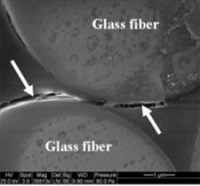
Multilayer organic laminates, which make up over 90% of the interconnecting substrates in electronics (standard FR-4 represents 85% of the substrates used for laminates), can develop a loss of electrical insulation resistance between two biased conductors due to conductive filament formation.
Identifying Product Board Class and Pre-quote Software
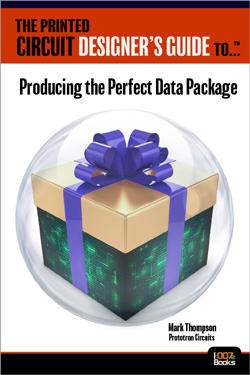
Deciding on the class of the final product will determine what files are needed for fabrication and assembly. It is critical to note that for a product to be built to any class level, it must be designed to that class level from its inception.
Conventional Exposing: Direct Imaging Solder Mask

When you compare direct imaging of solder mask with contact exposure of solder mask, the positive aspects and the advantages are clear. Without a doubt, direct imaging shortens the throughput time and eliminates artwork production. It also eliminates the costly measurement of the panels and manufacturing of artwork with different scaling factors.
Words of Advice: What Feature Would You Like to See in Your CAD Tool?

In a recent survey, we asked the following question: What feature would you like to see in your CAD tool? Here are a few of the answers, edited slightly for clarity.
Design Is a Pivotal Piece of the Puzzle

As a field applications engineer at TTM Technologies, which has fabrication and manufacturing locations around the world, Julie Ellis sees a wide variety of customer design requirements. In this interview with the I-Connect007 Editorial Team, Julie explains how PCB designers can influence the development of the PCB. She shares a variety of tips and tricks that designers can implement early in the design process to help optimize fabrication and assembly later on and keep small issues from becoming big problems downstream.
Kelvin Characterization to Accurately Predict Copper Thickness

A few years ago at Integrated Test Corporation, we found that the reaction plan for void fallout at electrical test was ineffective and not standardized. Like many PCB manufacturing facilities (including a Sanmina shop that I used to work at), the reaction plan consisted of cross section analysis to determine the void type.
Virtual Verification Station From CIMS Enhances AOI Capabilities

At this year’s CPCA Show, CIMS Marketing and Technical Director Vladi Kaplan spoke to Barry Matties about a number of add-ons CIMS designed to further enhance their AOI capabilities and systems. He described their Virtual Verification Station (VVS), CIMS Quality Center (CQC), and Software Development Kit (SDK) as well as trends he sees with laser via inspection.
Saying Yes to Opportunities: IPC’s Emerging Engineer Program Offers Career Growth for Electronics Industry Newcomers

What makes the IPC Emerging Engineer Program a premier networking and career enriching program? IPC staff spoke to Emerging Engineer Kate Stees, materials and process engineer, Lockheed Martin, about her experience in the program and why she recommends it to other engineers.
Words of Advice: Making Life Easier for Fabrication and Assembly
In a recent survey, we asked the following question: What steps do you take to make the job easier for your fabrication and assembly providers? Here are a few of the answers, edited slightly for clarity.
Albert Gaines: Design All Comes Down to Documentation

During SMTA Atlanta, I spoke with Albert Gaines of HiGain Design. We discussed Albert’s belief that everything starts with design and that too many engineers and designers focus solely on the final board at the expense of the documentation, which is a designer’s most important product. Do you consider your documentation to be a critical product?
Pulsonix 10.5 Development Driven by Customer Demand

I recently spoke with Bob Williams, the managing director of Pulsonix, about the release of the EDA tool’s version 10.5. Bob explained how the company had made the tool more intuitive based on user input, and he discussed some of the more cutting-edge functionality not normally found in competitively priced tools.
IPC SummerCom Highlights: A Government Relations Perspective
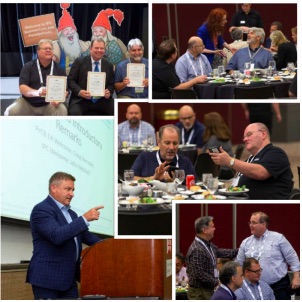
Last week, IPC hosted SummerCom, our semi-annual standards development committee meetings, in Raleigh, North Carolina. The event brought together thousands of technical experts from around the world to shape the product, manufacturing, and supply-chain standards that guide our industry.
Technically Appropriate Material Choices Are Key to Success

Materials are no longer a passive part of the design; they play an active role in the manufacturability, reliability, and speed of a PCB. Editor Nolan Johnson and Mike Creeden, founder of San Diego PCB Design, discuss several key characteristics that designers should consider in their material selection process.
Emma Hudson: From Tomboy to Tech Lead

In this interview, Emma Hudson, CTO of Gen3, and Gayle Paterson, founder of Female Leaders in Tech, Everywhere (FLITE), discuss careers and the electronics industry.
Insulectro’s OEM Program: Time to ACT!

Ken Parent, Insulectro VP of sales and product management, discusses the current dynamics in the materials marketplace and how Insulectro is developing educational resources to help design teams and fabricators better understand the capabilities and features for the emerging laminate materials.
AWE 2019: Go XR, Be Awesome

Dan Feinberg attended and covered the recent 2019 Augmented World Expo (AWE) and conference in Santa Clara, California. The event featured the latest developments and technologies in augmented (AR), mixed (MR), virtual (VR), and extended virtual reality (many just call it all XR to make it simple). Here's a wrap-up of the event.
Microtek Labs: Providing Trusted Testing in the Chinese Market

On a recent visit to Microtek Laboratories' Changzhou facility, Barry Matties, publisher, and Edy Yu from the I-Connect007 China team spoke with chairman and CTO Bob Neves about the changes he has seen living and doing business in China over the past 15 years, and the increased importance of standards and testing as China moves into manufacturing more high-reliability products.
Digital Twin Drives Design in the Smart Factory

New product realization and design for manufacturing and assembly has now started to become more visible as a program that can improve a company’s time to market and lower product costs. This is one of the main focuses of Industry 4.0 for the smart factory. Many programs are underway by numerous companies, and what is now needed is a framework to coordinate the application of these programs.
Libraries: A Must-have for Design

I-Connect007 was invited to attend a session of the Orange County Chapter of the IPC Designers Council (DC). Even though I have been an IPC member for over half a century (yes, almost since vacuum tubes dominated design), this was my first DC event.
Photonics Systems Looks to Expand Its PCB Capabilities

Pulsed-laser equipment manufacturer Photonics Systems looks to expand its capabilities to the PCB industry. Barry Matties sat down with Antonio Schmidt and Kurt Weber to talk about the company’s transition and the challenges they’ve faced thus far as they continue to build and extend their brand into a new market segment.
Quality by Design

The design team’s files and the accompanying documentation is the real-world implementation plan to turn the OEM’s concepts and marketing research into a viable, physical, competitive product. Unless manufacturing defies the build instructions from the designers, the product will only be as manufacturable as the design files themselves.
Stitching Capacitor: Crosstalk Mitigation for Return Path Discontinuity

When the return path is broken due to the switching of reference planes with different potential, e.g., from ground to power or vice versa after layer transition on PCB, the return current might detour and propagate on a longer path, which causes a rise in loop inductance. This might lead to the sharing of a common return path by different signals that pose a high risk of interference among the signals due to higher mutual inductance. This interference results in signal crosstalk. To mitigate the crosstalk due to return path discontinuity (RPD), stitching capacitors are mounted on the PCB to serve as a bridge between the two reference planes of interest on different PCB layers.
ICT 45th Annual Symposium Review

The Institute of Circuit Technology (ICT) held its 45th annual symposium on June 4, 2019 in Dudley at the Black Country Museum—a symbol of the spirit of innovation in engineering technology and the entrepreneurial and manufacturing skills that had established that region’s supremacy in leading the original Industrial Revolution. Here's a recap of the events and presentations at the symposium.
What Electronics Companies Need to Know About Environmental Product Requirements
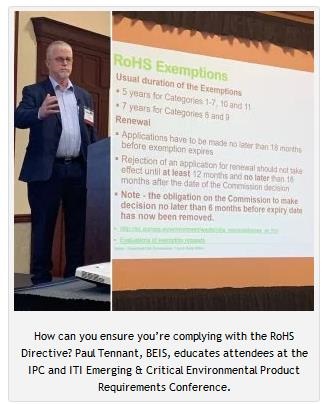
The task of monitoring and complying with environmental, health and safety (EHS) rules that affect electronics companies and their products requires a watchful eye on all levels of government: local, state, national, and international.
IPC’s PCB Tech Trends Study Highlights Issues Impacting Fabricators

The 2018 survey results indicated the need for speed and low loss as critical functions of the materials chosen. This is the digital age, and with the Internet of Things, virtual and augmented reality, vehicle-to-vehicle communication, etc., the need for low-loss and ultra-low-loss materials continues to grow as a percentage of circuit boards fabricated.
Copyright © I-Connect007 | IPC Publishing Group Inc. All rights reserved.
Log in