















 Elementary, Mr. Watson: The Design Matrix—Revealing the Hidden Truths of Reality
 Connect the Dots: Designing for the Future of Manufacturing Reality—Surface Finish
 The Pulse: Caught in the Crosshatch—A Cautionary Tale of Detective Work





Calling All Designers: The Latest Design Technology and AI
March 20, 2025 | Andy Shaughnessy, Design007 MagazineEstimated reading time: 2 minutes
Advanced design technology and AI were in the spotlight at the annual Design Town Hall, held March 19 during IPC APEX EXPO 2025. Speakers included IPC’s Peter Tranitz, Matt Kelly, and Devan Iyer, as well as a panel on the use of AI in PCB design moderated by Susan Kayesar of Siemens.
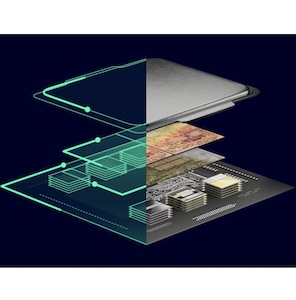
After an introduction by Peter, Matt provided an update on IPC’s recent design efforts, and Devan discussed some of the challenges and solutions in chip-package PCB co-design. Peter also spoke about the path forward for the IPC Design Leadership Council, which meets regularly to discuss the issues facing PCB designers and design engineers.
The AI panel was focused on the future, but Susan opened the proceedings with a quote from the opening scene of the dystopic 1936 Charlie Chaplin movie Modern Times: “A story of industry, of individual enterprise—humanity crusading in the pursuit of happiness.” I doubt AI design tools will ever take over the world, but many of us still think of Skynet when we hear the term AI, don’t we?
Seated on the AI panel were (L-R)bDirk Stoop, founder of the EDA software company Flux; Savita Ganjigatti of IPC India; Steve Watt of Zuken; and IPC design instructor Kris Moyer. It was a pretty lively discussion. The panel discussed whether AI in design tools would cause designers to abandon their drive to create artistic layouts and the risks vs. rewards of using AI. What are the limits to AI? How much of the designer’s job could be done with AI? Will AI ever render designers obsolete? (Probably not.) Everyone in the audience raised their hands when asked if they’d ever used AI.
Technical Editor Kelly Dack said the ongoing AI conversation reminds him of how the industry first looked at the cloud 10 years ago. “I’d ask 20 people on the show floor at APEX what they thought about the cloud,” Kelly said. “I’d get 20 different responses. Now the cloud is a part of our lives, and we don’t even think about it. Is AI will be the same way.”
Let’s all give a special thanks to Peter Tranitz for leading the Town Hall and steering IPC’s Design Initiative.
Share on:


Testimonial
"Advertising in PCB007 Magazine has been a great way to showcase our bare board testers to the right audience. The I-Connect007 team makes the process smooth and professional. We’re proud to be featured in such a trusted publication."
Klaus Koziol - atgSuggested Items
New Book Explores How UV Technology Is Transforming Electronics Protection, Efficiency, and Sustainability
05/14/2026 | I-Connect007I-Connect007 proudly announces the recent release of The Printed Circuit Designer’s Guide to…™ UV Curable Conformal Coatings. Authored by respected industry technologists Brian Chislea and Cody Schoener, PhD, of Dow, Inc., this new volume offers a comprehensive exploration of UV-curable conformal coatings and their expanding role in improving the protection, performance, and sustainability of electronic assemblies.
Siemens Expands EDA Software Access Through EuroCDP Project
05/14/2026 | SiemensSiemens has become the first software provider to sign a strategic framework agreement with the European Chips Joint Undertaking (Chips JU) which aims to bolster Europe's semiconductor industry by fostering collaboration between the EU, member states and the private sector, through the European Chips Design Platform (EuroCDP) project.
Rethinking Stackup, Materials, and Tolerances in Modern Designs
05/14/2026 | Kristin Moyer, Global Electronics AssociationThe simple rectangular rigid PCB is becoming increasingly infrequent. This reality necessitates designing with concepts well outside traditional rigid PCB methodologies. For example, the designer of wearable electronics may need to implement conductive fibers integrated into the textile material. Heads-up displays, like those in VR/AR headsets and glasses, require transparent circuitry etched into the display glass. The process of designing without a rule book usually starts with something other than the traditional board design process.
New Courses: Advance Your Electronics Expertise in June and July
05/14/2026 | Global Electronics AssociationStay current with design, manufacturing, and quality standards by enrolling in one of these online instructor-led courses starting in June and July from ElectronicsU at the Global Electronics Association, designed to help professionals at every level sharpen their skills and advance their careers. These live, expert-led sessions combine flexibility with real-time interaction, allowing participants to learn directly from seasoned industry professionals while collaborating with peers worldwide. Access to all applicable IPC standards is included in the courses.
Road to Reliability: Engineering High Uptime EV Charging Infrastructure
05/13/2026 | Stanton Rak, SF Rak CompanyThe transition to EVs is no longer constrained solely by vehicle capability. Instead, it is increasingly defined by a simpler, but more unforgiving question: Will the charger work when I arrive? This high uptime does not happen by accident. As EV technology has matured, limitations in battery range, power electronics, and thermal management are no longer the primary barriers to adoption.