













 Connect the Dots: What PCB Designers Should Know About Materials
 Elementary, Mr. Watson: The ‘Baton’ Handoff Makes or Breaks the Design
 Designers Notebook: Implementing Strategic Planning Principles for PCB Design





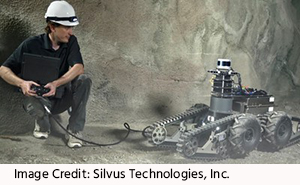
Silvus Technologies is proud to support Team CoSTAR in the DARPA Subterranean Challenge. The Collaborative SubTerranean Autonomous Resilient Robots team, or CoSTAR, is using radios by Silvus Technologies for communication with the CoSTAR robots and sensors during the DARPA "SubT" Subterranean Challenge. As one of a handful of teams, CoSTAR is competing to see which team can successfully deploy autonomous drones and robots into three different subdomains, underground tunnels, urban undergrounds, and caves, in simulated disaster and rescue scenarios.
CoSTAR includes more than 70 team members worldwide from NASA's Jet Propulsion Laboratory, California Institute of Technology, Massachusetts Institute of Technology, KAIST in South Korea, and Lulea University of Technology in Sweden. The team is competing in the SubT challenge using their Next Generation Autonomous Subsurface Explorer robots and was awarded second place in the first round of the competition. Dr. Ali-akbar Agha-mohammadi is CoSTAR's team leader and Dr. Jeffrey Edlund is leading the communications efforts. Both Agha and Edlund work in NASA's Jet Propulsion Laboratory (JPL).
The team is using Streamcaster 4200 tactical MIMO radios by Silvus Techologies as a high priority option in their communications stack on their Next Generation Autonomous Subsurface Explorers. According to Agha and Edlund, the team created a wireless mesh network that enables them to control the robots in the challenging subsurface voids environment. CoSTAR relies on a multi-option communication stack, and the team spent 6 months extensively testing various communication technologies, in-house and COTS, to determine the priorities of various options in their communication stack.
Agha stated, "Communication from subsurface voids includes many challenges: no direct line of sight, a multipath environment, unpredictable link quality, etc. After extensive testing, the main option in our communication stack is the Silvus MIMO radios. The radios perform well underground, have strong bandwidth and range, and are ruggedized for harsh conditions."
"Another crucial component of choosing Silvus MIMO radios as the main option for our comms stack was the software and integration. The software was straightforward to integrate into our autonomy framework, NeBula, essentially the brain of our robot," said Edlund. "When we were testing the radios, we worked directly with the support team at Silvus to get issues resolved. They came back with the updates we needed quickly."
NeBula's communication stack was built with a multi-option approach, so if one communication method fails, the team can quickly switch to another. The communication stack includes internal JPL options, but Agha and Edlund stated that the Silvus MIMO radios are the first and most important of the options in terms of performance and integration with their autonomy. During the exploration of the urban underground, CoSTAR's subsurface explorer robots will drop radio nodes at varying distances, similar to dropping breadcrumbs, to ensure continuous communication between the team above ground and the robots underground.
Jimi Henderson, VP of Sales at Silvus Technologies, said he is excited to see Silvus' MIMO radios working for CoSTAR. "Underground environments pose a significant challenge for wireless systems. Our MIMO radios are designed for ensuring reliable communication in rugged, unpredictable underground environments. We are proud to have our radios playing a role in this innovative challenge and wish CoSTAR success in this round of the SubT challenge."
Team CoSTAR is currently preparing for the second round of competition in the "Urban Circuit" which takes place in Elma, Washington on February 21st, 2020.


