
















 Powering the Future: What Engineers Get Wrong About Designing for Reliability
 Fresh PCB Concepts: Managing PCB Trace Width and Spacing
 Elementary, Mr. Watson: The Rise and Fall of Europe's PCB Design Community





Understanding and controlling sources of differential-pair skew is critical to signal integrity and reduces the potential for nightmarish field failures.
Differing micro-environments can cause slight signal delays within a differential pair, leading to apparently random field failures in production. This is known as glass weave skew, a phenomenon that's easier to prevent that predict.
A serial link’s differential-skew budget shrinks as bit rates increase. For example, a 1 Gbps (500 MHz) signal would have roughly 250 ps of skew tolerance. That’s a wide window, and why most engineers didn’t need to worry about GWS 20+ years ago.
In this November 30, 2022 webinar we explore eleven possible solutions to help prevent glass-weave skew, with an eye toward manufacturing costs and future-proofing your designs.
The webinar covers
- Deterministic methods for addressing GWS
- Probabilistic GWS mitigation methods
- Glass styles and their relative suitability for mitigating GWS
About the presenter
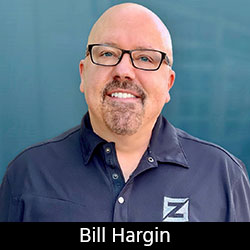
Bill Hargin is the chief everything officer at Z-zero, developer of the PCB stackup design and material selection software, Z-planner Enterprise. Bill is an industry pioneer, with more than 25 years working in PCB signal integrity and manufacturing, while authoring dozens of articles on signal integrity, stackup design, and material selection. Hargin is also the author of the I-Connect007 eBook The Printed Circuit Designer’s Guide to…Stackups, the Design within the Design.
To register for this webinar, or for more information, click here.


