














 Nolan’s Notes: The CMMC Certification Question Mark
 Standard of Excellence: Building Intelligent Supply Chain Ecosystems Before Your Competitors Do
 SMT Perspectives & Prospects: The Architecture of Winston Churchill’s Leadership





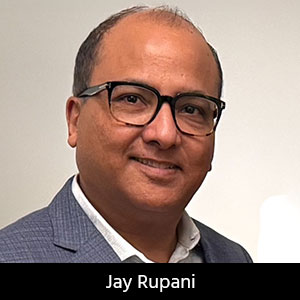
I have heard about Precision PCB for a few years now, and I was hoping to have the chance to talk to the owner Jay Rupani about how things are going. Jay is in the speed business: While engineers and OEMs are under constant pressure to move faster while maintaining quality, reliability, and cost control, it’s becoming increasingly difficult as PCB designs grow more complex and supply chains become more fragmented. That’s where Precision PCB has built its reputation.
For more than 25 years, Precision PCB has helped customers simplify the manufacturing process by providing quick-turn PCB fabrication and PCB assembly services under one roof. The company combines engineering support, responsive communication, and manufacturing expertise to help customers reduce delays, improve manufacturability, and accelerate time-to-market.
After talking to Jay, I’ve seen that what truly separates Precision PCB is its commitment to partnership. Rather than simply building boards, the company works closely with customers to solve problems early, improve outcomes, and support projects from prototype through production.
In this interview, we talk about the evolution of Precision PCB, today’s manufacturing challenges, and what customers should expect from a true PCB manufacturing partner.
Dan Beaulieu: Let’s start at the beginning. How long have you been at Precision PCB? Give us a short history of the company.
Jay Rupani: I started Precision Technologies Inc., rebranded two years ago as Precision PCB, in 1998, with the goal to eliminate the frustration of dealing with multiple suppliers by providing one-stop PCB solutions. We provide quick-turn PCB fabrication and assembly services under one roof.
Beaulieu: What makes your company different, and why does that difference matter to your customers?
Rupani: Well, it’s crucial to communicate your requirements thoroughly with your suppliers. When you submit Gerber data and a BOM to various suppliers, there is a risk of losing critical process information. One small error can cause you hundreds or thousands of dollars, especially when you are on a crunch and need your PCBs and assembly quickly.
Precision Technologies, Inc., dba Precision PCB, is on a mission to eliminate the frustration of dealing with multiple suppliers, to avoid communication gaps, and prevent engineering delays. Providing one-stop cost-effective PCB solutions, delivering consistently quality products, and exceeding your expectations.
Beaulieu: What are your core products or services, and when should someone choose you over other options?
Rupani: With engineering support at the forefront of everything we do, we provide quick-turn PCB fabrication and assembly services with lead times of three to five days for prototypes and one to two weeks for more complex builds. We also support low-volume production with typical delivery times of two to three weeks, helping customers accelerate product development and move efficiently from prototype to production.
Beaulieu: What’s your personal story? How did you get here, and what drew you to this company?
Rupani: I began my career in the PCB industry in Silicon Valley while attending college in Santa Clara, California, working in PCB design and photoplotting, where I reviewed and edited Gerber files. This early exposure to real-world design challenges quickly developed my technical foundation and led to close collaboration with PCB designers and engineers.
I went on to work for multiple PCB manufacturers, eventually transitioning into sales, where I gained a broader understanding of customer needs and manufacturing limitations. I recognized a market gap for more flexible, capable PCB fabrication options beyond a single-source approach.
Drawing on my CAD/CAM engineering background and entrepreneurial roots as an immigrant, I founded Precision Technologies Inc. to provide comprehensive, flexible PCB fabrication solutions. My goal has been to bridge design and manufacturing while delivering greater speed, quality, and choice to customers.
Beaulieu: What do you see as your real job beyond your title? What are your responsibilities to your customers and your team?
Rupani: To me, customers come first. My responsibility is to educate them about the manufacturing process so they can make informed decisions that lead to higher-quality outcomes and greater long-term success.
This same philosophy extends throughout our organization. We encourage team members in every department to ask questions, share ideas, and seek clarity whenever needed. By fostering open communication and continuous learning, we maintain high-quality standards while consistently meeting project timelines and customer expectations.
Beaulieu: What do you love most about being part of this company, and why does it still excite you today?
Rupani: Every project presents unique challenges, and those challenges create opportunities to learn, improve, and grow. That's what makes the work exciting and rewarding.
Beaulieu: Who actually needs what you do? What industries, applications, or challenges are driving demand?
Rupani: The companies that need our services most are organizations that design and sell electronic products but want a reliable partner to help bring those products to market efficiently and at scale. These range from startups launching their first product to established OEMs looking to improve quality, reduce costs, or expand production capacity.
Demand is being driven across a variety of industries, including industrial automation, medical devices, aerospace and defense, telecommunications, automotive electronics, consumer products, energy systems, and IoT-connected devices. As electronic products become more sophisticated, companies increasingly need manufacturing partners with the expertise to manage complex assemblies, stringent quality requirements, and global supply chain challenges.
Common challenges that drive companies to work with us include component shortages, rising production costs, quality and reliability concerns, regulatory compliance requirements, long lead times, and the need to accelerate product launches.
Beaulieu: What do your best customers have in common? What kind of companies get the most value from working with you?
Rupani: Our best customers tend to share a few key characteristics. They view manufacturing as a strategic partnership rather than simply a transactional supplier relationship. These companies value quality, reliability, and responsiveness because their products, customers, and reputation depend on consistent performance.
The companies that get the most value from working with us are typically those developing complex electronic products that require strong engineering support, supply chain expertise, and scalable production capabilities. They often operate in industries where product quality, regulatory compliance, and on-time delivery are critical.
Ultimately, the best fit is a company that wants a long-term manufacturing partner committed to helping them reduce risk, improve product performance, and support business growth.
Beaulieu: Why do your customers stay with you? What do they value most about your relationship?
Rupani: Through our consultative approach and commitment to customer education and responsiveness, clients value the depth of engagement we bring to every project, whether small or large scale. We focus on the details that matter, ensuring clarity, confidence, and better outcomes at every stage.
Beaulieu: When someone discovers your company, what do you want them to immediately understand about you?
Page 1 of 2


