
















 Elementary, Mr. Watson: Waking Up Europe's PCB Giants
 Connect the Dots: Getting the PCB Quote Right
 Powering the Future: What Engineers Get Wrong About Designing for Reliability





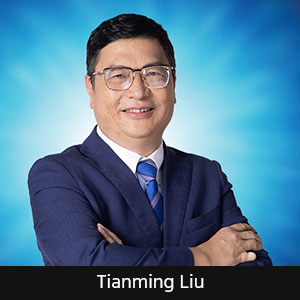
Bridging the Pacific: What American and Asian PCB Companies Can Learn From Each Other
I have spent much of my career working with people from different countries. Before starting our company in 2009, I lived and worked in Japan for 13 years. Since then, I have worked with customers, suppliers, engineers, and business leaders throughout Asia, North America, and Europe. Those experiences have taught me that no country has all the answers. Every manufacturing culture has strengths, weaknesses, and habits that can be improved.
There are many generalizations about American and Asian PCB companies. American manufacturers are often described as innovative, responsive, and expensive, while Asian manufacturers are efficient, disciplined, and focused on volume. There may be some truth behind those impressions, but they are far too simple. I have visited excellent and average factories in both regions. Geography does not guarantee quality, innovation, service, or reliability. The people running the company make that difference.
The Pros of American Companies
I admire that so many American PCB companies work with their customers throughout product development. Their engineers are often willing to get involved before the design is finished. They review stackups, materials, tolerances, impedance requirements, via structures, and potential manufacturing problems. The best American companies do not simply accept a data package and produce what is shown. They help customers improve the product before manufacturing begins.
That approach is especially valuable in the markets they serve. A design decision that appears small on a computer screen can create a serious manufacturing or reliability problem later, so when the PCB manufacturer speaks honestly and early, the customer can make a better decision before time and money are lost.
American companies are also generally comfortable with direct communication. If there is a problem, customers expect to hear about it quickly. They want access to someone who understands the technology and has the authority to act. This creates pressure, but it also builds trust. Asian manufacturers can learn from this willingness to communicate openly, especially when the news is not good. Customers can usually accept a manufacturing challenge, but they have a much harder time accepting silence or surprises.
The Pros of Asian Companies
The best Asian factories have developed strong process discipline by spending decades supporting large, demanding electronics supply chains. At higher volumes, informal methods do not work. Processes must be documented, measured, controlled, and consistently repeated across shifts, production lines, and facilities.
I have always believed that quality must be built into the process. Final inspection is necessary, but inspection cannot repair a weak manufacturing system. Materials must be controlled when they arrive. Every stop of the fabrication and assembly process must all work together. When one operation is unstable, the entire product is at risk.
This is where some American companies can learn from Asian manufacturers. Flexibility and quick decision-making are valuable, but they should not depend on a single experienced person remembering how to solve every problem. Knowledge must become part of the system. A repeatable process allows a company to grow without losing the quality and responsiveness that made it successful.
Asian companies also tend to take a longer view of manufacturing investment, from new equipment and automation to employee development and factory expansion. It may take years to deliver their full return, but companies that commit to this can build capabilities that competitors find difficult to replicate. At FUJI PCB, we understand that a factory cannot wait until customers need a technology before beginning to prepare for it. By then, it is already too late.
The Practicalities of Scale and Planning
Asia has developed a broad electronics manufacturing ecosystem over many years, encompassing laminates, chemicals, components, equipment, assembly, testing, tooling, and logistics. It provides access to capacity and specialized knowledge, but scale by itself is not enough. A large factory that does not listen to its customers can still be a poor supplier.
It is an honest weakness some Asian companies must address. We can become so focused on equipment, output, yield, and efficiency that we forget how the customer experiences the relationship. Customers want dependable boards, but they also want clear explanations, useful engineering support, realistic schedules, and people who take responsibility. Manufacturing performance and customer service are inseparable.
American companies face a different challenge. Their ability to react quickly can sometimes become a substitute for planning. Solving an emergency is admirable, but preventing the emergency is better. Stronger process controls, better forecasting, deeper supplier partnerships, and long-term investment can make American manufacturers more competitive without taking away their entrepreneurial character.
Conclusion
The strongest PCB companies combine American-style engineering access, speed, creativity, and customer intimacy with Asian-style process control, scalability, continuous improvement, and long-term planning. It’s possible through digital communication, shared engineering platforms, automated manufacturing data, simulation, and AI.
Technology helps, but it doesn’t replace trust. AI may identify a design concern, improve scheduling, or organize manufacturing information, but experienced people must still make responsible decisions. Customers want to know that someone understands their product, tells them the truth, and remains involved when conditions become difficult.
The Pacific Ocean is vast, but the distance between our industries is narrowing. The most valuable progress will not come from proving that one region is better, but from recognizing where each region is better and having the humility to learn from it. The companies that exchange knowledge as freely as they exchange products will build the strongest future for PCB manufacturing.
This column originally appeared in the October 2026 issue of SMT007 Magazine.


