












 It’s Only Common Sense: AI Makes Preparation Easier and Excuses Harder
 The Chemical Connection: A Few Things That Still Scare Me






Latest Articles
Printing PCBs…In Your Office!
The days of producing a PCB prototype with a 3D printer may not be as distant as you think. I spoke with Simon Fried of Nano Dimension about how 3D printing is becoming a reality, and how this disruptive technology will change the way designers produce rapid prototypes.
New Material and Process Solutions for the Electronic Interconnection Industry
The manufacture of electronics has, for the last several decades, followed a production script that has changed little over time. The vast majority of printed circuits are still being manufactured and assembled using materials and processes that the pioneers of the early printed circuit industry would easily recognize.
DuPont, Taconic and PFC Team Up For High-Speed Flex

At DesignCon, I sat down with three flex circuit specialists: Glenn Oliver of DuPont, Tom McCarthy of Taconic, and Steve Kelly of PFC Flexible Circuits. Our discussion covered a lot of territory, most notably the findings they described in the paper they were about to present later that day at DesignCon, and the future of flex, as they see it.
The Quiet Mainstreaming of HDI Manufacturing

Advances in technology continue to push the envelope of what’s possible. And nowhere has the impact of those advances been felt more profoundly than in the evolution of the current class of mobile devices. Although design engineers have driven this evolution, primarily through addressing market demand for new form factor innovation, the push to meet the associated manufacturing challenges has been responsible for a revolution in PCB manufacturing.
Enhancing Thermal Performance of CSP Integrated Circuits

In order to meet size and weight requirements, constraints of portable electronic designs often force PCB designers to reduce the size of components and PCB real estate area. To meet these demands, the use of CSP packages to shrink the PCB area needed is a common change in designs. As a result of the reduction of total PCB area, the available options to move heat and route high-power PCB traces is also reduced. Furthermore, the thermal performance cannot be matched when a QFN is compared to an equivalent CSP package.
Book Review: Meetings That Get Results

In this short but amazing book, Brian Tracy covers all types of meetings, from the large training sessions to the one-on-ones. He even describes how you should be sitting when having a one-on-one meeting (each of you at a corner of the table), how to get your point across, and how to listen.
Happy’s Essential Skills: Problem Solving

Related to TQC and a very important role of an engineer is solving problems. Using a problem solving methodology is a job that all engineers will use sooner or later, but if you are in product or process engineering in manufacturing, it will be sooner! This was the situation that introduced me to printed circuit manufacturing.
Punching Out: How to Sell Your PCB/Assembly Shop

You are thinking of selling your PCB or assembly shop. Perhaps you are contemplating retirement, you have no successors, and the thought of going to the office on Monday is driving you crazy. This column is designed to help your planning efforts. Future columns will go deeper into each subject.
Flex: Just What the Doctor Ordered for Medical Devices

Medical devices represent one of the fastest growing electronic markets in the United States. The drive for reduced space and weight, added functionality, and reduced cost has driven the adoption of a wide array of custom flexible circuits. The design freedom offered by this three-dimensional interconnect supports the packaging design requirements for a myriad of diverse applications within the medical electronic market.
Japan’s MicroCraft on the Japanese Market, Technology, and More

Soichiro Fujita of MicroCraft sat for an interview recently, in which we discussed what the current PCB market looks like in Japan, from a Japanese supplier’s perspective. Fujita also shared the company’s strategies for combating copycat machines, and even copies of the copycats, which includes a healthy dose of acceptance. He also shared what technology trends he sees moving forward.
25 Essential Skills for Engineers

The 25 engineering skills are just my opinion; they are what I have observed to be the essential tools that engineers, including myself, needed to complete a project, develop a product, meet a schedule, or solve a problem. These were the important skills that got me the promotion, or the opportunity for a challenging job.
Striving for One-Stop Solutions, Manz Eyes U.S. Market

I recently spoke with Frank Baron of Manz AG about their transition from Asia into the European and North America marketplace, and how their recent acquisition of KLEO Halbleitertechnik and their LDI technology has helped turn Manz into a real one-stop solution.
Designers Notebook: Flex and Rigid-Flex Circuit Design Principles, Part 2

In this installment of "Designers Notebook," Vern Solberg discusses supplier assessment, planning of the flexible circuit outline, and various circuit routing principles. Communication between designer and fabricator is paramount, as well as an understanding of IPC-2223, which sets the specific requirements for the design of flex circuits.
The Pinless Registration System, Explained by DIS’ Bernd Gennat

I sat down at productronica recently with Bernd Gennat, VP sales Asia and Europe for Duetto Integrated Systems (DIS Inc), for an overview of the industry, including his company’s technology. Our discussion touched on trends in multilayer registration, market requirements in Europe compared with those in China, and the benefits of pinless over hard-tooled registration systems for current and future rigid, flex and flex-rigid constructions.
High-Performance Laminates

High-performance laminates are characterized as base materials that in one or more aspects exceed the performance of FR-4, CEM, or paper/phenolic laminates. In this article, Karl Dietz talks about the different types of laminates, their dielectric requirements, and how they are being manufactured.
Justifying the Need to Outsource Design Work

Mehul Dave and H.D. Shreenivasa of Entelechy Global discuss the many benefits of outsourcing and why it should not be thought of as a four-letter word. They also talk about the huge gap between design and manufacturing, and how their company can help customers address that issue.
What a Difference a Year Makes: Voxel8 and the 3D Printing Pioneering Spirit

At CES in Las Vegas in January, Dan Feinberg and I met with Michael Bell, co-founder of 3D printing company Voxel8, to get an update on their developments of the past year, where he sees the company going in the future and whether rapid prototyping might be a valid application for their machines.
American Standard Circuits: Leading the Way in Medical Electronics
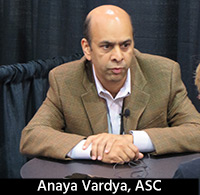
When it comes to innovative fabricators, American Standard Circuits is always at the front of the pack. Naturally, when Editor Andy Shaughnessy asked me to interview a fabricator about PCBs for the medical market, ASC was the one company that immediately came to mind. I spoke with CEO Anaya Vardya about fabricating medical PCBs, the medical electronics market, and the future of this fast-growing segment.
Fabrication Drawings and Electrical Test— Reading the Fine Print

When a new PCB design is born, designers envision what the product will provide when completed. Whether the product is for the consumer, aerospace, military, medical or countless other markets, the designers—or more likely, the customers—expect certain deliverables on the commodity they wish to purchase.
Orbotech’s New Products and Equipment Offerings Highlighted at HKPCA

At the recent HKPCA show, members of the media and some of the leading figures at Orbotech joined together for a Q&A session to learn more about some of the company’s new product rollouts, how their vast equipment offering has set them up to take on Industry 4.0, and their best estimate on when we’ll see 3D printed circuit boards reach mass production levels.
ECI on the Many Benefits of Automated Process Lines
In this recent interview, I spoke with Peter Bratin, PhD, of ECI Technology about how PCB shops can benefit from upgrading the control and analysis of plating line solutions to 4.0 and how the data collected by these systems can help prevent future issues from occurring.
Catching up with…Tom Kastner
When is the right time to sell your board house? Who is going to buy it? What is a buyer looking for in a PCB fabrication business? These are questions I hear all the time particularly in the past few months as many owners are reaching an age when they are thinking about retirement.
Innovative Circuits Sees Healthy Medical Market

Medical electronics is one of the fastest growing segments of our industry. Alpharetta, Georgia-based Innovative Circuits is at the forefront of fabricating medical PCBs, both flex and rigid. I asked Innovative Business Development Manager Amir Davoud to give us a solid diagnosis of the world of medical PCBs.
Mr. Laminate Tells All: CEM-3 Reinvents Itself (Again)—or, Atari Game Boards on eBay?

CEM-3 was unusual as the reinforcement was a combination of woven fiber-glass fabric and fiber-glass paper. The resin system was a dicy-cured epoxy resin yielding a Tg the same as FR-4 at the time, of 110–120°C range. Because it was all epoxy and all fiberglass, the properties were electrically identical to those of FR-4.
What a Long, Strange Trip it’s Been—and It’s a Long Way from Being Over

Harvey Miller has been in the PCB industry for more than 40 years, and he’s probably seen it all. I recently sat down with Harvey at a wine bar in Palo Alto to learn more about his history in the industry and where he sees it going forward. Harvey arrived wearing jogging shorts and running shoes. No surprise after what his doctor recently shared with him.
Copyright © I-Connect007 | IPC Publishing Group Inc. All rights reserved.
Log in