












 It’s Only Common Sense: AI Makes Preparation Easier and Excuses Harder
 Happy’s Tech Talk #50: Start Your Digitalization Strategy With Automation
 The Chemical Connection: A Few Things That Still Scare Me






Latest Articles
Gary Ferrari Shares His Thoughts on PCB Design and More

Recently, I spoke with Gary Ferrari, director of technical support at Firan Technology Group, about numerous topics related to PCB design. Our conversation ranged from CID training to the need for reaching high school students as a way of introducing more young people to career opportunities in our industry. We also covered strategies for helping customers design and build better product, and keeping designers provided with the most critical part of their supply chain—information.
Material Witness: The Use of Fillers in Composites

The use of finely divided ceramic fillers in composites intended for use in printed wiring boards has a long history, but most people still associate the idea with reducing the cost of the product by loading it with an inexpensive inert filler. Nothing could be further from the truth...
The Keys to Success for Supply Chain Management

This article describes the key components and issues regarding achieving supply chain management success, offers some suggestions and action items mostly for customers to store in their memory banks. It also explains key partner relationships and how they must work to gain each other's confidence. When it comes to results, the most important requirement is the product. When a distributor is awarded a tier one product from a tier one supplier, 50% of the goal has been accomplished.
The Drive for Transparent Circuits

DKN Research develops many types of unique electronic circuits. Some products in our portfolio include ultra-thin conductor circuits as small as 0.2 microns, metal-free circuits, and some circuits up to 20 meters long. Our staff fields many inquiries for packaging of new electronic devices. Lately, there is a lot of interest in transparent flexible circuits. The increase in interest is driven by the recent market expansion of display and optical devices.
Accomplish Change Together (ACT)

Shifting strategies for selling PCBs and the materials to build them is the impetus for ACT. Insulectro's Ken Parent and Jason Marsh spoke to I-Connect007 Publisher Barry Matties about the ACT approach—and how it is helping their PCB fabricator customers increase sales and OEMs to get better products.
Agricultural Drones and Flexible Circuits

Agricultural drones are expected to have a significant impact on farming over the next few years. In the article mentioned above, the drone’s ease of use and affordability make this a tool that virtually every farmer could employ. One major complementary technology to the drone is the advances in imaging technology and analysis. Specifically, the agricultural drone gives farmers data analysis capability that they have not had before.
Supply Chain in the 21st Century

The shift away from vertical integration has pushed the topic of supply chain management to the forefront of strategic planning for many manufacturers. This wide-ranging article talks about supply chain management, a brief history of supply chain innovation, managing supply chain risk, as well as presents the "7 Rights" of supply chain management.
Design and Manufacture of High-Voltage Electronics

This SMART Group webinar, presented by Ian Lake, director of engineering at Applied Kilovolts Ltd, and moderated by Bob Willis, explored the current technical barriers faced in high-voltage electronics design and manufacturing processes. Although he made it clear that within the timeframe of a webinar session he could only scratch the surface of the topic, Lake gave a valuable insight into basic concepts and drivers and set a perspective on current state of the art and future trends.
Eliminate Connectors with Sculptured Flex
Any time you eliminate a component, hidden costs are eliminated, such as the cost of stocking, tracking and managing the supply chain for that part number. When designing an electronic package, don’t assume that you need a component for every connection point. Sculptured flex will give some options that can make your electronic package, lighter, less costly, more reliable, and take up less space.
IPC-A-610: What's New With Rev F?

Why are new revisions created anyway? Can’t IPC just issue updates to the existing revision? Who defines what the changes are going to be and who approves of those changes? Why can’t they make changes for all the new technologies available? And the best question of all: Why does my product have some conditions that are not covered in the documents and specifications? Leo Lambert explains.
A Well-Designed Laminate Supply Chain has to Own It!

Suppliers must use industry knowledge, robust systems, clever software and total visibility to build a supply chain agile enough for any PCB fabricator. Consigned stock, local customization, regional hubs, short manufacturing cycles, controlled processes and highly evolved systems are just a few of the tools needed to develop custom fit solutions that flex and move with the needs of the fabricator and their customers. You can only design the supply chain when you own the supply chain.
Coated Ultra-Thin Copper on Printed Circuit Laminates

Nano copper-based electronic ink and associated processing have been developed to create ultra-thin copper on flexible PCB substrates, allowing for much finer etch resolution and increased circuit density. The process is rapid and sufficiently low-temperature to allow deposition onto temperature-sensitive substrates such as polyimide, plastic and paper.
An Update on the Rogers Material Supply Line

As part of a recent I-Connect007 supply chain survey, we found that RF laminate material can be very difficult to obtain. Rogers Corporation was named specifically in our survey as one supplier with a limited amount of material available. In fact, their delivery time was reported as being as high as 55 days for some materials at one point. In an industry where quick turnaround time is critical, this is one supply line that killed any hope of being quick.
Innovative Technologies Drive PCB Industry Growth
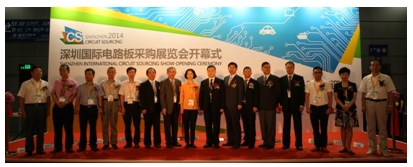
PCB growth has slowed in recent years, though last year the growth rate was slightly higher than the 2% of the last three years. Estimates by IEK of Industrial Technology Research Institute of Taiwan show that the PCB industry will continue to grow in 2015 at a rate of 3-5% with an annual output of RMB 576 billion (USD 93.8 billion).
Rigid-Flex PCB Right the First Time--Without Paper Dolls

The biggest problem with designing rigid-flex hybrid PCBs is making sure everything will fold in the right way, while maintaining good flex-circuit stability and lifespan. The next big problem to solve is the conveyance of the design to a fabricator who will clearly understand the design intent and therefore produce exactly what the designer/engineer intended.
The Past, Present, and Future of IPC-A-610

To understand the ultimate power of IPC-A-610, you need to first understand what is at the core of this standard. IPC-A-610 is a collection of visual quality acceptability requirements for electronic assemblies. It is utilized as a post-assembly acceptance standard to ensure that electronic assemblies meet acceptance requirements.
“Supply Chain Management”: Overused, Underused or Just Misunderstood?

In a world of buzz words, "supply chain" and "supply chain management" have certainly been right up there in our industry. Everyone sort of knows what the terms mean, or at least what they want them to mean. Everyone has assigned their own level of importance and interest to the idea of supply chain management, so it made perfectly good sense for us to highlight that subject in our July issues.
EIPC Summer Conference: Day 2
Refreshed after an excellent conference dinner, and for most, a good night’s sleep, delegates returned for the second day of the EIPC Summer Conference in Berlin, continuing the theme of improving profitability through technical leadership and innovation to meet future market requirements, with sessions on materials and processes for high performance PCBs and advanced material testing strategies to meet OEM and ODM needs.
TTM: Consult Fabricators Early for PCB Designs
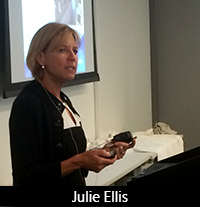
Recently, I attended the Designers Council “Lunch and Learn” at Broadcom’s office in Orange County, California. One of the speakers at this event was Julie Ellis, a field applications engineer with TTM Technologies. She sat down with me to discuss her presentation and some of the ways fabricators can assist PCB designers.
EIPC Summer Conference, Berlin: Day 1
Berlin, capital of Germany and a world city of culture, politics, media and science, was the venue for the 2015 EIPC Summer Conference, which attracted delegates from sixteen countries, including Russia, Hong Kong, Japan, Israel, USA and Canada, as well as the European Union, to experience a programme of 21 technical presentations over two days. Also included was a visit to the Berlin laboratories of Fraunhofer Institute, Europe’s largest application-oriented research organisation.
Book Review: Brian Tracy’s “Business Strategy”

If you’re serious about your company’s strategic planning, this book is for you. And if you’re not serious, then you won’t be around much longer anyway. Pick up this little volume, the latest from The Brian Tracy Success Library.
Kelly Dack Discusses His Recent Move

Dan Beaulieu has known the Prototron staff for years, and worked with them for a number of years as well. So, when he heard that they had hired Kelly Dack, a longtime PCB designer and guest editor for PCBDesign007, Dan wasted no time meeting with Kelly to talk about his new position, the future of PCB design, and the nascent interest millennials are showing in the PCB industry.
Catching Up with Vector Fabrication’s Quang Luong: Here Comes Vietnam!
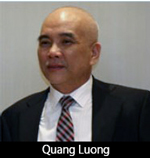
I have known Quang Luong, the owner of Vector Fabrication, for many years now, and I have always been interested in his business and how it operates, especially since he is the only PCB shop owner I know of who has a company in the U.S. and in Vietnam.
Enabling Smart Wearable Technology: Flexible, Stretchable Interconnect

In this article, Joan Vrtis highlights the current and forward-looking interconnect technologies enabling the stream of amazing new smart wearable electronic devices connecting the user to their personalized experience.
A Review of the Opportunities and Processes for Printed Electronics (Part 1)

As microsystems continue to move towards higher speed and microminiaturization, the demands for interconnection are opening up new opportunities for "innovative" interconnects. In the first part of this five-part article series, Happy Holden gives a brief background on printed electronics, as well as presents key technologies that are being employed for PE production.
Copyright © I-Connect007 | IPC Publishing Group Inc. All rights reserved.
Log in