













 Trouble in Your Tank: HDI and UHDI—Building the Foundation of Advanced Packaging
 It’s Only Common Sense: Look Beyond the Tariffs
 The Chemical Connection: Employee and Operator Empowerment in the Age of AI





Latest Articles
Additive Electronics Conference Set for October 2019 Debut

Kelly Dack and Tara Dunn talk about the upcoming conference "Additive Electronics: PCB Scale to IC Scale" on October 24, 2019, hosted by SMTA in San Jose, California, and why it's an important event for people to attend—especially those involved in the design process.
Chuck Bauer: SMTAI 2019 Founder's Award Recipient
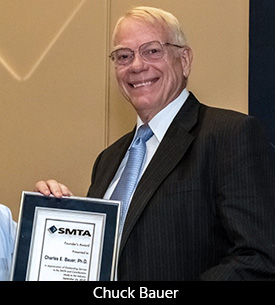
At the recent SMTAI conference and exhibition, Chuck Bauer, Ph.D., senior managing director at TechLead Corporation, received the Founder's Award, a prestigious award given to a member who has made exceptional contributions to the industry and provided ongoing support and service to the SMTA.
Decreasing Bend Radius and Improving Reliability—Part I
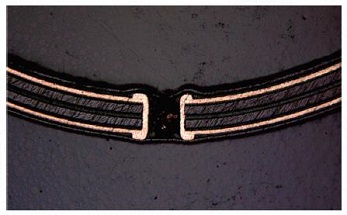
Many of the issues that arise when using a flex circuit come from a lack of knowledge about how to properly design one, especially when the circuit is required to bend.
Communication, Part 2: Design Data Packages
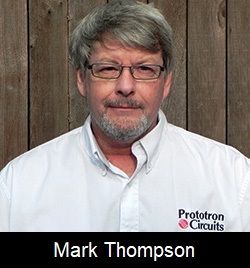
The first part of this six-part series highlighted ways that PCB fabricators and designers can better communicate, starting with how to qualify a board shop. In Part 2, Bob Chandler and Mark Thompson talk about the importance of preparing, sending, and receiving comprehensive (and ideally, perfectly complete) design data packages.
SMTA Additive Electronics Conference: Industry Trends

Mainstream PCB manufacturing is often limited to 50-75 microns (mm) line and space. But the electronics industry is evolving quickly. Propelled by the demand for more sophisticated electronics, PCB design is being tasked with finer lines, thinner materials, and smaller via sizes.
ODB++: Transforming Ideas Into Products
The ODB format originated with the objective of delivering on this need. The format was originally introduced for use by PCB fabricators, eliminating the need for a collection of CAM files in multiple formats—such as Gerber, Excellon, IPC-356, or even IPC-350, which was an early attempt to simplify this process. The key to the success of ODB was that it obtained industry acceptance.
New High-speed 3D Surface Imaging Technology in Electronics Manufacturing Applications
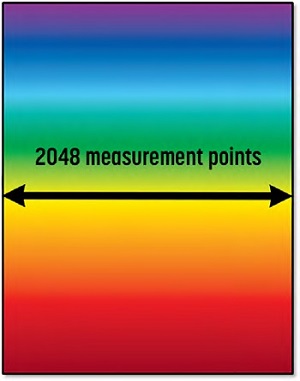
Line confocal sensors—and scanners based on them—are used in the imaging of surfaces, transparent materials, and multi-layered structures in various metrology and inspection applications on discrete parts, assemblies, webs, and other continuous products. Line confocal sensors operate at high speed and can be used to scan fast-moving surfaces in real-time as well as stationary product samples in the laboratory.
Standards: Why We Have Them and Live by Them
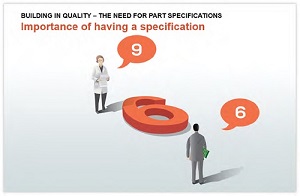
Have you ever designed a board but received feedback that it couldn’t be manufactured unless changes were made? Or maybe you’ve designed a complex board and sent it to the factory only to find out that the manufacturer didn’t build the board to your expectations? PCBs are becoming more complex, factory options are growing, and expectations for product life cycles are becoming longer.
Communication, Part 1: How to Qualify a Board Shop
In Part 1 of this six-part series for "Fab Fridays," Mark Thompson, CID+, engineering support at Prototron, and CA Design CTO Bob Chandler discuss ways that PCB fabricators and designers can better communicate, starting with how to qualify a board shop.
Bob Martin Brings Maker Attitude to AltiumLive Keynote

Bob Martin is a self-proclaimed “Wizard of Make” and senior staff engineer with Microchip Technology. Next week, this leader of the maker community will be one of the keynote speakers at AltiumLive in San Diego, California. I caught up with Bob and asked him to give us a preview of his presentation.
Words of Advice: What Data Format do you Send Your Assembly Provider?

In a recent survey, we asked the following question: What PCB data format(s) do you send to your PCB assembly supplier? Here are just a few of the answers, edited slightly for clarity.
SMTAI 2019: Happy Holden’s On-the-Scene Report
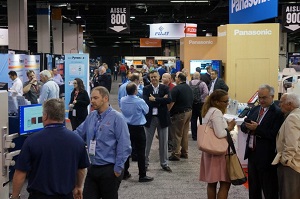
Last week concluded the 2019 SMTAI conference in Rosemont, Illinois. Overall, I think the show was successful and covered all aspects of SMT processes.
The Institute of Circuit Technology Autumn Seminar

Meriden has been established as a popular Midlands venue for Institute of Circuit Technology (ICT) meetings. On September 19, a multitude of Fellows, Members, and Associates gathered for the Institute’s autumn seminar, which was organised and hosted by ICT Technical Director Bill Wilkie. The agenda included five informative technical presentations, describing current research and development on significant topics relevant to the industry.
Insertion Loss Performance Differences Due to Plated Finish and Circuit Structure

Data will be presented for loss versus frequency for six different plated finishes commonly used in the PCB industry, and opinions will be offered as to why the loss behavior differs for the different plated finishes and for the different circuit configurations. Because the insertion loss of high-frequency circuits also depends on substrate thickness, circuits fabricated on substrates with different thicknesses will be evaluated to analyze the effects of substrate thickness on insertion loss.
Real Time with… SMTAI 2019 Slideshow
The SMTA International 2019 Conference and Exhibition closed last week on a high note. For those who were not able to attend the event, held at Stephens Convention Center in Rosemont, Illinois, the slideshow contains a selection of photos from the exhibition show floor as well as the conference.
Is It Time to Shake Up Materials Standards?

COO Mark Goodwin and Technology Ambassador Alun Morgan from Ventec International Group describes how they feel current standards do not sufficiently recognize the needs of end customers today with new processes and materials being shoehorned into old standards based on dated ideas of classifications, and how this makes choosing the right material challenging for designers.
SMTAI 2019: George Milad's SMTAI Paper and the IPC ENIG Specification Revision
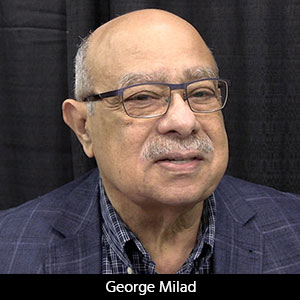
George Milad, national accounts manager for technology at Uyemura, discusses his paper on changing processes to eliminate nickel corrosion that he presented at SMTAI. He also tells Nolan Johnson about the IPC ENIG specification revision. George is involved in the Revision B acceptance process and shared information on how to get involved with the specification committee as well.
Carrying the Flag

The September 2019 issue of PCB007 Magazine concludes our month-long look at industry standards. We wrap up by "waving the standard" in celebration. Of course, that phrase immediately piques the interest of us wordsmiths. Why, after all, do English speakers use "standard" as a synonym for a flag?
Leo Lambert on Training the Next Generation of Technologists

I sat down for an interview with Leo Lambert, VP of technical director for EPTAC Corporation, during the IPC Summer Meetings in Raleigh, North Carolina. We discussed the company’s growth, including plans to have training centers across different regions of the country to help cut down on students’ travel times, and why training methods must constantly evolve to remain effective.
Insulectro and DuPont Experts Talk Flex Design

I recently spoke with Insulectro’s Chris Hunrath and DuPont’s Steven Bowles at the DuPont Technology and Innovation Center in Sunnyvale, California. We discussed a variety of topics related to flex design, including the support structure that’s needed in flex design, the everchanging world of flex materials, and the need for working with a flex fabricator as early as possible in the flex design cycle.
Joe Grand Brings a Hacker Outlook to PCB Design
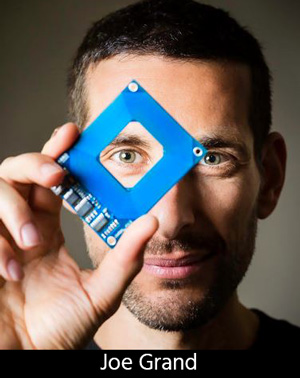
From designing his own mischievous gadgets to testifying on Capitol Hill and starring in his own Discovery TV show “Prototype This!” Joe Grand has lived a hacker’s life. I spoke with Joe about his upcoming keynote at AltiumLive in San Diego, “When Hacking and Engineering Collide,” which will focus on the lighter side of engineering and the benefits of thinking like a hacker. Can Joe convince PCB designers to adopt a hacker’s outlook?
Additive Electronics Conference Set for October 2019
Tara Dunn, president of Omni PCB and I-Connect007 columnist, and Lenora Clark, director of autonomous driving and safety technology at MacDermid Alpha Automotive, discuss what can be expected from the upcoming Additive Electronics Conference in San Jose, California, the impetus and motivation behind the conference, and who can benefit the most from attending.
Weaving Advocacy into E-Textiles
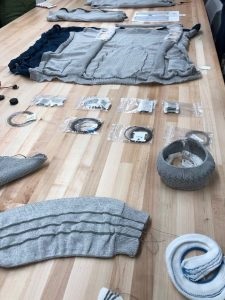
Electronic textiles (e-textiles) – fabrics that have electronics embedded in them to achieve certain functions – are of growing interest in the electronics manufacturing industry, and thus they are of growing interest to the IPC Government Relations team as well.
Meet Dana Korf, I-Connect007 Columnist

Meet Dana Korf, one of our newest I-Connect007 columnists! Dana’s columns will focus on IPC-2581 as well as PCB front-end tooling, data quality, DFM processes, etc.
The Use of Insoluble Anodes in Acid Copper Plating

Soluble anodes have been the staple of the industry for decades, but they require extensive maintenance and generate waste in both copper metal and electrolyte. As plated copper thickness uniformity requirements become more stringent, more and more time will be needed for anode maintenance to ensure the uniformity of the anodic setup.
Copyright © I-Connect007 | IPC Publishing Group Inc. All rights reserved.
Log in